 Photo Wikimedia Commons
Contents
History & cultureBY TELLBY8 sections · numbered as on the map01 Orientation
Welcome to Indravati National Park, a majestic sanctuary of pristine wilderness and one of the most ecologically vital protected areas in central India. Located in the Bijapur district of Chhattisgarh state, this magnificent reserve represents a sanctuary where ancient forest ecosystems merge with the rolling topography of the Deccan Plateau and the rugged highlands of Central India. As you step into this expansive landscape, you are entering a realm that has preserved its raw natural beauty, extraordinary biological diversity, and profound ecological serenity across generations.
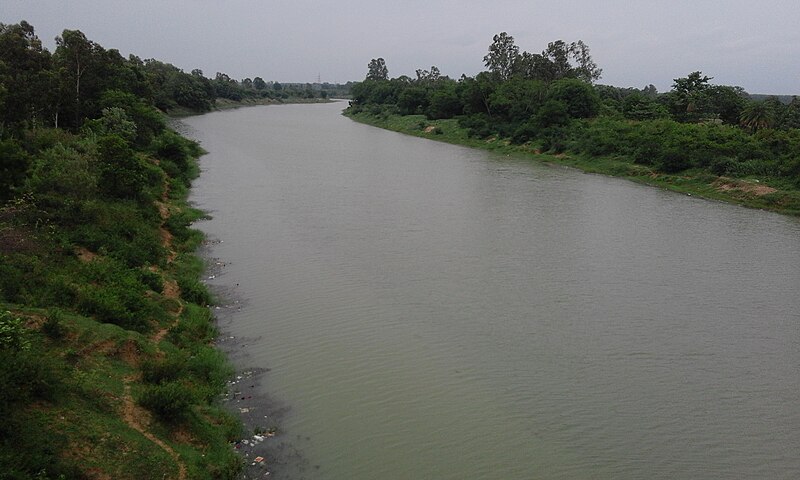
The historical trajectory of this reserve began in nineteen eighty one, when the area was officially established as a national park to safeguard its unique flora and fauna. Recognizing its critical role in apex predator conservation, the government elevated its status in nineteen eighty three under the nationwide Project Tiger initiative, establishing Indravati as one of the earliest and most significant tiger reserves in peninsular India. The park takes its name from the mighty Indravati River, which flows continuously from east to west along its borders. This great watercourse forms the northern and western boundaries of the reserve while simultaneously marking the geographical border between the states of Chhattisgarh and Maharashtra.
Spanning a vast total area of approximately two thousand seven hundred and ninety nine square kilometres, Indravati is among the largest wildlife reserves in the region. The protected area is strategically divided into two functional zones, featuring a core critical tiger habitat covering approximately one thousand two hundred and fifty eight square kilometres and an extensive surrounding buffer zone of roughly one thousand five hundred and forty square kilometres. This vast spatial structure ensures that wide-ranging predators and large mammal herds possess sufficient room to roam freely without human interference.
Topographically, the reserve is characterized by an undulating hilly terrain with elevations rising gently from one hundred and seventy seven metres to five hundred and ninety nine metres above sea level. The convergence of the Deccan Plateau topography and the Central Indian climate creates unique ecological microclimates across the landscape. These gradual slopes, combined with fertile river valleys, seasonal drainage basins, and sprawling plateaus, form a rich mosaic of microhabitats that sustain a remarkable array of endemic flora and fauna. Throughout our journey today, we will explore open grasslands, dense deciduous canopies, riverine forests, and ancient historical sites hidden deep within the jungle. Prepare to immerse yourself in the natural tranquility, rich biodiversity, and spiritual heritage of Indravati National Park.
02 Kutru Grasslands and the Sanctuary of the Endangered Wild Water Buffalo
Our journey brings us to the expansive grassland landscapes surrounding Kutru village and the renowned Kutru Game Sanctuary. Situated approximately twenty two point four kilometres north of the main road connecting Jagdalpur and Bhopalpattanam, Kutru serves as the primary entry gateway to Indravati National Park. More importantly, this region encompasses the core habitat for the park's most celebrated resident and conservation icon, the endangered wild water buffalo. …
03 Along the Indravati Riverbanks and the Eco Tourism Trail
Stepping along the shaded riverbanks, we encounter the soothing sound of flowing water along the Indravati River corridor. As the primary lifeline of this entire national park, the Indravati River meanders gracefully from east to west, nourishing the fertile soil and sustaining a thriving riverine ecosystem. …
04 Canopy of Teak and Sarai Trees in the Deciduous Forest
Venturing deeper into the heart of the national park, our trail winds beneath an imposing overhead canopy of ancient, towering trees. The air grows noticeably cooler, filled with the refreshing scent of damp earth, rich humus, and crushed wild leaves. The vegetation of Indravati National Park represents a magnificent botanical transition zone between the Central Indian highlands and the Deccan Plateau, featuring a rich mosaic of tropical moist deciduous and tropical dry deciduous forest types…
05 Ancient Shiva Temple at Pasewada and Spiritual Heritage
Continuing along our route into the tranquil core region near Pasewada village, we arrive at an extraordinary cultural and historical landmark hidden deep inside the wilderness: an ancient Shiva temple. Surrounded by towering forest trees and moss-covered stone masonry, this venerable shrine stands as a silent witness to the centuries of spiritual devotion that have unfolded within these wild grounds. …
06 Forest Watchtower and Birdwatching Haven for Hill Myna
Ascending the elevated forest watchtower, we are rewarded with a magnificent panoramic vista stretching across the heart of Indravati National Park. From this vantage point, sweeping views of dense Sarai tree canopies, open grassy glades, and distant meandering river bends unfold in every direction. This watchtower serves as an ideal observation post for birdwatchers, wildlife photographers, and field researchers studying the park's extraordinarily rich and interconnected faunal communities. …
07 Pharsegarh Checkpoint and the Great Central Indian Wildlife Corridor
Reaching the final major landmark of our guided tour, we arrive at the Pharsegarh checkpoint and forest rest house zone, a strategic intersection linking the core critical tiger habitat with the surrounding buffer areas. The Pharsegarh Forest Rest House, managed by the Chhattisgarh Forest Department, provides essential operational infrastructure for wildlife rangers while offering peaceful lodging for researchers and eco-visitors seeking an immersive wilderness experience. …
08 Closing
As our audio-guided tour comes to a conclusion, it is time to reflect upon the extraordinary journey we have shared through Indravati National Park. Together, we have explored one of India's most ecologically significant and remote wilderness reserves, tucked away in the Bijapur district of Chhattisgarh. …