Contents
History & cultureBY TELLBY7 sections · numbered as on the map01 Orientation
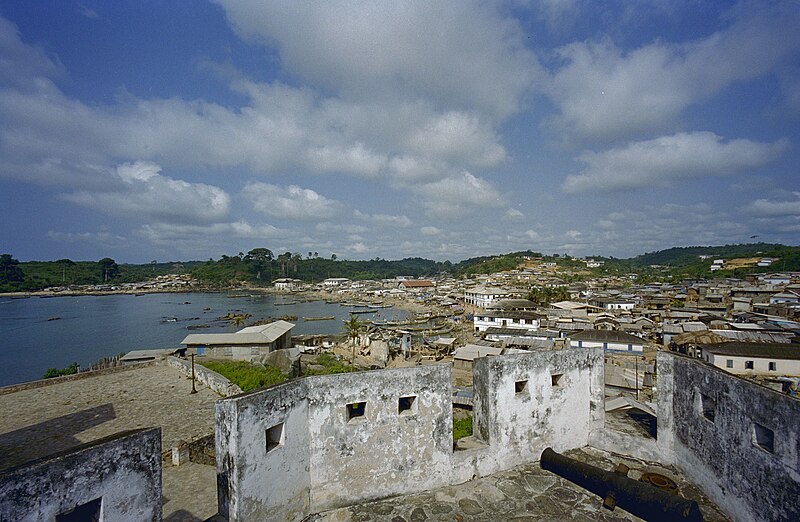
Welcome to the elevated coastal promontory of Dixcove, located in the Western Region of Ghana. Standing on this historic vantage point, you are looking at Fort Metal Cross, a poignant sanctuary that bears eloquent witness to five centuries of Afro-European trade and the tragic dispersion of the African Diaspora across the Atlantic ocean. In nineteen seventy-nine, this site was officially inscribed as a UNESCO World Heritage property under the collective designation of the Forts and Castles of Ghana. Beyond administrative registries, bureaucratic criteria, and dry archive numbers, the true significance of this heritage landmark resides in the living human memories deeply embedded within its weathered stone ramparts and seaside foundations. Originally, the native Ahanta inhabitants called this coastal settlement Effiema, or Nfuma, in honor of a deeply revered local deity whose sacred shrine rested just west of the serene Nfuma Lagoon. When foreign mariners first anchored along this stretch of the Gold Coast during the early contact era, they struggled continuously to pronounce the indigenous name Effiema. Instead, European traders chose to refer to the natural harbor as Dickies Cove, taking the moniker from a prominent English merchant named Dick who had established a bustling gold trading post on the sandy beach. Over time, the phrase Dickies Cove was gradually corrupted into the modern geographical name Dixcove. Beyond its external colonial history, Dixcove possesses an extraordinary traditional political structure that continues to endure to this day. Long before the arrival of foreign merchant ships, the settlement established an uncommon dual chiefdom system composed of two distinct ancestral quarters known as Daazikessie and Ntwarkro. The original progenitors of Daazikessie migrated from Eguafo, while the ancestors of Ntwarkro arrived independently from Tekyeman, with each group maintaining its own paramount chief and cultural autonomy while coexisting in harmony. During the nineteenth century colonial administration, British Governor Major Hill officially designated these two indigenous quarters as Upper Dixcove and Lower Dixcove to draw precise administrative boundaries for exacting the colonial poll tax. As you prepare to explore this promontory overlooking the Atlantic ocean, let the sea breeze guide your steps into a profound journey of shared global history and cultural endurance.
02 Spot 1: The Natural Cove and Promontory View
Surprisingly, the famous chief merchant of the Dutch West India Company, Willem Bosman, publicly ridiculed this very location as the fake mint of the Gold Coast. This biting insult arose because the gold extracted from the immediate hinterland of Dixcove was mostly impure and heavily blended with base minerals, consistently failing to deliver the promised fortunes that optimistic European traders anticipated. …
03 Spot 2: Corner Bastions and Artillery Defenses
Surprisingly, by the year seventeen fifty, this compact square fortification was mounted with an astonishing total of up to twenty-five heavy cannons. This formidable array of artillery was deployed along the ramparts to safeguard British commercial interests, defend stockpiled trade goods, and repel potential naval bombardments from rival European fleets as well as ground assaults by hostile indigenous forces. …
04 Spot 3: The Central Courtyard and Service Hub
Surprisingly, although Fort Metal Cross was originally erected to tap into the lucrative hinterland gold trade, its primary practical utility evolved into serving as an indispensable maritime service station for repairing damaged sailing ships and supplying timber from surrounding tropical forests. When gold extractions proved largely impure and commercially disappointing, the Royal Africa Company adapted the fort's operational focus. …
05 Spot 4: Subterranean Slave Dungeons
Tragically, beneath the calm, picturesque, and peaceful appearance of this coastal fort lies a grim historical reality deeply tied to the human tragedy of the trans-Atlantic slave trade. Fort Metal Cross operated as a dark subterranean lockup prison where captive African men, women, and children, brought from inland polities and regional trade routes, were systematically confined in complete darkness before being forcibly marched onto European trade vessels bound for distant overseas colonies…
06 Spot 5: Upper Lookout and Coastal Merchant Mansions
Surprisingly, during the eighteenth century, wealthy indigenous Ahanta trade brokers used the massive commercial profits earned from transatlantic maritime trade to build grand, multi-story European-style stone mansions directly along the beachfront below the fort. These prominent African merchants embraced foreign architectural designs as prestigious status symbols, transforming their substantial earnings from gold extractions, tropical timber, and high-grade palm oil trading into impressive…
07 Closing
As we conclude our comprehensive audio guide tour of Fort Metal Cross, we reflect upon a historic sanctuary that represents far more than a colonial military remnant. Over the past five centuries, this fort served as a dynamic meeting point where European maritime trading powers and indigenous Ahanta culture interacted, collided, and influenced one another through commerce, diplomacy, and architectural innovation. …