Contents
History & cultureBY TELLBY7 sections · numbered as on the map01 Orientation
Welcome to the ancient ruins of Leon Viejo, one of the earliest European colonial settlements established in the Americas. Founded in 1524 on the southwestern shores of Lake Xolotlan, this remarkable archaeological landscape marks the dramatic historical threshold where Spanish conquistadors first established their permanent governance in Central America. Take a quiet moment to feel the heavy thermal breeze sweeping across the lake and gaze at the imposing silhouetted ridge of the Momotombo volcano rising in the distance. From its very origin, this colonial town was locked in a continuous struggle against raw atmospheric forces, enduring relentless ash plumes, violent tremors, and volcanic disturbances. Yet, through a profound twist of historical fate, those catastrophic natural forces became the very shield that protected this ancient city for over three hundred years. The primary reason Leon Viejo holds its prestigious UNESCO World Heritage designation is that it stands as the absolute only sixteenth century Spanish colonial city in the entire American continent that never underwent any subsequent urban planning alterations or architectural overbuilding. Unlike other historic cities across Latin America that grew, expanded, and built modern layers over their ancient foundations, time completely stopped here when the town was suddenly abandoned and sealed beneath dense layers of volcanic ash and lacustrine sediments. Consequently, the original colonial grid network, the fragile tapial mud-wall structures, and the raw physical layout of daily life remain preserved in an untouched capsule of history. Today, our audio journey is carefully crafted to lead you through a multi-dimensional narrative that captures both the ruthless political ambitions of Spanish conquerors and the deep resilience of the native populations. We will begin our walkthrough at the central plaza where imperial authority was violently asserted, move into the silent ruins of the cathedral where prehispanic burials lay beneath Christian altars, explore the sacred convent where mortal enemies were eventually laid to rest side by side, visit the royal foundry where stolen gold was processed for the Spanish Crown, and conclude at the ancient native settlement area where the Imabite people maintained vibrant trade networks long before European contact. As you step onto the soft pumice soil and walk beside these ancient foundation stones, listen closely to the resonant echo of centuries past.
02 Plaza Mayor
The very Spanish conquistador who founded this colonial town was publicly decapitated at this main square by his own governor just two years after its creation.
Now look at the wide dirt yard spread out beneath your feet and notice the silent traces of stone columns and foundation borders surrounding this central open space. …
03 Cathedral of Santa María de la Gracia
Beneath the high altar of this ruined cathedral, archaeologists discovered the skull of a young indigenous woman bearing clear surgical marks of ancient head trepanation.
Direct your eyes now to the main floor where the central altar once stood and look beyond it toward the towering ridge of the Momotombo volcano rising in the background. …
04 Church and Convent of La Merced
Four hundred years after the town was abandoned, the skeletal remains of both the city founder and his murderous enemy governor were discovered buried together right beneath this convent altar in the year two thousand.
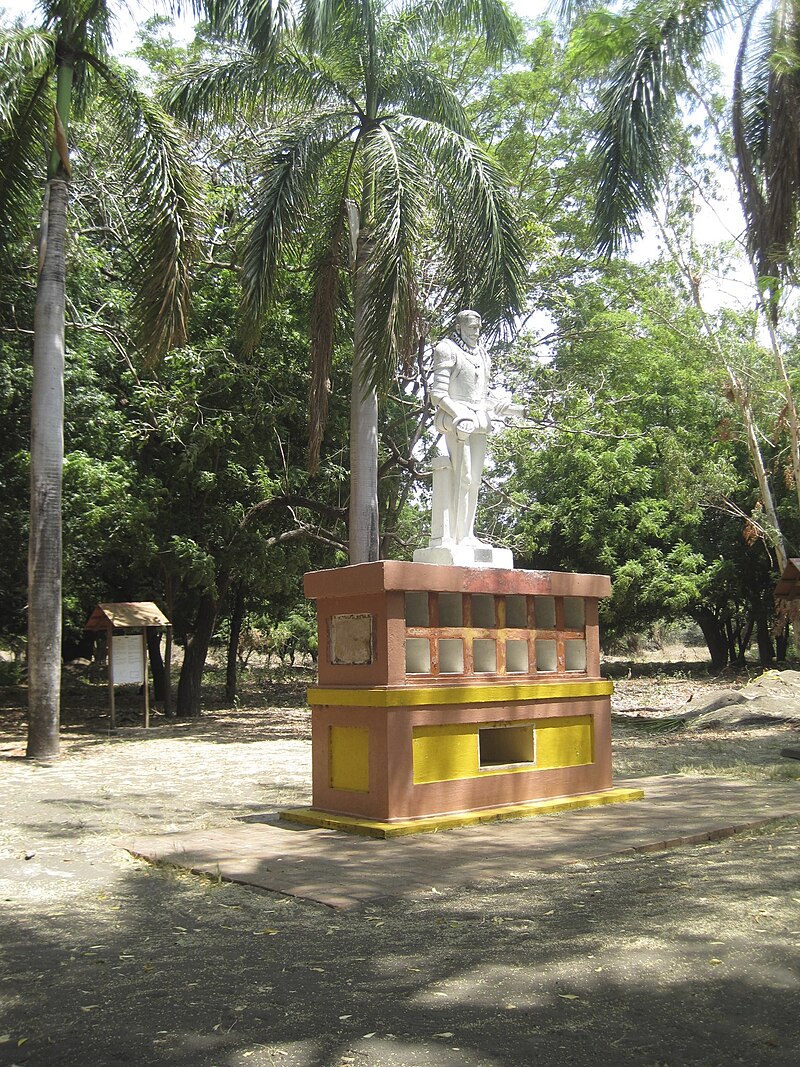
Look now toward the southern wall of the ruined complex where a restored burial structure stands with a dedicated memorial monument erected above it. …
05 Casa de la Fundición / La Fortaleza
This site served as the financial core of Spanish imperial conquest, where stolen gold and silver from across the region were melted down into metal ingots to fill royal chests sent to Spain.
Cast your gaze up toward the thick cross sections of the mud walls and look out across the open perimeter boundary facing toward Lake Xolotlan. As you stand in this elevated breeze, imagine the heavy smoke and intense heat that once radiated from this precise location out toward the lake waters. …
06 Imabite Indigenous Settlement Area
Long before the first Spanish ship arrived, a thriving native city of fifteen thousand Imabite residents flourished on this very soil, trading volcanic glass across distant regions in Guatemala, El Salvador, and Honduras.
Look down now at the horizontal excavation trenches cut into the ground and observe the fine white sand texture of the pumice soil. …
07 Closing
In the year sixteen ten, following years of terrifying quakes and destructive eruptions from Momotombo volcano, the exhausted citizens gathered in an open town referendum known as a cabildo to make a momentous choice, voting to abandon their ruined city forever and relocate thirty kilometers to the west. Standing here where the thermal lake wind blows across the open ruins, we reflect on the solemn final moments of this short-lived colonial capital. …