 Photo Wikimedia Commons
Contents
History & cultureBY TELLBY8 sections · numbered as on the map01 Orientation
Welcome to the Indian Museum in Kolkata, the oldest and largest repository of history, art, and natural science in Asia. You are standing in the grand colonnaded main courtyard, the beating heart of this magnificent complex. Surrounding you are lofty arched galleries and stone pathways that have echoed with the footsteps of scholars, travelers, and curious minds for over two centuries. As light filters through the heritage arcades, you can feel the deep historical rhythm of an institution bridging the ancient world and modern knowledge. The story of this institution began on January fifteenth, seventeen eighty-four, when Sir William Jones, a renowned philologist and scholar, founded the Asiatic Society of Bengal at the Grand Jury Hall of the Supreme Court in Calcutta. Jones articulated a breathtaking mandate, stating that the bound of investigations would be the geographic limits of Asia, encompassing whatever is performed by man or produced by nature. In seventeen ninety-six, members of the Society formally conceived the idea of a permanent museum to house, preserve, and display their growing collections of man-made artifacts and natural specimens. The dream drew closer to reality in eighteen hundred and eight when the government granted suitable accommodation in the Chowringhee and Park Street area. The decisive milestone occurred on February second, eighteen fourteen, when Doctor Nathaniel Wallich, a visionary Danish botanist who had been captured during the siege of Serampore and later released, addressed a landmark letter to the council of the Asiatic Society. Wallich offered his own extensive botanical collections and proposed the establishment of a museum divided into five distinct sections, namely archaeological, ethnological, technical, geological, and zoological. The council enthusiastically accepted his proposal, appointing Wallich as the Honorary Curator and Superintendent of the Oriental Museum. In eighteen fifteen, William Lloyd Gibbons joined as Joint Secretary, strengthening the museum's organization. The monumental building framing this courtyard was authorized under the First Indian Museum Act of eighteen sixty-six, with its foundation laid in eighteen sixty-seven. Designed by architect W. L. Granville in consultation with experts like Sir Thomas Oldham of the Geological Survey of India, the structure was completed in eighteen seventy-five. Its magnificent colonnades were specifically engineered to provide shade and air circulation against Bengal's tropical humidity, creating a timeless architectural masterpiece. Today, the Indian Museum stands as the ninth oldest museum in the world and the largest in Asia, safeguarding an astounding collection of two point five million artifacts. Recognized as an Institute of National Importance under the Ministry of Culture, Government of India, it comprises six major scientific and cultural sections spread across thirty-five specialized galleries. Our guided journey will lead you through the finest highlights of these collections, beginning with the ancient Bharhut Buddhist sculptures, continuing through Gandhara art, rare coinage, prehistoric fossils, a four-thousand-year-old Egyptian mummy, and vibrant Bengali folk dioramas. Please take your time, step into the shaded colonnades, and prepare to discover two centuries of extraordinary heritage.
02 Bharhut Gallery
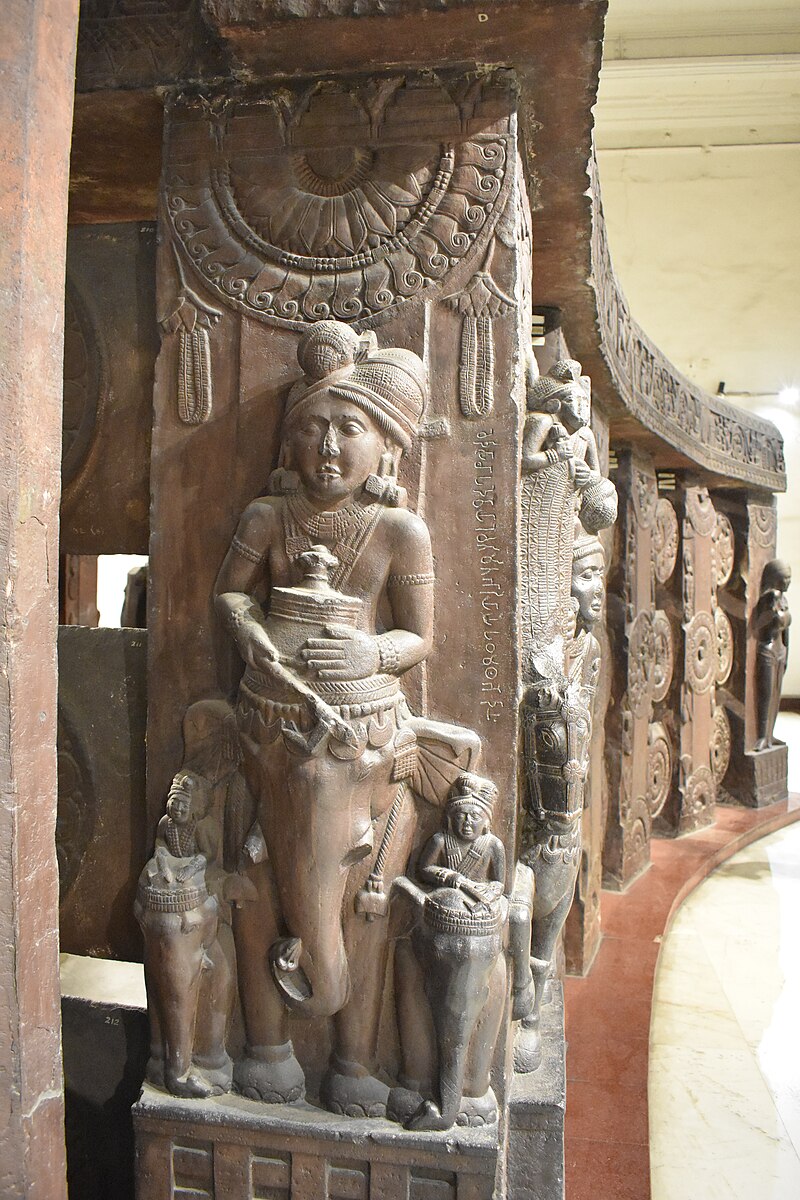
Welcome to the Bharhut Gallery, one of the most revered and artistic spaces within the Indian Museum. As you step into this hall, you are standing face to face with an absolute masterpiece of ancient Indian Buddhist art. Before you stand the complete sandstone railings and gateway, known as a torana, salvaged from the ancient Bharhut Stupa originally located near Satna in Madhya Pradesh. …
03 Gandhara and Archaeological Sculpture Gallery
Welcome to the Gandhara and Archaeological Sculpture Gallery, a magnificent repository celebrating the rich artistic evolution of the Indian subcontinent. As you walk through this gallery, you are surrounded by extraordinary stone sculptures spanning ancient to medieval periods, brought together from prominent historical regions including Bengal, Bihar, and Odisha, as well as the northwestern frontiers of ancient India. …
04 Coin & Currency Vault and Minor Art Gallery
Welcome to the Coin and Currency Vault and Minor Art Gallery, a captivating treasury showcasing thousands of years of economic history, exquisite miniature paintings, and rare archaeological antiquities. As you step into this specialized gallery, you are entering a space where the physical tokens of empire and trade meet the refined craftsmanship of ancient artisans. …
05 Natural History and Fossil Gallery
Welcome to the Natural History and Fossil Gallery, an extraordinary space where the deep history of planet Earth and the marvels of prehistoric life come alive. Your guided walk begins in the four natural history galleries, comprising the Botanical, Insect, Bird, and Mammal galleries. As you navigate these classic halls, you are surrounded by a breathtaking Victorian-era collection of taxidermied animals, articulated skeletons, and geological wonders. …
06 Egyptian Mummy Gallery
Welcome to the Egyptian Mummy Gallery, one of the most enigmatic and deeply atmospheric spaces within the Indian Museum. As you ascend the narrow, creaking teakwood staircase leading up to the mezzanine level, you will notice a distinct change in temperature and ambiance. The air grows noticeably cooler, carrying a subtle vintage scent of cedarwood, aged linen, and historical preservation that transports you back across four millennia. …
07 Bengal Village Diorama and Cultural Halls
Welcome to the Bengal Village Diorama and Cultural Halls, a charming space that offers an immersive window into traditional Bengali rural life, folk culture, and the intellectual legacy of Kolkata. As you enter this hall, you are greeted by the comforting ambient scents of straw, clay, and vintage paper, creating an authentic nostalgic atmosphere that modern digital museums simply cannot replicate. …
08 Closing
Dear visitors, you have now completed your journey through the Indian Museum in Kolkata, the oldest and largest institution of its kind in Asia. As you walk back through the main colonnaded courtyard toward the exit, we hope the extraordinary artifacts and stories you encountered today leave a lasting impression on your heart and mind. …