Contents
History & cultureBY TELLBY7 sections · numbered as on the map01 Orientation
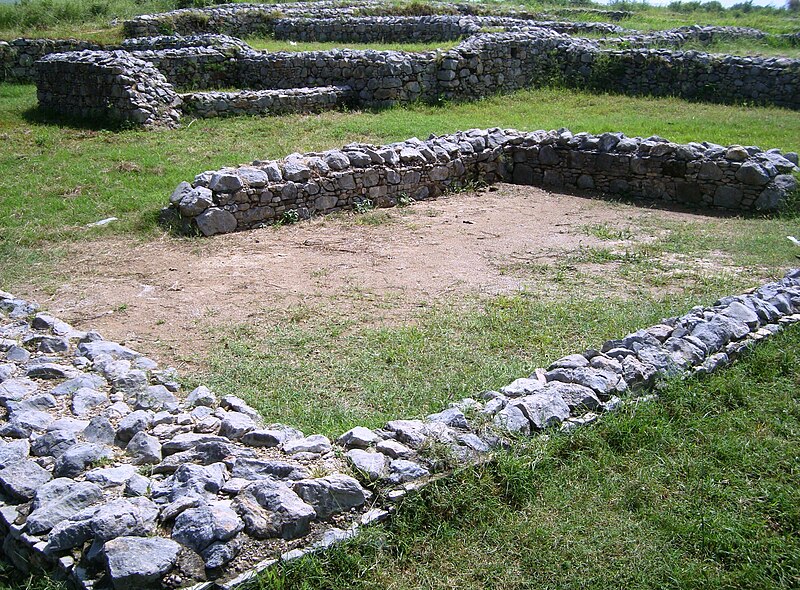
Welcome to the ancient archaeological site of Sirkap, one of the most celebrated and historically significant urban centers forming the UNESCO World Heritage Site of Taxila. Inscribed by UNESCO for its exceptional illustration of urban evolution and vibrant cultural exchange along the Silk Road, Sirkap represents an extraordinary historical crossroads where Western Hellenistic traditions and Eastern Asian philosophies seamlessly converged. Over four continuous centuries of active occupation, this flourishing valley served as an indispensable hub for international merchants, diplomatic envoys, devout pilgrims, and scholarly travelers who journeyed across formidable mountain passes to exchange luxury trade goods, religious doctrines, and revolutionary artistic concepts.
The intriguing local name Sirkap carries a fascinating folk origin deeply rooted in the ancient legendary tale of Raja Rasalu and the Seven Demons. According to traditional folklore preserved across generations in Punjab, a heroic prince named Raja Rasalu established his royal court at this site after valiantly vanquishing seven malevolent demons who had long terrorized the surrounding valley. This colorful mythical narrative bestows an enchanting oral storytelling tradition upon the silent stone foundations you see today, blending ancient regional folklore with the physical realities of archaeological discovery.
Geographically situated in the Rawalpindi district of Punjab province in Pakistan, Sirkap lies approximately two kilometers from the modern Taxila Museum. The excavated urban remains occupy the extreme western edge of the Hathial hill spur, positioned strategically along the elevated bank opposite ancient Taxila near the gently flowing Tamra stream. This thoughtful geographic orientation provided ancient urban planners with optimal military defenses along elevated ridges while securing a bountiful, year-round water supply essential for sustaining a dense, thriving city population.
As you prepare to explore this ancient planned city, direct your attention straight ahead toward the broad central avenue stretching down the axis of the ruins. This wide main thoroughfare once served as the vibrant commercial and civic spine of Sirkap, flanked on both sides by lively merchant shops, private residential compounds, and monumental religious sanctuaries. Throughout our audio walking tour today, you will encounter circular stupa foundations, elevated temple terraces, multi-cultural architectural reliefs, and ingenious subterranean domestic quarters that vividly illuminate daily life in ancient Gandhara. Please step forward with us onto the central avenue as we begin our immersive journey through Sirkap.
02 Main Entrance & Hippodamian Grid City Walls
Standing at the principal northern entrance of the archaeological site of Sirkap, you are immediately confronted by the extraordinary vision of a classically planned Greek grid city established deep within ancient South Asia. Around one hundred eighty BCE, the Greco-Bactrian king Demetrius the First marched across the Hindu Kush mountains into modern-day Pakistan and founded this monumental planned urban capital. …
03 The Round Stupa
As you walk a short distance further along the broad central avenue of Sirkap, you arrive at the Round Stupa, one of the oldest circular stupa structures identified in the entire Indian subcontinent. This extraordinary archaeological site bears witness both to a catastrophic natural disaster that devastated the city and to the profound religious devotion of its ancient inhabitants. …
04 The Apsidal Temple
Arriving at the northern sector of Sirkap, you are confronted by the monumental Apsidal Temple, raised on an elevated artificial terrace directly facing the central main street. This sanctuary represents the largest religious building in Sirkap, measuring an impressive seventy by forty meters across its stone terrace. …
05 The Double-Headed Eagle Stupa
A short distance past the Apsidal Temple brings you to the Double-Headed Eagle Stupa, one of the most intriguing and celebrated monuments in Sirkap. This remarkable stupa facade represents a breathtaking fusion of four distinct ancient civilizations synthesized into a single harmonious architectural work. …
06 Residential Quarters, Underground Chambers, and Palace
Proceeding past the Double-Headed Eagle Stupa into the northern sector of the site brings you to the residential quarters, stone wells, and the expansive Royal Palace complex of Sirkap. This domestic sector conceals a surprising architectural secret that distinguishes Sirkap from almost any other ancient city on the subcontinent. Viewed from the street outside, these private dwellings appeared to be modest single-story structures. …
07 Closing
Thank you for joining this audio guide tour through the extraordinary archaeological ruins of Sirkap, a crowning jewel of the UNESCO World Heritage Site of Taxila. Founded in the second century BCE by the Greco-Bactrian king Demetrius the First, Sirkap flourished for over four continuous centuries as an unparalleled melting pot of Persian, Greek, Central Asian, and South Asian civilizations. …