Contents
History & cultureBY TELLBY7 sections · numbered as on the map01 Orientation
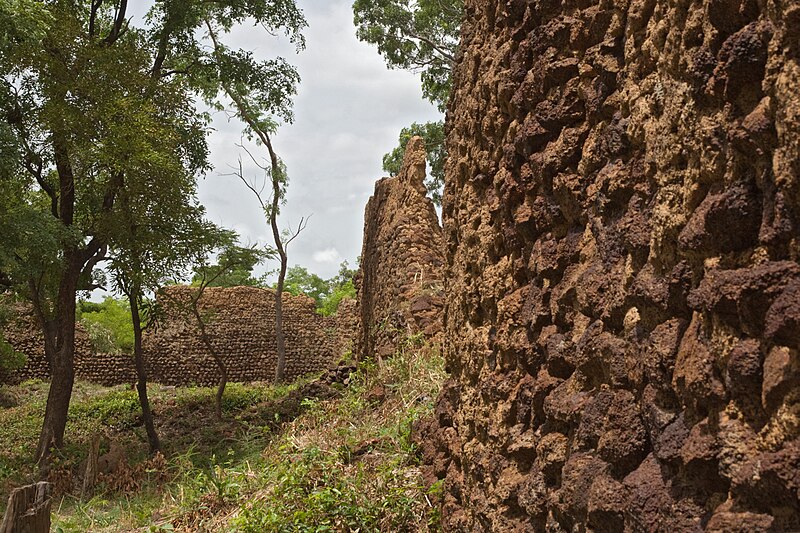
Welcome to the ancient, mystery-laden realm of Loropeni, hidden deep within the lush tree-covered savanna of Poni province in southwestern Burkina Faso, near the national highway connecting Gaoua and Banfora. You are standing near the main entrance of Burkina Faso's very first UNESCO World Heritage site, officially inscribed in two thousand and nine during the thirty-third session of the World Heritage Committee. Extending over a grand quadrangular perimeter that encompasses an interior floor surface of eleven thousand one hundred and thirty square meters at the center of a protective savanna buffer zone covering two hundred and seventy-eight hectares, this extraordinary sanctuary presents the finest and best-preserved example of a medieval stone-fortified settlement in all of West Africa.
This monumental citadel represents the absolute crown jewel of the broader Lobi cultural landscape, an expansive regional archaeological zone measuring one hundred and ninety-three kilometers by ninety-seven kilometers that contains roughly one hundred ancient stone enclosures. Among the ten major fortified citadels scattered throughout this territory, Loropeni stands preeminent in both its architectural scale and structural preservation. During the height of the medieval trans-Saharan trade network between the seventh and seventeenth centuries, this region served as a vital crossroads for the extraction, refining, and commercial distribution of gold. Merchant caravans trekking across the arid expanses of the Sahara Desert from North Africa and the Mediterranean basin journeyed toward southern market centers like Djenne, Timbuktu, and Gao, exchanging precious rock salt, manufactured textiles, copper, and luxury items for the pure gold harvested from local alluvial deposits. Loropeni functioned as a formidable fortified stronghold along these trade arteries, safeguarding precious metal stocks and regulating commercial exchanges across the region.
Yet behind these towering red walls lies an enduring historical enigma that continues to intrigue scholars across the globe. Since French military expeditions first drafted official observations of the ruins in the year nineteen hundred and two, generations of archaeologists, historians, and anthropologists have sought to identify the original builders, establish exact construction timelines, and clarify the full range of functions performed within these walls. Was it a defensive fortress built to resist slave raiders and aggressive rival states, a secure gold storage repository, or a royal capital? While modern scientific research constantly uncovers new evidence, the site retains its captivating moniker as the mysterious ruins of Loropeni. Through this immersive audio guide, we invite you to explore the rich architectural mechanics, archaeological breakthroughs, and living spiritual traditions that define this ancient sanctuary. Please step forward along the marked path as we move closer to examine the towering red outer rampart.
02 The Towering Red Walls
These formidable outer ramparts reach up to six meters in height and span a thickness of nearly one and a half meters at their base, yet they were constructed over a thousand years ago without a single drop of modern cement, wet lime mortar, or conventional defensive arrow slits and battlements. Direct your eyes to the lower base of the red laterite wall standing directly before you at ground level. …
03 Traces of Reoccupation in the South Compartment
Archaeological excavations inside this southern compartment uncovered five distinct layers of original wall plaster preserved on buried masonry faces, proving that this medieval fortress was maintained, abandoned, restored, and reoccupied multiple times across many centuries of turbulent West African history. Cast your eyes down toward the shallow rectangular earth trenches carefully excavated into the floor right in front of you. …
04 Enigmatic Chambers and Bullet-Shaped Masonry
Inside these northern inner chambers, archaeologists discovered laterite stone blocks that were uniquely hand-carved into distinct bullet or shell shapes, a specialized architectural masonry technique found nowhere else in Sub-Saharan Africa. Direct your attention toward the isolated rectangular room enclosure situated within the northern courtyard. …
05 Preserving the Millennium-Old Stone Masonry
Remarkably, comprehensive engineering assessments conducted during the World Heritage nomination process revealed that over eighty percent of these massive structural walls have survived intact for more than a thousand years without total collapse, despite centuries of tropical weathering and the complete absence of modern Portland cement. Direct your gaze to the designated conservation test section of the central partition wall located directly in front of you. …
06 Sacred Traditions and Natural Guardians
The most powerful shield protecting these stone ruins across centuries was not modern heritage legislation, but deep spiritual fear and ancestral taboos that strictly prohibited anyone from cutting a single tree or removing a single stone block from the sanctuary. Look toward the boundary edge where giant tree trunks and thick, intertwining roots wrap tightly around crumbling laterite wall blocks. …
07 Closing
As you complete your journey through the Ruins of Loropeni and walk back toward the main visitor orientation center, take a final moment to look back at the majestic red laterite ramparts rising above the peaceful savanna landscape. Today, you have walked through a monumental site that safeguarded medieval trans-Saharan gold trade routes for centuries, hosted the vibrant cultures of the Lorhon, Koulango, and Gan peoples, and survived intact through a full millennium of natural and human…