 Photo Wikimedia Commons
Contents
History & cultureBY TELLBY7 sections · numbered as on the map01 Orientation
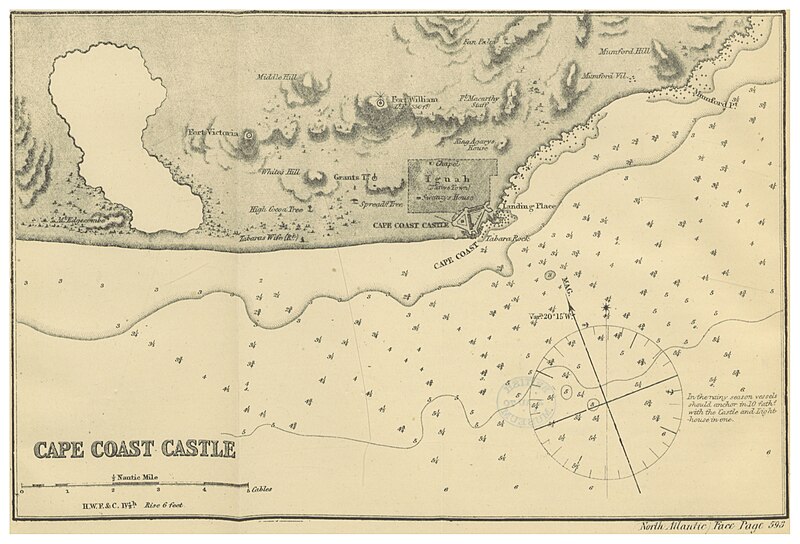
Welcome to Cape Coast Castle, a UNESCO World Heritage site that preserves the poignant history of the transatlantic slave trade. This castle stands as a powerful historical monument testifying to the immense human suffering, tragedy, and enduring human dignity that defined one of the most brutal chapters in world history. Designated as a UNESCO World Heritage site in nineteen ninety one, this location is recognized not merely for its architectural significance as a coastal fortification, but as a living memorial meant to evoke collective reflection and ensure that such historical atrocities are never repeated. The history of this site began when Portuguese traders observed the geography of the local settlement and named it Cabo Corso, which translates to short cape, a name that eventually evolved into Cape Coast. Permanent construction commenced in sixteen fifty three when Swedish forces under Krusenstjerna erected a fortification named Carolusburg in honor of the Swedish monarch. Positioned strategically along the Atlantic shoreline with a sheltered beach ideal for maritime operations, the fort became an object of intense colonial rivalry among European powers seeking economic dominance over coastal trade routes. Following Swedish construction, control of the fort shifted rapidly through captures by the Danes, a local Fetu chief, and the Dutch. Ultimately, a British fleet commanded by Captain Holmes conquered the structure, and by seventeen hundred, the British had extensively renovated and expanded the fort into a formidable castle. Under British administration, the castle served multiple roles, functioning as the West African headquarters for the Committee of Merchants, the official seat of the British governor, and an educational institution, while serving as a primary hub for forced human transportation across the Atlantic Ocean to the New World. Countless individuals were confined within its dark chambers before being shipped away from their homeland. Today, managed by the Ghana Museums and Monuments Board as its regional headquarters and historical museum, the castle educates global visitors about the complex interactions between European traders and local communities. Visitors can view historical exhibits, maps, and artifacts that contextualize these historical events in deep detail. As you begin your journey through these historic grounds today, we invite you to move quietly through the stone courtyards and dark chambers, listening attentively to the solemn echoes of history that resonate throughout this sacred memorial.
02 Central Courtyard and Castle Gates
Our tour of this historic site begins with a chilling and staggering reality: hundreds of years ago, tens of thousands of innocent African men, women, and children passed through this central courtyard every year, forced onto perilous and tragic voyages across the Atlantic Ocean with no hope of return. Please take a moment to look closely at the sturdy stone pavement beneath your feet and the massive stone fortifications that surround this central courtyard like an imposing wall. …
03 Male Slave Dungeon
We begin our exploration of this gloomy subterranean space with a tragic and jarring contrast: just a few feet above this dark male slave dungeon, in the castle's upper chapel, European slave traders were singing Christian hymns and praising God. The appalling realization that while sacred hymns echoed in the chapel above, thousands of suffering human beings were confined in total darkness mere feet below highlights the profound hypocrisy and shocking cruelty of the transatlantic slave trade. …
04 The Condemned Cell
We enter the Condemned Cell encountering a chilling and disturbing truth: for those captive individuals who dared to rebel or resist unjust authority and punishment within the castle, absolute darkness without a single drop of water or ray of light was strictly enforced. Those who refused to submit to the oppressive discipline of the slave masters, or who demanded basic human dignity and clung to their desire for freedom, were cast into this cramped, suffocating solitary cell to face slow,…
05 The Door of No Return
We stand at the Door of No Return confronting a poignant and heartbreaking historical truth: the moment captive individuals passed through this narrow stone doorway, they were forcibly separated forever from their native continent and beloved families. Having endured terrible suffering in the dark underground dungeons of the castle, thousands of captives were marched through this exact doorway to board waiting slave ships anchored off the coast, marking their final farewell to African soil. …
06 Cape Coast Castle Museum and Sea Defenses
We begin our tour of the Castle Museum and upper sea defenses confronting a shocking commercial reality: human lives were directly bartered as trade commodities in exchange for glass beads, whisky bottles, and firearms. The historical practice of treating innocent African men, women, and children as commercial goods in unequal transactions with European merchants vividly demonstrates the absolute inhumanity of the transatlantic slave trade. …
07 Closing
As we conclude our comprehensive tour of Cape Coast Castle today, let us pause to reflect deeply upon the solemn historical footsteps we have traced across these sacred grounds. Engaging with dark history at sites of immense human tragedy is not intended merely to immerse visitors in overwhelming grief or passive sorrow. …