 Photo Wikimedia Commons
Contents
History & cultureBY TELLBY7 sections · numbered as on the map01 Orientation
Welcome to the sacred heart of the Bamoun Kingdom, one of the oldest continuous monarchies in sub-Saharan Africa. You are standing in the grand entrance plaza before an extraordinary cultural sanctuary designed to safeguard over six centuries of living rituals, artistic mastery, and dynastic history that have been officially recognized by UNESCO as intangible cultural heritage of humanity. The monumental structure before you represents the culmination of a century-long dream of preservation. The royal museum tradition in Foumban originally began over a century ago inside the historic royal palace, where a dedicated treasury called Nda Ngu, meaning the house of the kingdom, housed sacred dynastic heirlooms. To properly shelter these expanding treasures, former Sultan King Ibrahim Mbombo Njoya launched the construction of this modern facility, which was completed through international cooperation involving La Route des Chefferies, the World Bank, and UNESCO. Spanning a vast base area of over three thousand square meters, this building is far more than a conventional museum. It is a living physical manifestation of the royal coat of arms of the Bamoun Kingdom, thoughtfully blending ancient oral symbolism with contemporary architectural genius. As you observe the exterior, notice how the design seamlessly integrates the three sacred emblems of the monarchy into a unified sculptural building. The main entrance is framed by the monumental arch of a double brass gong, which represents peace and absolute royal decree. The sweeping two-story main structure forms the winding body of a mythical two-headed snake, symbolizing military triumph and perpetual vigilance across all frontiers. Surrounding and crowning the top of the entire architectural complex is a breathtaking giant tarantula spider spanning over five thousand square meters, which serves as the traditional emblem of wisdom, divinatory insight, and ancestral guidance. Together, these three iconic emblems create an unforgettable presence in the historical capital of Foumban. As you step inside this sanctuary, you are invited to explore a world-class collection containing over twelve thousand five hundred royal treasures and historical artifacts. These priceless objects tell the vibrant story of a kingdom that preserved its sovereign pride and cultural identity through centuries of regional expansion and European contact. From foundational migration sagas to the invention of a unique native alphabet and governance rituals, every gallery offers a profound glimpse into African intellectual genius. Take a moment to absorb the majesty of your surroundings, set a comfortable walking pace, and prepare to embark on an unforgettable journey through the royal history of the Bamoun Kings.
02 The Double Gong: Sound of Peace and Royal Authority
For more than six hundred years, a unique twin brass bell known throughout Central Africa as the double gong has served not merely as a sacred musical instrument, but as the supreme acoustic signal of peace, legal decree, and absolute royal authority across the entire Bamoun Kingdom. Look up at the massive double bell archway framing the outer entrance to this monumental museum structure, noticing how its golden brass contours rise gracefully into the open sky to create an unforgettable…
03 The Two-Headed Snake: Emblem of Military Triumph
The legendary mythical two-headed snake featured so prominently at the heart of the Bamoun royal coat of arms was specifically adopted to honor an invincible warrior king who achieved the extraordinary military feat of defeating two separate invading armies on diametrically opposing regional fronts at the exact same time. Look closely at the sweeping curved walls that form the interior gallery space all around you, designed to mirror the winding serpentine architecture of the building exterior. …
04 The Mandu Yenu: Splendor of Beads and Power
The world-renowned royal throne known as the Mandu Yenu, which translates from the Bamoun language as rich in pearls, is a breathtaking masterpiece sculpted from solid hardwood timber and completely encased in hundreds of thousands of imported European glass beads and cowrie shells. Look at the twin guardian figures standing behind the circular seat holding ritual vessels and the footrest carved with defeated enemies flanked by carved spider motifs on the sides, creating an iconographic…
05 King Njoya: The Visionary Innovator and His Script
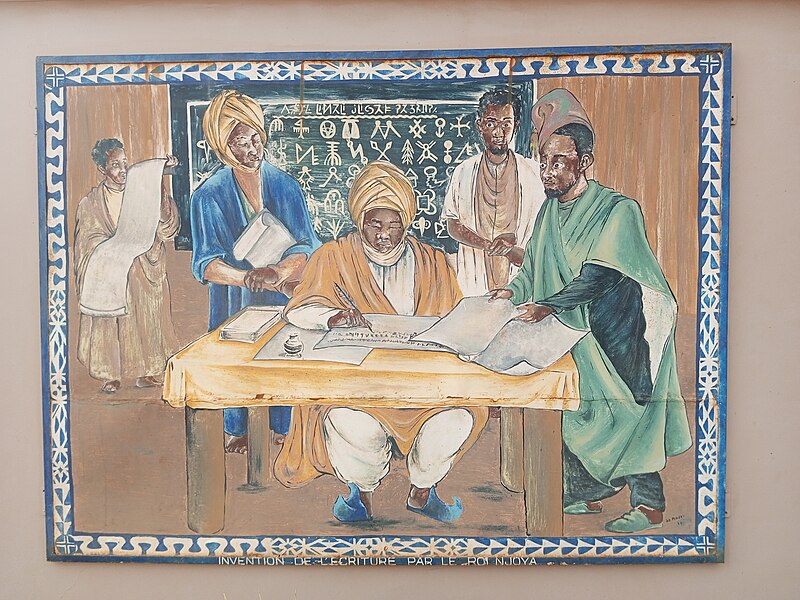
In an extraordinary intellectual triumph unprecedented in African history, King Ibrahim Njoya single-handedly invented a completely original eighty-character writing system called Shu Mom after receiving a prophetic vision in a dream. Raise your eyes to the framed parchment manuscripts displaying the eighty unique characters of the Bamoun alphabet along the main showcase wall directly before you, observing how the elegant graphic symbols flow with artistic precision. …
06 The Nguon Festival: Rituals of Justice and Communion
During the ancient Nguon festival, officially recognized by UNESCO as intangible cultural heritage of humanity, traditional secret priests perform an astonishing ritual of governance accountability in which they temporarily strip the reigning king of his royal attributes and publicly judge his political mistakes before reinstating his sovereign authority. …
07 Closing
Stand upon this panoramic upper viewpoint terrace and look across the royal palace square toward the historic landmark positioned directly before you. Directly across the open plaza stands the majestic red brick Royal Palace of Foumban, constructed in the year nineteen seventeen under the personal architectural vision of King Ibrahim Njoya. …