 Photo Wikimedia Commons
Contents
History & cultureBY TELLBY7 sections · numbered as on the map01 Orientation
Welcome to English Harbour on the picturesque southern coast of Antigua. You are standing at the threshold of an extraordinary maritime cultural landscape designated as a United Nations Educational Scientific and Cultural Organization World Heritage Site. This remarkable venue represents the only continuously operating historic dockyard from the Georgian era anywhere in the world, serving as a magnificent testament to eighteenth century naval engineering and transatlantic history. As you look around this tranquil haven surrounded by deep green hills and calm sheltered waters, it may be hard to imagine that this peaceful bay was once the beating military heart of the British Royal Navy in the Caribbean. During the eighteenth century, European imperial powers fought fiercely for control of the lucrative sugar producing islands of the Eastern Caribbean. To protect their merchant fleets and exert naval dominance, the British Admiralty searched for a natural harbour that could shelter warships from both enemy naval attacks and the destructive tropical hurricanes that sweep through these waters every year. They found the ideal answer in this extraordinary geographic formation. Deep bays carved into the coast, almost completely encircled by high protective limestone ridges and accessible only through a narrow ocean entry channel, made the harbour invisible from the open ocean while offering complete shelter from raging storms. Within this natural sanctuary, military engineers and skilled workers constructed a sophisticated naval complex using local limestone and imported ballast bricks. They adapted traditional British Georgian architecture to suit the intense heat and humidity of the tropical climate, creating a distinctive colonial building style that influenced construction across the Caribbean region. Our walking tour today will guide you through the key landmarks of this historic dockyard and its surrounding defenses over the course of about twenty minutes. We will begin at the outer fort protecting the bay entrance, move through the main storage buildings and official officer quarters where historic exhibits are displayed, explore the royal residence perched on the hillside, and finally reach the commanding heights that provided a panoramic defensive view over the ocean. As you walk along these historic stone paths, you are retracing the steps of sailors, skilled shipwrights, military commanders, and African workers whose labor built and maintained this remarkable naval base.
02 Fort Berkeley at the Harbour Mouth
We are now standing at Fort Berkeley, positioned at the narrow tip of the peninsula guarding the entrance to English Harbour. To understand the extraordinary protective power of this location, consider a remarkable event from the early eighteenth century. In seventeen twenty three, a monstrous hurricane swept across the Caribbean Sea, destroying dozens of war fleets and merchant vessels anchored in open roads and outer ports throughout the region. …
03 The Copper and Lumber Store
Standing before the magnificent Copper and Lumber Store, you are looking at a brilliant example of architectural adaptation in the colonial West Indies. The remarkable fact about this structure is that it was built using red clay bricks brought across the Atlantic Ocean inside British sailing ships as heavy weight ballast. …
04 Dockyard Museum and Officers House
Welcome to the Dockyard Museum, hosted within the elegant former residence of the senior naval officers. A surprising historical detail surrounds Britain famous naval commander Horatio Nelson, who served as second in command at this station during his mid twenties. Although this entire national park bears his name today, Nelson actually despised the intense tropical heat, deadly diseases, and restrictive atmosphere of Antigua. …
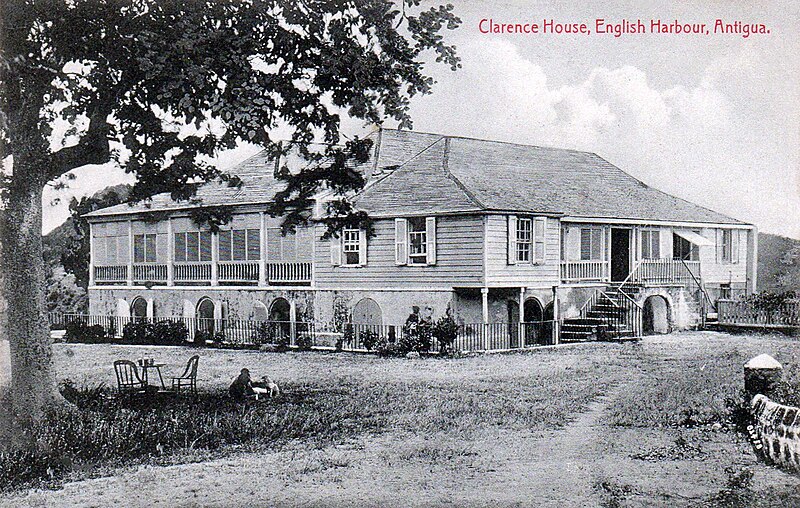
05 Clarence House on the Hillside
Standing before Clarence House on this scenic hillside, you are admiring one of the finest historic residences in the Caribbean. A fascinating fact about this elegant mansion is its long history of hosting royal figures and world leaders. Built in eighteen zero four for the Royal Navy commissioner, the estate was designed to impress visiting dignitaries with its sophisticated comfort. …
06 Shirley Heights Panoramic Lookout
You have now arrived at the breathtaking peak of Shirley Heights, towering five hundred feet above the Caribbean Sea. The most astonishing military truth about this high vantage point is that its unique topography ensured Antigua was never once conquered by foreign powers throughout the entire colonial era. …
07 Closing
As we conclude our audio tour today, we reflect on the inspiring history of preservation that saved this extraordinary cultural landmark. When steam powered iron warships replaced wooden sailing vessels near the end of the nineteenth century, the Royal Navy officially decommissioned the dockyard in eighteen eighty nine. For over six decades, these historic stone buildings and wooden quays sat abandoned, slowly deteriorating under the harsh tropical sun. …