 Photo Wikimedia Commons
Contents
History & cultureBY TELLBY7 sections · numbered as on the map01 Orientation
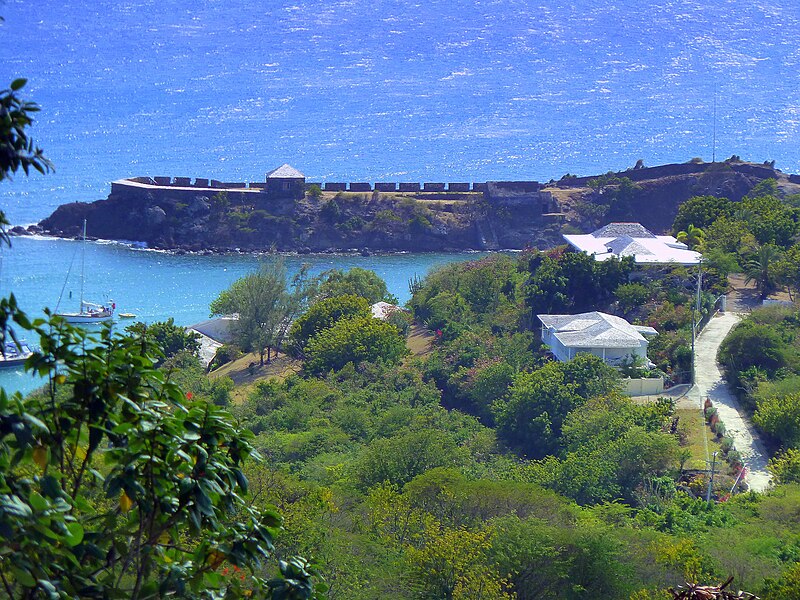
Welcome to Fort Berkeley, the historic guardian standing perpetual watch at the picturesque entrance of English Harbour on the island of Antigua. As you step onto this peaceful coastal path, you are treading upon ground recognized internationally as part of the Antigua Naval Dockyard and Related Archaeological Sites, a designated UNESCO World Heritage Site. This remarkable landscape achieved its prestigious World Heritage inscription because it represents an exceptionally complete and authentic ensemble of eighteenth century naval dockyard infrastructure and coastal fortifications. Unlike many historical military outposts around the globe that have succumbed to urban development or natural decay, the structures here remain astonishingly preserved, offering an unparalleled window into Georgian-era maritime engineering and military strategy in the West Indies. Fort Berkeley itself occupies a dramatic, narrow peninsula that stretches out like a protective arm across the mouth of English Harbour. For well over a century, this naval stronghold played a pivotal role in shielding one of the most vital anchorages in the Eastern Caribbean. English Harbour served as an indispensable sanctuary for the British Royal Navy during the tumultuous Age of Sail, providing a deep, landlocked haven where warships could safely shelter from destructive tropical hurricanes and undergo essential hull careening and maintenance. Because the narrow channel offered the only maritime gateway into the harbor, Fort Berkeley was constructed at this exact strategic point to command direct line of sight over all approaching vessels. Today, as you walk along this winding footway flanked by the crystalline waters of the Caribbean Sea, you will embark on a fascinating journey through time. As we make our way along the peninsula trail, take a moment to absorb the breathtaking scenery surrounding you, from the azure waters crashing against the rugged rocky shores to the sweeping green hills that define this protected bay. You will discover the stories of the skilled local laborers and military architects who labored under the grueling tropical sun to quarry stone, erect stone ramparts, and secure this natural harbor against foreign fleets. Our walking guide will take you step by step through six key historical stops: beginning at the stone quarry, continuing along the divided battlements of the Charles Line, visiting the bombproof powder magazine, examining the massive twenty-four pounder cannon bastion, and discovering the underwater harbor boom chain anchor, before concluding at the scenic lookout point. Please enjoy the refreshing ocean breeze and follow the pathway forward as we approach our first historical feature, the stone quarry.
02 Section 1
Astonishingly, the colossal stone fortification of Fort Berkeley that you see surrounding you today was not constructed using timber or quarried stone imported from distant locations across the sea. Instead, this entire maritime bastion was carved directly out of the very solid coastal bedrock upon which your feet are currently resting. As you stroll along the scenic trail, please pause for a moment and look to the right-hand side of the footpath near the dockyard dinghy wharf. …
03 Section 2
A fierce and acrimonious political dispute between a high-ranking British naval commander and local colonial island authorities created a fascinating architectural anomaly where two completely distinct building styles collide within a single continuous stone wall. Please turn your attention to the long extending defensive wall stretching along the right-hand side of the footpath, known historically as the Charles Line. …
04 Section 3
Despite the scorching tropical climate of Antigua, eighteenth century British sentries stationed at this lonely outpost frequently complained in official logbooks that their night shifts were bitterly cold and miserable. Historical records reveal that guards lamented their meager daily allowance of nine pence, protesting that it was barely enough at such a bleak coastal post to purchase warm spirits to ward off the damp nighttime chill. …
05 Section 4
This immensely heavy iron weapon required a full team of roughly ten highly trained gunners to maneuver, load, and aim, yet astonishingly, it was never fired at an enemy warship in anger throughout its entire operational history. Look directly at the impressive artillery piece pointing out over the waters toward the distant silhouette of Guadeloupe. …
06 Section 5
During dangerous nights or under martial emergency warnings, the narrow maritime entrance to this entire harbor was physically locked shut using a gigantic floating iron boom chain stretched across the open sea. Please look down over the far wall at the extreme outer edge of the rocks where the waves crash against the shore. …
07 Closing
We have now reached the conclusion of our walking audio tour at Fort Berkeley Lookout. Throughout its long and distinguished military history during the turbulent Age of Sail, this coastal bastion stood so formidably constructed, heavily armed, and brilliantly situated that no foreign enemy fleet ever dared to launch a direct assault against English Harbour. …