 Photo Wikimedia Commons
Contents
History & cultureBY TELLBY7 sections · numbered as on the map01 Orientation
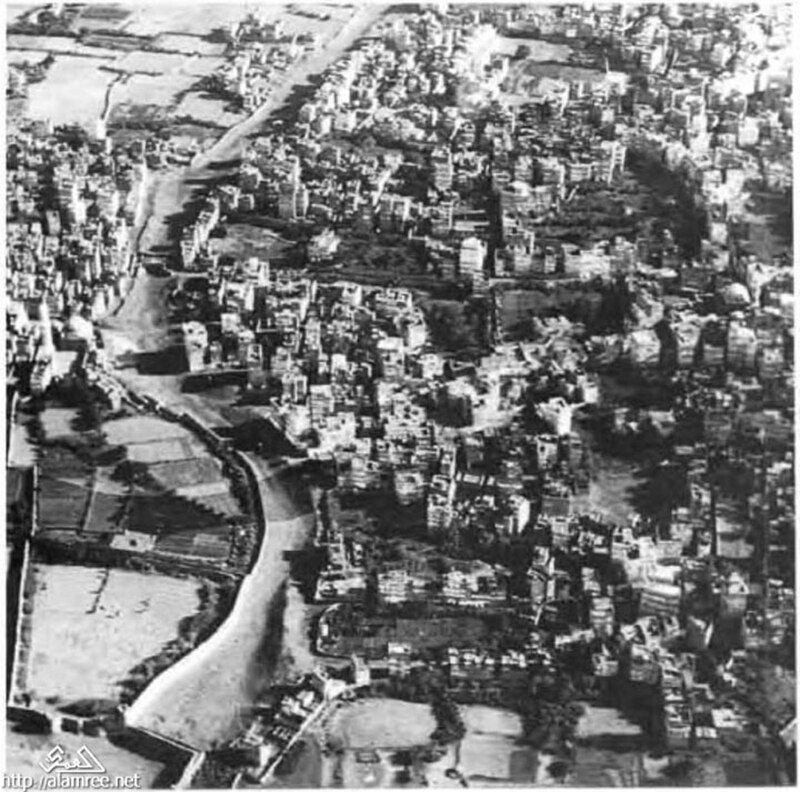
Welcome to the Old City of Sana'a, a breathtaking historical sanctuary nestled in a high mountain valley at an extraordinary altitude of 2,200 meters above sea level. This ancient settlement stands as one of the most remarkable continuously inhabited urban centers on Earth, having been vibrant with human life for more than 2,500 years. As you begin your exploration, you are stepping into a living landscape that served as an official outpost for ancient Yemenite kingdoms as early as the second century BC, eventually flourishing into a major inland trade hub by the first century AD. The historic city's origins trace back even deeper to the legendary Sabaean kingdom, when families from the Hamdan tribe reclaimed the throne from the Himyarites, relocated the royal capital from Marib, and established the magnificent Ghumdan Palace—the oldest partially standing structure in the city. Sana'a seamlessly layers centuries of human civilization, from the architectural remnants of Abyssinian rule between 525 and 575 AD, which marked the peak of Christian influence during the era of Emperor Justinian, to its transformative emergence as an epicenter for the spread of Islam during the seventh century.
Inscribed on the UNESCO World Heritage List in 1986, the Old City of Sana'a is celebrated under Criteria four, five, and six as a uniquely cohesive architectural ensemble. It represents an outstanding example of a traditional Islamic human settlement that harmonizes defensive requirements with dense residential accommodation. Within these ancient fortified precincts, the city encompasses 103 historical mosques, 14 traditional public baths known as hammams, and over 6,000 multi-story tower houses, all constructed prior to the 11th century. These majestic tower houses are true masterpieces of traditional engineering, featuring ground floors of dark volcanic stone topped by multiple levels of rammed earth and fired bricks. The ochre tones of the raw earth blend effortlessly into the surrounding bistre-colored mountains, while exterior facades are strikingly adorned with white gypsum lace patterns, friezes, and geometric motifs.
At the heart of Sana'a's urban fabric lies a fascinating traditional ecological system organized within distinct quarters called hara. Each quarter was centered around a complex featuring a mosque, a public hammam, and an urban agricultural garden known as a maqshama or bustan. In this brilliantly sustainable cycle, gray water from the mosque's ablution pools was funneled directly to irrigate the produce in the agricultural gardens. Simultaneously, household waste dropped through exterior vertical chutes was dried rapidly in the arid mountain air and subsequently burned as fuel to heat the water for the public bathhouses. This harmonious urban ecology demonstrated an extraordinary level of resource efficiency centuries ahead of its time.
Rising elegant minarets pierce the mountain skyline, interspersed with these spacious green gardens and historic caravanserais tucked between densely packed quarters. However, contemporary social transformations, urban pressures, and regional conflicts led to its inclusion on the List of World Heritage in Danger in 2015. Despite these profound challenges, the city remains an enduring testament to human resilience, local craftsmanship, and cultural continuity. As you prepare to walk through its winding alleyways and ancient thoroughfares, immerse yourself in the rich atmosphere of this living museum. Please follow the path forward as we make our way to our first featured landmark, the iconic southern entrance known as Bab Al-Yemen.
02 Bab Al-Yemen: The Historic Gateway
Standing before you is Bab Al-Yemen, meaning the Gate of the Yemen, an awe-inspiring architectural marvel that has served as the iconic southern entryway to the historic city for more than 1,000 years. What makes this gateway truly astonishing is that while time, military conflict, and urban modernization have claimed countless historic fortifications across the Middle East—including six of Sana'a's original seven gates—Bab Al-Yemen stands as the sole fully intact historic gate along the city's…
03 Suq al-Milh: The Ancient Salt Market
Welcome to Suq al-Milh, famously known as the Salt Market, a mesmerizing commercial sanctuary situated at the heart of the Old City. While its name specifically highlights the historic salt trade, you are standing in a vast market complex that has served as the paramount commercial crossroads for trade routes spanning the entire Arabian Peninsula for thousands of years. …
04 Great Mosque of Sana'a: The Sacred Origin
Standing before you is the Great Mosque of Sana'a, known locally as Jami al-Kabir, one of the most revered and historically significant sanctuaries in the entire Islamic world. What makes this sacred site profoundly remarkable is that it was constructed in Year 6 of the Hegira, corresponding to 627 AD, during the actual lifetime of the Prophet Muhammad. …
05 Traditional Tower House: Vertical Clay Skyscrapers
Before you stands the iconic Sana'a traditional tower house, an architectural miracle constructed entirely without modern concrete or steel reinforcement, relying solely on natural stone, clay, rammed earth, and fired bricks to rise several stories high. Known globally as ancient vertical earthen skyscrapers, these multi-story residences typically range from three to eight stories high. …
06 Hotel Dawood: Adaptive Reuse in Action
Standing before you is Hotel Dawood, a triumphant masterclass in adaptive reuse where a centuries-old residential tower house has been flawlessly transformed into a functional modern hotel. What makes this building an architectural marvel is that while many historical structures across expanding urban centers face abandonment or total demolition, Hotel Dawood successfully retains its original historic identity, exterior materials, and structural authenticity. …
07 Closing
As we gather at this breathtaking viewpoint overlooking the rooftops of the Old City of Sana'a, our journey through more than 2,500 years of living history comes to its gentle conclusion. Looking out across the urban skyline, where the setting sun casts a warm golden glow over towering ochre earth houses, sparkling Qamariah windows, soaring minarets, and the lush green sanctuaries of bustan gardens scattered between dense quarters, one cannot help but feel deeply moved by the extraordinary…