 Photo Wikimedia Commons
Contents
History & cultureBY TELLBY7 sections · numbered as on the map01 Orientation
Welcome to the Land of Frankincense, an extraordinary UNESCO World Heritage Site located in the Dhofar Governorate of southern Oman. For thousands of years, this region served as the vital epicenter of the global frankincense trade, connecting the Arabian Peninsula with ancient civilizations across the Mediterranean, Northeast Africa, India, and East Asia. In the year 2000, UNESCO officially inscribed this historical landscape under the designation Frankincense Trail, and later in 2005, it was renamed to the Land of Frankincense to reflect the complete ecological, cultural, and historical system of this unique heritage. What makes this region so remarkable is the harmonious interplay between its natural environment, its distinct monsoon climate, and the enduring human trade networks that flourished here.
While the vast majority of the Arabian Peninsula endures scorching summer heat where temperatures routinely exceed fifty degrees Celsius, Dhofar benefits from a completely different natural phenomenon. Every summer, moisture-laden monsoon winds known locally as the Khareef sweep north from the Indian Ocean. The coastal mountain range of Dhofar acts as a massive physical barrier, catching and concentrating the moisture-heavy clouds while simultaneously blocking the hot, desiccating winds blowing from the vast Rub Al Khali desert to the north. Consequently, the region enjoys a remarkably gentle climate throughout the summer, with temperatures hovering comfortably between twenty and thirty degrees Celsius. Dense mist and soft rains transform the coastal slopes into a green, fertile haven amidst the surrounding arid lands.
This clockwork-like seasonal climate provided ancient human populations with a predictable environment where they could organize hunting, agriculture, and settlement patterns. Even more importantly, the seasonal reversal of winds across the Arabian Sea, shifting predictably between the northeast and southwest, allowed ancient mariners to schedule long-distance maritime trading voyages with guaranteed return dates. The UNESCO site encompasses four primary geographical components: the natural frankincense trees of Wadi Dawkah, the fortified ancient trade harbor of Khor Rori and Samharam, the desert caravan oasis of Shisr, and the medieval maritime metropolis of Al-Baleed. Together with the living cultural traditions preserved by Omani communities, these sites present the complete story of how a precious tree resin transformed global trade and human history. As we begin our journey today, let us step back in time and explore the sacred paths, ancient ports, and timeless heritage of the Land of Frankincense.
02 Wadi Dawkah: The Source of Frankincense
In the middle of a dry desert valley grows a humble tree whose dried sap was once valued far more than pure gold across the ancient world. You are standing inside Wadi Dawkah, a protected UNESCO World Heritage park that preserves thousands of natural Boswellia sacra trees in their native ecological habitat. Look directly in front of you at the smooth, paper-thin bark and low, gnarled branches of this Boswellia sacra tree. …
03 Khor Rori and Samharam: The Ancient Trading Port
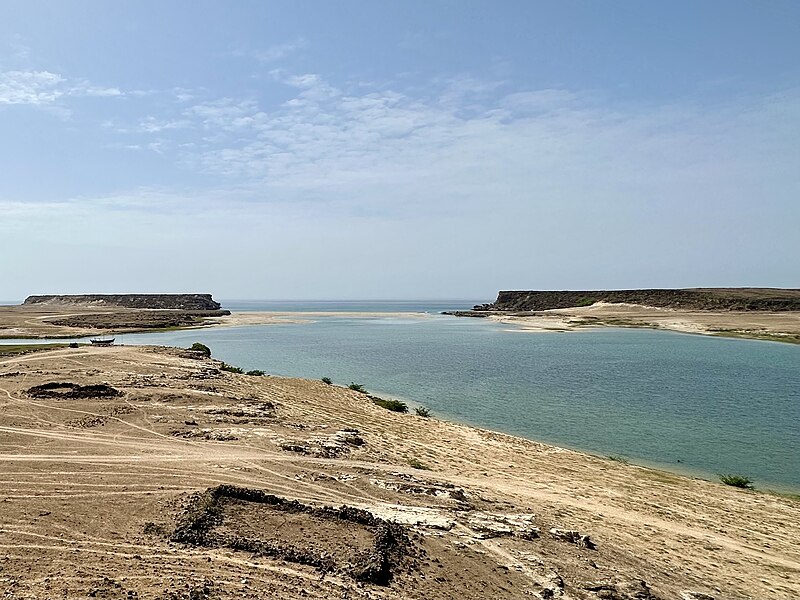
Long before direct maritime trading routes were formally established between the Roman Empire and India, this fortified port perched high on a coastal cliff virtually monopolized the ancient world's frankincense market. You are standing at Khor Rori, the site of the ancient walled trading town known historically as Samharam. …
04 The Oasis of Shisr: The Desert Caravan Stop
Hidden on the edge of the vast interior desert lies a subterranean freshwater well that saved the lives of countless merchant caravans traveling along the ancient Incense Road. Welcome to the archaeological site of Shisr, a vital caravan oasis located on the northern border of Dhofar, where the mountains flatten into dry gravel plains that border the vast Rub Al Khali desert. …
05 Al-Baleed Archaeological Park: The Medieval Port
During the peak of the Middle Ages, thousands of tons of frankincense were exported annually from this grand coastal city to royal courts across China, India, Persia, and Europe. You are standing within the Al-Baleed Archaeological Park, the imposing ruins of the medieval Islamic city that succeeded Samharam as the premier maritime trading capital of Dhofar. Cast your gaze across the expansive rectangular plaza open before you, dominated by the tall stone column bases of the Grand Mosque. …
06 Museum of the Land of Frankincense and Hospitality
In every Omani household today, burning frankincense every morning is far more than a pleasant habit, it is a sacred ritual of welcome, protection, and deep-rooted cultural identity. Welcome to the final exhibit inside the Museum of the Land of Frankincense. Direct your attention to the glass display case standing in front of you, where traditional Omani incense burners filled with dried resin tears are beautifully presented. …
07 Closing
Our journey through the UNESCO World Heritage Site of the Land of Frankincense now comes to a gentle close. From the natural Boswellia sacra trees quietly thriving in the desert valley of Wadi Dawkah to the ancient stone ramparts of Samharam at Khor Rori, from the remote desert oasis well at Shisr to the grand medieval maritime ruins of Al-Baleed, you have witnessed a cultural landscape shaped by thousands of years of human endurance, maritime trade, and ecological harmony. …