Contents
History & cultureBY TELLBY8 sections · numbered as on the map01 Orientation
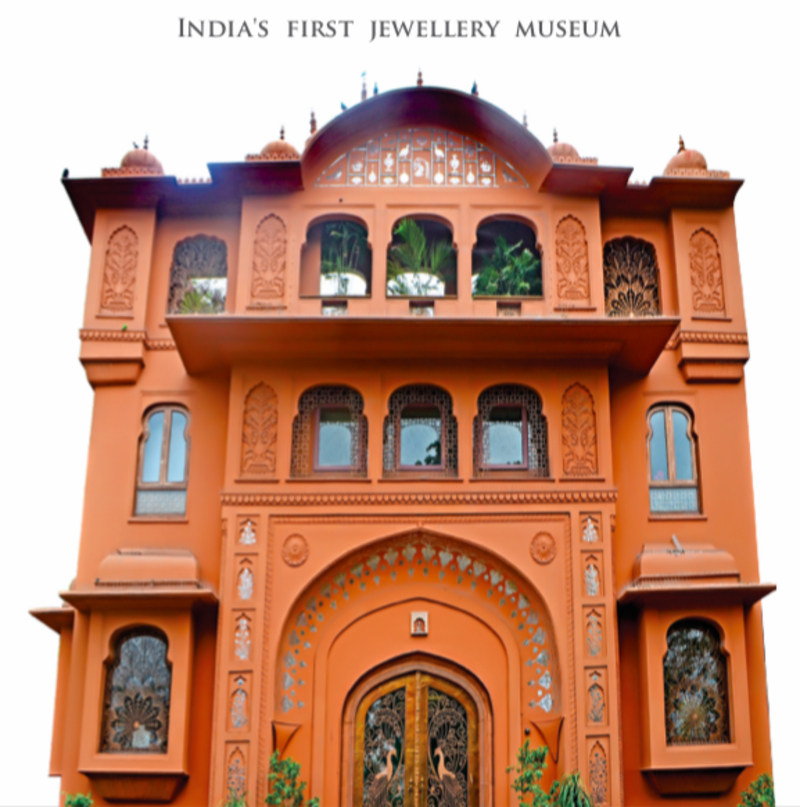
Welcome to the Amrapali Museum located in Jaipur, Rajasthan, India. Situated at Ashok Marg in the C Scheme area of Jaipur, this unique institution stands as the only museum in the entire world completely devoted to the thousand year old tradition of Indian jewelry and decorative arts. Although India possesses one of the richest and most diverse adornment cultures in human history, this museum is the sole dedicated space where the extraordinary depth of Indian jewelry making is preserved, researched, and celebrated in its own right.
This unprecedented collection is the culmination of more than four decades of dedicated effort by its founders, Rajiv Arora and Rajesh Ajmera. Having met as college friends with a shared passion for historic, artistic, and handcrafted objects, both founders grew up in Jaipur, a historical city renowned for its deep engagement with industrial arts. In the nineteenth century, the landmark 1883 Jaipur Exhibition inspired the establishment of the famous Albert Hall Museum in the city, establishing a proud local tradition of celebrating material culture and decorative craftsmanship. Inspired by this legacy during their extensive travels across India, Arora and Ajmera observed that traditional jewelry designs were rapidly vanishing due to changing modern tastes. Precious vintage ornaments were frequently dismantled, and their metals were melted down to create new objects, resulting in the permanent loss of invaluable cultural heritage.
Determined to preserve these traditional aesthetics and salvage India's endangered material culture, they began systematically collecting rare pieces, leading to the founding of the Amrapali Jewels brand in 1978. Over forty years, the duo traversed the length and breadth of the Indian subcontinent, traveling from Tamil Nadu to Gujarat, and from Assam to Kerala, acquiring an extraordinary range of tribal, folk, and royal ornaments. Following meticulous documentation and academic research in collaboration with cultural advisory experts, the Amrapali Museum officially opened its doors on January 20, 2018.
Spanning an area of six thousand five hundred square feet, the museum houses a vast reserve of four thousand objects. Spread across two thoughtfully curated levels, over eight hundred exceptional pieces primarily dating from the nineteenth and twentieth centuries are publicly displayed. The remaining thousands of objects are stored in an accessible visual storage facility within the building. As you begin your journey through the ground floor and basement, you will discover how these adornments decorated the human body from head to toe, expressed sacred devotions, and reflected the supreme mastery of Indian goldsmiths and silversmiths. Please enjoy this immersive exploration into the living cultural soul of India.
02 Entrance Hall and the Silver Jain Chariot
As you step into the entrance hall of the Amrapali Museum, you are immediately greeted by one of the most striking and magnificent artifacts in the collection. Positioned at the center of the entrance is a massive, highly detailed silver chariot dating from the mid twentieth century. Originating from the state of Gujarat in western India, this extraordinary chariot was used by followers of Jainism during religious processions. …
03 Ground Floor - Head to Face Adornment and Symbolic Language
The ground floor of the museum is organized around the overarching theme of beauty and adornment. This section explores how Indian jewelry served as a visual representation of symbolic language, deeply entwined with rites of passage, cultural identity, and spiritual beliefs. In Indian traditional thought, ornaments worn on the body were far more than superficial decorations. …
04 Ground Floor - Body Ornaments and Tribal Silver
Continuing along the ground floor, you arrive at the vibrant display dedicated to body ornaments and tribal silver jewelry. In India, the practice of embellishing the human body extends seamlessly from head to toe, encompassing an infinite repertoire of forms. Beyond head and facial jewelry, this section highlights intricate torso, waist, arm, leg, and toe ornaments that played crucial roles in daily life and ceremonial celebrations across diverse Indian communities. …
05 Ground Floor - Sacred Temple Jewels and Royal Gold
The final zone on the ground floor houses an awe inspiring gallery dedicated to sacred temple jewels, royal gold ornaments, distinguished men's jewelry, and Mughal inspired hookahs. Moving beyond personal daily adornment, this section brings to life the grandeur of India's royal courts during the era of Maharajahs and Maharanis, while also illustrating the deep religious devotion reflected in ornaments created for temple deities. …
06 Basement - Journey of Design and Master Craftsmanship
Descending the stairs into the basement, you enter the captivating Journey of Design gallery. This expansive level is dedicated to demonstrating the boundless creativity and extraordinary technical skills of Indian artisans over centuries. In India, an estimated three million active goldsmiths and silversmiths continue to practice these ancient metalworking traditions. …
07 Basement - Utilitarian Silver, Curios, and Heirloom Textiles
The second section of the basement presents a captivating collection of utilitarian silver objects, personal curios, and heirloom textiles embellished with precious metals. In Indian culture, silver was not confined to body jewelry; it was widely employed to create an incredible range of daily, decorative, and luxury household items that elevated the rituals of daily living.
Among the personal accessories, visitors will find charming containers carved in traditional mango and fish shapes. …
08 Closing
Thank you for visiting the Amrapali Museum and embarking on this extraordinary journey through the jewel culture of India. Today, we have explored how ornaments decorated the body from head to toe, translated complex spiritual metaphors, served as vital financial security for tribal communities, and embodied the supreme craftsmanship of millions of goldsmiths and silversmiths. …