Contents
History & cultureBY TELLBY8 sections · numbered as on the map01 Orientation
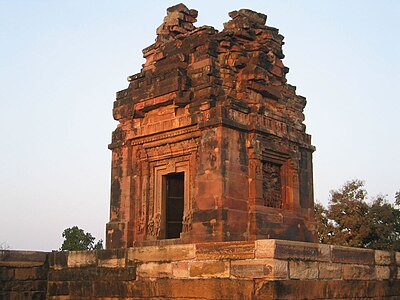
Welcome to the holy and historic precinct of Deogarh, located in the state of Uttar Pradesh in northern India. As you walk along the broad paved stone causeway that climbs gently from the foot of the hill, take a quiet moment to immerse yourself in the serene, reverent atmosphere that envelops this ancient sanctuary. This sacred monument rests near dramatic rocky cliffs overlooking the tranquil waters of the Betwa River, surrounded by a dense jungle canopy that hid these stones from the outside world for centuries. In the early eighteen seventies, around eighteen seventy one, an intrepid explorer named Charles Strahan pushed his way through the dense jungle foliage and unexpectedly encountered the breathtaking ruins of this stone shrine. Overwhelmed by the site, Strahan enthusiastically conveyed his discoveries to the famous archaeologist Alexander Cunningham. Strahan remarked with awe that the jungle was heaviest in the immediate neighborhood of Deogarh, where the Betwa River was overlooked on either bank by rocky cliffs once sacred to Hindu shrines. He noted that these ancient ruins displayed the utmost profusion of the art of sculpture, barely overtopping the surrounding trees. He highlighted one temple of great magnificence with a broad paved causeway leading from the foot of the hill along the face of the rocks, emphasizing its immense archaeological interest and extraordinarily well preserved carvings. Following Strahan initial exploration, Alexander Cunningham published his landmark archaeological survey report in eighteen seventy five, securing Deogarh a permanent place of honor in the annals of world art history. Constructed during the early sixth century CE under the golden age of the Gupta Empire, the Dashavatara Temple represents a vital historical milestone as one of the earliest surviving structural stone temples in India. Dedicated principally to Lord Vishnu, the temple was meticulously assembled using finely dressed sandstone blocks combined with durable masonry brick construction. Walking up this ancient stone pathway toward the main elevation allows you to step directly into the morning dawn of North Indian temple architecture. The calming movement of the Betwa River below, paired with the rustic silence of the surrounding forest, creates an unforgettable setting for reflecting upon the brilliance of Gupta engineering. Every stone course beneath your feet and every sculpted block before you carries the living memory of master craftsmen who transformed natural rock into an eternal residence for the divine. As we prepare to examine the finer structural details and divine reliefs ahead, let the natural beauty and deep historical mystery of Deogarh set the stage for your journey through one of India most treasured sanctuaries.
02 성소와 나가라 슈카라 타워
Please step closer toward the exterior of the central sanctum, known in classic Indian architectural terminology as the garbhagriha, or womb chamber. As you cast your gaze upward toward the upper superstructure of the shrine, you will behold the majestic curvilinear tower known as the Shikhara rising gracefully above the inner sanctum. …
03 판차야타나 배치와 4대 부속 전각
Please move your position toward the corner area of the elevated temple base to examine the ground layout of the complex. As you stand upon this broad stone platform and look across the layout of the site, you will observe the distinctive architectural design known as the Panchayatana plan. The Sanskrit term Panchayatana translates to a five spired or five temple layout, wherein the principal central shrine is surrounded in perfect geometric symmetry by four smaller subsidiary shrines situated…
04 아난타샤야나 비슈누 부조 패널
Please position yourself directly in front of the world famous Anantashayana Vishnu relief panel carved into one of the exterior wall niches of the temple. This magnificent sculpted panel is universally celebrated as a masterpiece of classical Gupta relief carving and one of the absolute high points of ancient Indian art. …
05 가젠드라 목샤 부조 패널
Now please walk around to another prominent sculpted recess on the temple exterior to behold the remarkable Gajendra Moksha relief panel. This captivating composition brings to life one of the most beloved narrative legends in Vaishnava iconography, depicting the divine liberation of the elephant king named Gajendra. As you observe the dramatic details of the panel, notice the profound narrative tension preserved in the hard sandstone carving. …
06 나라-나라야나 부조 패널
Please move your attention to another magnificent carved niche on the exterior of the temple, which presents the serene Nara Narayana relief panel. In striking contrast to the dramatic narrative action displayed in the adjacent panels, this extraordinary composition exudes an aura of supreme stillness, contemplative discipline, and spiritual harmony. …
07 입구 출입문과 신상 및 세속 조각군
Please approach the primary sanctuary doorway and closely observe the intricate relief carvings adorning the entrance frame and surrounding outer wall surfaces. As you examine the layered doorframe jambs, you will notice the famous figures of the river goddesses Ganga and Yamuna sculpted on either side of the lower threshold. …
08 Closing
This concludes our audio guide tour of the extraordinary Dashavatara Temple at Deogarh. Nestled against the serene backdrop of rocky cliffs overlooking the Betwa River and framed by the dense forest canopy, this monument remains an irreplaceable landmark of ancient Indian architectural heritage. Constructed during the early sixth century CE under the golden age of the Gupta Empire, the temple stands as a pioneering milestone of the North Indian Nagara tradition and an early structural…