 Photo Wikimedia Commons
Contents
History & cultureBY TELLBY7 sections · numbered as on the map01 Orientation
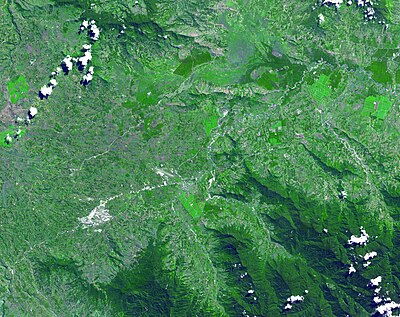
Welcome to the Kuk Early Agricultural Site, located in the beautiful Wahgi Valley of the Western Highlands Province in Papua New Guinea. This is a vast wetland heritage site covering one hundred sixteen hectares at an elevation of fifteen hundred meters above sea level, preserving one of the most vital turning points in human history. Kuk Swamp is one of the very few places on Earth where ancient people independently developed plant cultivation and agricultural techniques without relying on foreign influence or external idea exchange. Between seven thousand and ten thousand years ago, the early inhabitants of this land reclaimed the natural wetlands, established an ingenious system of land management, and achieved an independent agricultural revolution. UNESCO recognized this exceptional universal value and inscribed the property on the World Heritage List.
From where you are currently standing at this orientation point, please cast your gaze broadly across the front and surrounding landscape. The wide open terrain spreading before your eyes was once an ancient lake basin, seamlessly joined with an alluvial fan formed by sediment carried down from the southern hills. Had it not been for the active intervention and dedicated efforts of ancient farmers, this land would have remained an uninhabited and waterlogged swamp. Through exceptional human ingenuity and persistent labor, it was transformed into a productive agricultural sanctuary. The ancient wetland drainage network stretching before you stands as powerful physical testimony to how early humans actively engaged with their natural environment to expand their living space and transform untamed marshes into sustainable fields.
Now, we will walk slowly along the visible line of the ancient drainage network, experiencing firsthand the profound wisdom of human history that spans ten thousand years. This walking path is far more than a simple earthen trail, it is the actual stage of a majestic historical journey where humans transitioned from gathering wild plants to systematically planting, cultivating, and settling the earth. As you walk, imagine the sweat and determination of ancient farmers who held wooden tools to till the waterlogged clay thousands of years ago. Allow yourself to reflect deeply on this timeless achievement. With a peaceful heart and quiet steps, listen closely to the ancient stories whispered by this tranquil landscape as we begin our walking tour toward our first featured interpretation point.
02 Spot 1: The Ancient Lake Basin & Alluvial Fan
Welcome to our first official tour stop. This location marks the geological boundary of the ancient lake basin and alluvial fan, where the foundational hydrology and early transformation of Kuk Swamp originally began. Looking back at the deep geological past of this landscape reveals a truly fascinating environmental evolution. Tens of thousands of years ago, this entire area was a massive lake basin lying beneath calm, open waters. …
03 Spot 2: The Irrigation Ditch Network
Welcome to our second stop, the Artificial Drainage Network site. Here, you can directly observe the astonishing hydraulic engineering developed by ancient farmers to gain complete control over the wetland hydrology. Standing before this field and observing the contours of the land reveals just how masterfully ancient inhabitants managed water flow. …
04 Spot 3: The Banana Cultivation Mounds & Phytolith Site
Welcome to our third stop, the Banana Cultivation Mounds and Phytolith Excavation Site. This very location yielded world-changing archaeobotanical evidence that utterly revolutionized our understanding of global agricultural history. Standing on these cultivation plots and reflecting on the deep history of the earth reveals an extraordinary revelation. …
05 Spot 4: The Taro, Sugarcane, & Yam Cultivation Plots
Welcome to our fourth stop, the Taro, Sugarcane, and Yam Cultivation Plots. Here, you are standing before a remarkable production site where ancient farmers pushed back environmental boundaries and expanded the geographic limits of crop farming. Observing this boundary zone and reflecting on ancient farming ingenuity reveals a truly profound achievement. …
06 Spot 5: Kawelka Village & Traditional Land Management
Welcome to our fifth stop, Kawelka Village and Traditional Land Management. This living heritage space is where ancient history and contemporary indigenous life intersect in perfect harmony. Standing at the entrance of the village and viewing the neat gardens and traditional homes reveals the true essence of a living cultural landscape. …
07 Closing
Welcome to the final stop of our audio tour. Together, we have journeyed across the extraordinary landscape of Kuk Swamp, where ten thousand years of highlander wisdom and continuous land reclamation are deeply etched into the earth. Over ten millennia, countless generations of early inhabitants cleared natural wetlands, excavated intricate drainage canals, and independently pioneered one of the earliest agricultural revolutions in human history. …