 Photo Wikimedia Commons
Contents
History & cultureBY TELLBY8 sections · numbered as on the map01 Orientation
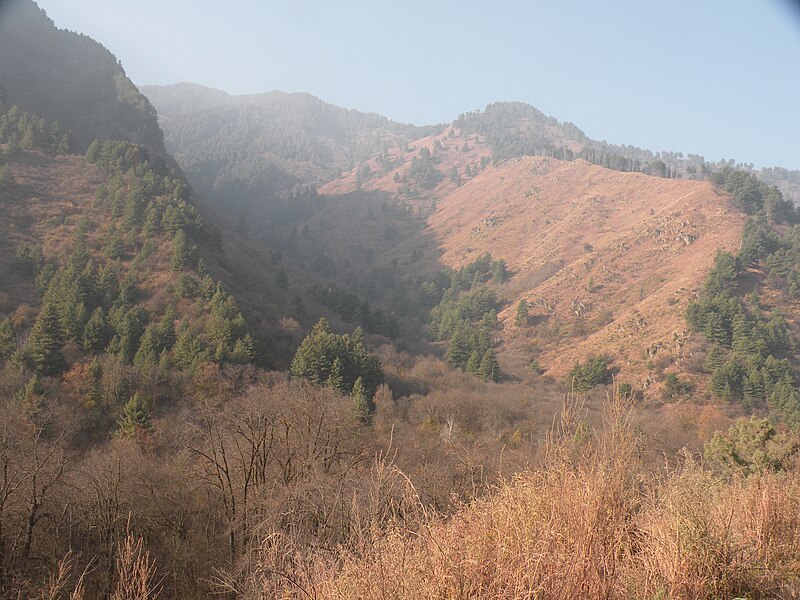
Welcome to Dachigam National Park, located approximately twenty-two kilometers northeast of Srinagar city along the magnificent Zabarwan Range of the western Himalayas, situated on the eastern side of the world-famous Dal Lake. This pristine natural sanctuary is renowned across the globe as the final stronghold of the critically endangered Kashmir stag, locally known as the hangul deer, which represents the sole surviving red deer subspecies in the entire Indian subcontinent. As you stand here at the main gate entrance, located very close to the New Theed general bus stand and positioned directly on either side of Darul Uloom Kousaria, you are entering a landscape rich in both ecological diversity and historic legacy. Nearby lies the picturesque Harwan Lake, adding to the scenic splendor of this region. For visitors, the park remains open daily from five thirty in the morning until six thirty in the evening, with official entry permits issued by the Wildlife Department office in Srinagar. The very name Dachigam translates directly to ten villages in the local Kashmiri language. This unique title was bestowed in solemn memory of the ten historic settlements that existed within these mountain valleys prior to World War One at the beginning of the twentieth century. These villagers were relocated outside the valley to facilitate the creation of the protected watershed and safeguard its pure water sources. The area was first declared a royal protected reserve in nineteen ten under the care of the Maharaja of Jammu and Kashmir. The primary motivation behind this initial conservation initiative was to secure an unpolluted, continuous supply of fresh drinking water for the residents of Srinagar city. Recognizing its extraordinary biological richness, the governing authorities upgraded its status, officially declaring it a National Park in nineteen eighty-one under the administration of the Government of Jammu and Kashmir. Encompassing a vast wilderness of roughly one hundred forty-one square kilometers, the park measures approximately twenty-four kilometers in length and six kilometers in breadth. The terrain exhibits extraordinary altitudinal variations, rising dramatically from a minimum elevation of one thousand six hundred seventy-six meters, or five thousand four hundred ninety-nine feet, up to a lofty maximum elevation of four thousand two hundred sixty-seven meters, or fourteen thousand feet above mean sea level. This drastic topographical rise creates an extraordinary physical landscape, transitioning from gently sloping grasslands and lush meadows to steep gullies, dense coniferous mountain forests, and razor-sharp rocky cliffs. Except along the western boundary where an artificial wire fence line has been constructed, the park is completely surrounded by a continuous chain of towering mountain peaks that form a formidable natural barrier against external encroachments. Experiencing a distinct sub-mediterranean type of climate, Dachigam preserves an exceptional ecological paradise. As we prepare to begin our walking journey, let us honor the heritage of the ten villages whose relocation made this sanctuary possible. Please proceed forward along the path toward the Dagwan River and the Sarband Reservoir.
02 Dagwan River and Sarband Water Supply
We have now arrived at the scenic banks of the Dagwan River and the Sarband Reservoir, an absolutely critical aquatic network flowing through the heart of Dachigam National Park. The crystalline, icy waters of the Dagwan River originate high up in the park interior from the serene glacial alpine heights of Marsar Lake. Flowing down through mountain contours, the river runs past the lower region along the exact course of the only proper paved road built inside the national park grounds. …
03 Lower Dachigam Deciduous Forest and Oak Patch
Welcome to the Oak Patch and the lower deciduous forest of Dachigam National Park. Lower Dachigam encompasses an area of approximately twenty-six square kilometers out of the total one hundred forty-one square kilometers of the national park. Characterized by relatively lower altitudinal levels and a diverse forest flora comprising oak, pine, deodar, and various moist broadleaf deciduous species, this zone serves as a vital ecological hub where complex seasonal animal migrations and intense…
04 Wildlife Observation Trail and Naturalist Shabir
We are now walking along the Wildlife Observation Trail, a pathway heavily associated with the inspiring legacy of Shabir Husain Bhat, who is fondly known by colleagues and visitors as the encyclopedia of Dachigam. Originally from the Nishat area in Srinagar located roughly fifteen kilometers from the park, Shabir first began his working career inside Dachigam as a driver operating the battery-powered electric vehicles designated for tourist transport. …
05 Government Facilities and Human Impact Concerns
We have reached a critical location in the park that illustrates the extensive human impact and anthropogenic disturbances affecting Dachigam National Park. Remarkably, in addition to the wildlife protection department, six other government entities physically occupy premises inside the national park bounds. …
06 Upper Dachigam Alpine Meadows and Mountain Peaks
Welcome to the Upper Dachigam Viewpoint, overlooking the sweeping alpine meadows, rugged mountain peaks, and dramatic topography of the high Himalayas. Upper Dachigam constitutes the vast majority of the national park, encompassing one hundred fifteen square kilometers out of the total one hundred forty-one square kilometers. …
07 Kashmir Hangul Deer Sanctuary and Population Crisis
Welcome to the Kashmir Hangul Deer Conservation Zone, dedicated to the most celebrated and endangered resident of Dachigam National Park. Scientifically classified as Cervus elaphus hanglu Wagner, the hangul stag is the official state animal of Jammu and Kashmir and holds monumental conservation importance as the sole surviving representative of the Red Deer Group in the entire Indian subcontinent. …
08 Closing
Welcome to the concluding stop of our Dachigam National Park audio tour. Having explored the magnificent landscapes, diverse wildlife, and complex environmental challenges of this sanctuary, we are left with a powerful message regarding the absolute urgency of ecological coexistence and conservation action. …