 Photo Wikimedia Commons
Contents
History & cultureBY TELLBY8 sections · numbered as on the map01 Orientation
Welcome to the National Rail Museum, situated along Chandra Gupta Marg in the prestigious Chanakyapuri diplomatic enclave of New Delhi, right beside the Embassy of Bhutan. I am delighted to serve as your audio guide director today, welcoming you to the flagship institution among all thirty four railway museums and heritage parks across India. Celebrated as one of the finest transportation heritage destinations in all of Asia, this sprawling campus greets approximately five hundred thousand visitors every year, each eager to experience the living history of the iron ribbon that bound a subcontinent together. The origins of this institution form a fascinating chapter in industrial preservation. In nineteen sixty two, the visionary rail historian Michael Graham Satow proposed the creation of a comprehensive transport museum. The project gained official momentum in nineteen seventy, culminating on October seventh, nineteen seventy one, when the foundation stone was solemnly laid on this very ground by President Varahagiri Venkata Giri. On February first, nineteen seventy seven, the museum was officially inaugurated under its original title, the Rail Transport Museum, by Minister for Public Transportation Kamlapathi Tripathi. While originally envisioned to encompass road, air, and maritime transit, the overwhelmingly rich legacy of the railways led to a dedicated focus, culminating in its renaming as the National Rail Museum in October nineteen ninety five. Spanning over eleven acres, or roughly four point four hectares, the site layout was meticulously masterplanned by the Ministry of Railways. It seamlessly pairs an elegant octagonal indoor building housing six display galleries with a vast outdoor exhibition ground engineered to simulate the authentic, sensory environment of an operational railway yard. Railways in India represent far more than steel rails and rolling stock. Spanning a rich timeline of over one hundred and sixty years, they reflect engineering triumph, social transformation, and the collective heartbeat of a nation. As you begin your tour, you will trace a sweeping longitudinal arc of human mobility, moving from the nineteenth century coal powered steam engines to modern high speed rail corridors. Step forward with anticipation as we journey through space and time together.
02 Journey Through Time: Octagonal Indoor Gallery
To begin your immersive tour, step onto the cool marble floors of the central octagonal indoor gallery, an architectural masterpiece housing six comprehensive display halls. This gallery offers an unparalleled interpretive walkthrough, breathing life into the technical milestones, human stories, and cultural evolution of Indian Railways through interactive exhibits, rare scale models, historical documents, and exquisite antique railway furniture. …
03 The Legend Alive: Fairy Queen Steam Locomotive
Step out from the indoor gallery into the sunlit expanse of the outdoor yard, and prepare to stand in the presence of an absolute world legend, the Fairy Queen steam locomotive. Resplendent with her polished green boiler jacket, gleaming brass trimmings, and perfectly preserved mechanical pistons, this small yet majestic engine is not merely a static display. She is officially certified as the oldest working steam locomotive in operational service anywhere on planet Earth. …
04 Engineering Marvel: Patiala State Monorail Trainways
Continuing along the outdoor display lines, you will arrive at an exhibit that represents one of the most astonishing mechanical rarities in global transport history, the Patiala State Monorail Trainways. Manufactured in nineteen hundred and seven by the world famous firm Orenstein and Koppel in Berlin, Germany, and imported to India in nineteen hundred and nine, this extraordinary forty ton steam locomotive operated on a route between the town of Bassi and the city of Sirhind Fatehgarh,…
05 Palaces on Wheels: Royal Saloons and Viceregal Dining Car
As you stroll through the central tracks of the outdoor yard, prepare to step into an atmosphere of royal luxury as you approach the collection of historic saloons and coaches, often celebrated as true Palaces on Wheels. This pristine display of eleven royal carriages offers an intimate glimpse into the extravagant lives of India's princely Maharajas and colonial rulers during the nineteenth and early twentieth centuries. …
06 Icons of Innovation: Historic Locomotives and Fire Engine
As you walk along the outer tracks of the yard, you will discover a rich assemblage of specialized locomotives and vintage road vehicles that highlight the astonishing scope of Indian railway engineering. One of the most famous non rail exhibits on the grounds is the John Morris Fire Engine, built in nineteen fourteen by John Morris and Sons of Salford, Manchester, on a Belsize automotive chassis. …
07 Joy Ride and Culinary Journey: Museum Express & The Rails
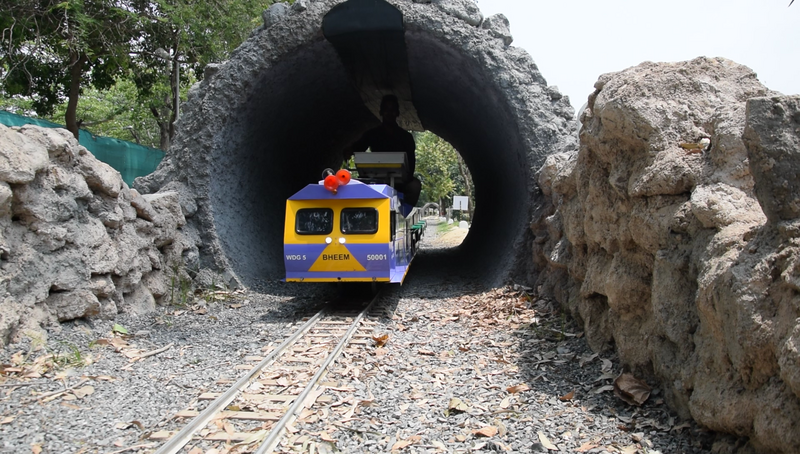
After immersing yourself in the static historical exhibits, it is time to experience the interactive and cheerful side of the National Rail Museum. A highlight for visitors of every generation is taking a Joy Ride aboard the Museum Express mini train. Departing regularly from its dedicated Museum Junction platform, this narrow gauge train circles the expansive outdoor grounds, winding past giant vintage steam locomotives, noble saloons, and shady garden trees. …
08 Closing
As our audio guide tour comes to a serene close, we hope you have deeply enjoyed this unforgettable journey through more than one hundred and sixty years of Indian railway heritage. Museums are never mere repositories for inactive machinery; they are living sanctuaries where we find profound inspiration in the story of human ambition, engineering triumph, and cultural unity. …