 Photo Wikimedia Commons
Contents
History & cultureBY TELLBY8 sections · numbered as on the map01 Orientation
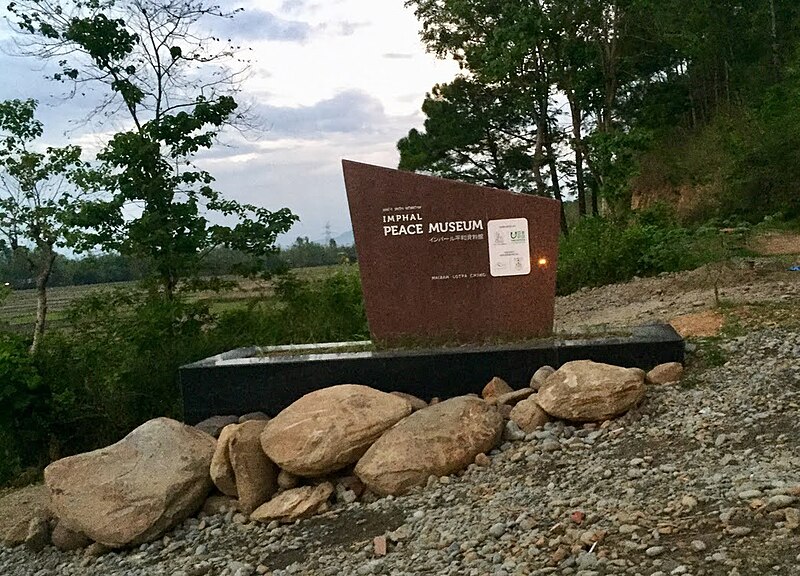
Welcome to the Imphal Peace Museum. As you stand here at the entrance of this sacred institution, you are stepping onto a land deeply etched with the tragic memory of the Battle of Imphal, one of the most fiercely fought campaigns of the Second World War in the Asia Pacific theater. Here, amidst the serene hills of Manipur, thousands of soldiers and innocent civilians lost their lives in a devastating clash of imperial powers. Yet today, this region has transformed its legacy from a destructive battlefield into a beacon of social reconciliation and active peacebuilding. Your presence here today marks the beginning of a profound peace pilgrimage. This journey is not merely a passive walkthrough of historical displays; it is an active, reflective pilgrimage designed to engage your heart, mind, and ethical responsibility. Take a moment to look around the entrance area and absorb the quiet dignity of your surroundings. Behind the peaceful landscape lies a complex layer of historical truth, long marginalized or forgotten by dominant global narratives. Throughout this audio tour, we will guide your steps through sequential exhibits that confront the stark reality of war, examine the material culture of conflict, explore the profound concept of intergenerational trauma, and celebrate the extraordinary resilience of local communities who spearheaded grassroots peace initiatives. Imphal Peace Museum exists to provide an inclusive space where historical truth-telling fosters healing rather than division. By presenting authentic artifacts, personal survivor accounts, and community-led reconciliation projects, the museum challenges us to rethink traditional concepts of war and history. As you prepare to enter the main exhibition gallery, allow yourself to transition from a detached observer to an active pilgrim of peace. Consider how historical memory can be transformed into a living instrument for global harmony and human rights. Let this space inspire you to reflect on the cost of conflict and the paramount value of human life. Step forward with an open mind and a quiet heart as we begin our shared journey through the resilience and hope of Manipur.
02 Zone 1: The Fiercest Battleground of WWII
Welcome to Zone 1, dedicated to historical truth-telling regarding the Battle of Imphal in 1944. As you walk along the main display panels, you are confronted with the stark reality of one of the most violent confrontations of the Asia Pacific theater during World War II. Here, imperial ambitions collided, turning the ancestral lands of Manipur into a devastating war zone. …
03 Zone 2: Material Heritage of Conflict
Step into Zone 2, where the physical relics of war are assembled to tell a tactile story of tragedy and remembrance. Look closely at the glass display cases lining the room. Inside, you will see rusted artillery shells, battered helmets, personal letters, broken mess kits, and worn personal belongings recovered directly from the battlefields surrounding Imphal. …
04 Zone 3: Human Cost and Healing Intergenerational Trauma
Welcome to Zone 3, a space dedicated to understanding the human cost of war and breaking the cycle of conflict-related intergenerational trauma. Research in peace studies demonstrates that the psychological impact of violent conflict does not terminate when hostilities officially cease. The trauma experienced by survivors, including learned silence, hypervigilance, and emotional detachment, is transmitted implicitly and explicitly across generations. …
05 Zone 4: Community-Led Peacebuilding Initiatives
Welcome to Zone 4, which highlights the inspiring history of community-led peacebuilding initiatives in Manipur. In the aftermath of catastrophic conflict, true reconciliation cannot be imposed from above; it must emerge organically from the grassroots level. This gallery demonstrates how the civil society of Manipur took control of its destiny by organizing localized peacebuilding processes to bridge deep ethnic, religious, and political divides. …
06 Zone 5: Fostering a Culture of Peace Through Art and Education
Welcome to Zone 5, a vibrant exhibit space dedicated to peace education and artistic expression. Art serves as a universal language capable of transcending cultural boundaries, provoking empathy, and dismantling hatred. In this room, we celebrate how creative education fosters a sustainable culture of peace among younger generations. A central feature of this zone is the documentation of the global Kid's Guernica project. …
07 Zone 6: Global Solidarity and Museums for Peace
Welcome to Zone 6, which highlights global solidarity and the International Network of Museums for Peace, known as INMP. No single community can build peace in isolation. True, lasting security requires international cooperation, shared memory, and mutual support among peace institutions worldwide. As you explore the global network map and collaborative exhibit displays in this gallery, you will see how Imphal Peace Museum connects its local history to a vast worldwide movement. …
08 Closing
You have completed your tour of the Imphal Peace Museum. We extend our deepest gratitude to you for undertaking this meaningful peace pilgrimage. Today, your steps have carried you from the brutal memory of the 1944 Asia Pacific battleground through the material heritage of conflict, the healing of intergenerational trauma, grassroots community initiatives, and the inspiring scope of global solidarity. The history and artifacts preserved within these walls are not static relics of a bygone era. …