 Photo Wikimedia Commons
Contents
History & cultureBY TELLBY7 sections · numbered as on the map01 Orientation
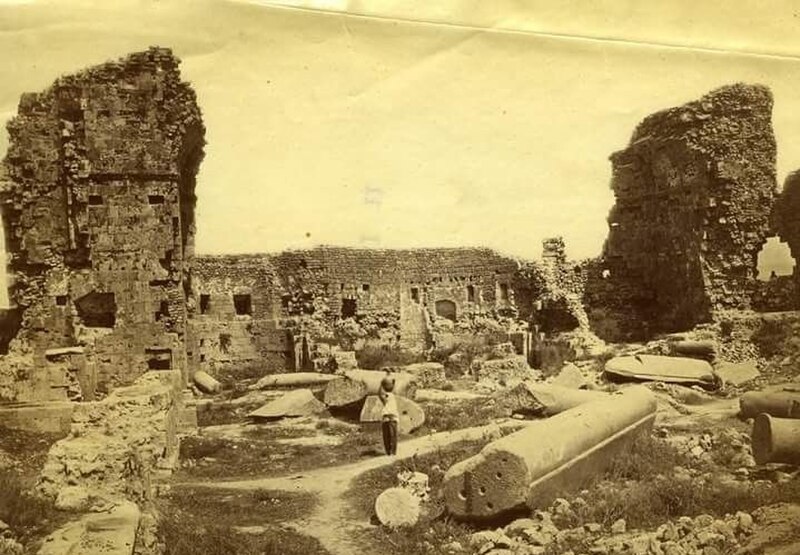
Welcome to the ancient city of Tyre, an extraordinary coastal treasure located in the South Governorate of Lebanon, approximately eighty-three kilometers south of Beirut. According to ancient legend, Tyre was the legendary site where the precious purple dye reserved exclusively for royalty and nobility was first discovered. As early as the fifth century before the Common Era, when the famous historian Herodotus visited this island metropolis, Tyre was celebrated as one of the oldest and most formidable powers in the ancient world. Through their legendary maritime mastery and extensive trade networks, the Phoenicians of Tyre navigated across the Mediterranean Sea to establish prosperous overseas colonies, including Cadiz and Carthage, thereby maintaining an absolute monopoly over maritime commerce. Tyre was directly linked to monumental milestones in human history, from supplying materials and skilled master artisans for the construction of Solomon Temple in Jerusalem under King Hiram, to enduring the epic siege by Alexander the Great, flourishing as a grand Roman metropolis, and later standing as a crucial frontline stronghold during the Crusades. Today, Tyre is recognized as a UNESCO World Heritage site, preserving these overlapping layers of ancient civilizations. We are standing before the evocative stone ruins of the Cathedral of the Holy Cross, a monumental Latin ecclesiastical structure constructed in eleven twenty-nine under the rule of William the First of Tyre upon the foundations of an earlier Byzantine basilica. Situated within the vibrant Venetian quarter, this cathedral grew to become one of the largest, most prestigious, and spiritually significant church edifices within the entire Crusader Kingdom of Jerusalem. Although severe earthquakes, centuries of exposure, and dramatic military conflicts eventually reduced its vaulted superstructures to ashlar ruins and ground foundations, the remaining walls still echo with profound tales of royal coronations, sacred burials, and groundbreaking architectural evolution. Our guided walking tour is systematically arranged along a five-spot spatial route designed to navigate you through the historic footprint of the cathedral. We will begin at the West Portal base, explore the triple-apsed sanctuary built in the Syrian taste, examine the central high altar platform where the Kings and Queens of Jerusalem were crowned, investigate the elusive burial quadrant associated with Holy Roman Emperor Frederick Barbarossa, and conclude near the cracked outer perimeter walls destroyed after the fall of Outremer. Please watch your step on the uneven stone flooring and proceed with care as we walk together. Let us now step toward the western entrance to begin our journey into the twelve century Crusader past of Tyre.
02 The West Entrance and Venetian Quarter Footprint
It is a striking and unexpected revelation that the massive Latin cathedral footprint before you was constructed directly over multiple layers of earlier sacred space, creating a dense archaeological stratigraphy of ancient faith. Before this Crusader cathedral was erected, an early Byzantine Christian basilica occupied this exact ground. …
03 Sanctuary Built in the Syrian Taste
When the distinguished eighteenth-century British traveler and scholar Richard Pococke surveyed these ruins in seventeen forty-three, he published a celebrated observation noting that this medieval cathedral in Tyre was built of hewn stone, both within and without, in the Syrian taste, with three naves, each of them ending in a semi-circle. This reference to the Syrian taste specifically designated the prominent eastern projection of three semi-circular apses. …
04 The Coronation Site of Jerusalem Kings
It is a profound and surprising historical fact that after Jerusalem fell to Saladin and the Ayyubid army in eleven eighty-seven, this very Cathedral of the Holy Cross in Tyre rose to become the primary official venue for the coronations of the Kings and Queens of Jerusalem. Stripped of the Holy City itself, the Latin Kingdom re-established its political and spiritual center along the coast at Tyre. …
05 The Mysterious Search for Barbarossa's Remains
A spellbinding and persistent historical mystery surrounds this section of the cathedral: in eleven ninety, the bones of the legendary Holy Roman Emperor Frederick Barbarossa were interred within this sacred site. After the revered emperor drowned in the Saleph River in Asia Minor during the Third Crusade, his remains were brought to Tyre and solemnly buried inside the Cathedral of the Holy Cross. …
06 Earthquakes, Battles, and the Final Collapse
The dramatic final chapter of the Cathedral of the Holy Cross is a narrative defined first by natural disaster and ultimately by absolute war. This grand stone cathedral survived the devastating regional Syrian earthquake of twelve hundred and two, which caused structural cracking and masonry damage throughout the Levant. However, the Frankish community repaired and restored their beloved cathedral. …
07 Closing
This concludes our guided audio tour of the Cathedral of the Holy Cross in Tyre. Together, we have journeyed through the multifaceted layers of this Crusader landmark, beginning at the western entrance portal established in eleven twenty-nine, admiring the triple-apsed sanctuary built in the Syrian taste, standing before the high altar platform of royal coronations, exploring the mysterious burial quadrant associated with Emperor Frederick Barbarossa, and inspecting the outer wall ruins…