 Photo Wikimedia Commons
Contents
History & cultureBY TELLBY7 sections · numbered as on the map01 Orientation
Welcome to the Tarxien Temples, one of the most remarkably preserved prehistoric megalithic complexes in the entire Mediterranean region. Standing quietly in the town of Tarxien within the Port region of Malta, this ancient monument has braved thousands of years to convey the mystery of human antiquity. In 1992, this incredible site was officially inscribed as a UNESCO World Heritage Site alongside the other monumental temples across Malta and Gozo, recognized for its exceptional testimony to an island civilization. These ancient stone structures occupy a singular place in human history. Built during the Neolithic period, these temples are significantly older than the Great Pyramids of Giza in Egypt and the stone circle at Stonehenge in Britain. Rather than becoming overwhelmed by technical terms, you can best appreciate this site as humanity's earliest surviving masterpiece of sophisticated stone architecture and refined sculptural art. These stone walls represent the culmination of spiritual devotion and early engineering brilliance.
As you begin your exploration today, you will observe that the Tarxien complex is composed of four distinct, interconnected megalithic structures built side by side over centuries. Upon entering the site, your attention is drawn to the massive white protective tent shelter overhead and the elevated walkway guiding visitors through the ruins. The primary building material used here is globigerina limestone, a soft stone extraordinarily vulnerable to rainwater erosion, harsh solar radiation, and airborne pollutants. Erected specifically to preserve these delicate stone surfaces, the protective canopy creates a comfortable shelter where you can contemplate the ruins in any weather condition. The elevated walkway was engineered to protect the fragile ancient floor surfaces from physical wear while providing an unobstructed view of the overall layout. Taking in the gentle atmosphere as you walk above the ruins promises an unforgettable experience.
Please follow the designated walkway at a measured pace, observing the surviving megalithic walls, delicate relief carvings, and sacred inner chambers. This audio guide will lead you sequentially through five key locations along the path, unpacking the dramatic discovery stories, engineering achievements, and deep cultural meanings associated with each area. Step forward with anticipation and immerse yourself in the living presence of the Neolithic stone carvers who raised these monumental structures nearly five thousand years ago. Listening closely as you walk, you will feel a direct connection to the ancient islanders who once gathered within these sacred enclosures to perform their solemn rituals.
02 Main Entrance and Trilithon Doorway
A local farmer peacefully plowing his agricultural field kept striking massive buried stone blocks beneath the fertile soil with his plow, leading through a fortunate accident to the unearthing of one of the most richly decorated Neolithic sites in human history. Now, please direct your attention straight ahead and look at the imposing stone entrance facade standing proudly at the very beginning of the archaeological site. …
03 South Temple and Colossal Statue
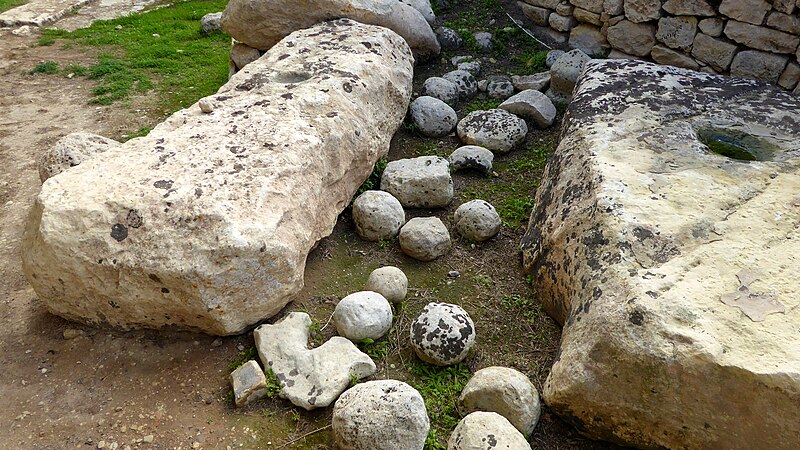
The largest human-shaped stone representation ever discovered from the entire Neolithic period across human history was uncovered right inside this very temple enclosure. Now, please look down toward the right side of the elevated walkway near the base of the ancient limestone wall. There, resting securely upon a heavy stone pedestal, you can observe the lower half of a monumental statue carved in the distinct shape of a wide, pleated skirt with voluptuous legs. …
04 Wall Chamber and Animal Relief Iconography
Hidden entirely inside the massive thickness of the stone wall separating two main temple structures lies a secluded, intimate chamber decorated with extraordinarily detailed high-relief carvings of domestic animals. Now, please direct your gaze directly into the thick stonework positioned between the South Temple and the Central Temple. …
05 Central Temple and Secrets of the Main Altar
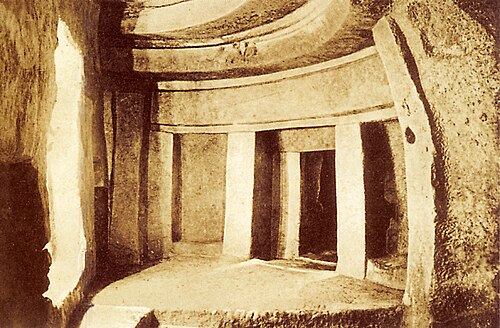
Unlike all other surviving prehistoric temples scattered across the Maltese archipelago, this Central Temple boasts an entirely unique, highly complex layout consisting of six full chambers arranged in three paired apses. Now, step forward along the elevated walkway toward the center of the structure and face the main altar directly. Take a moment to admire the exquisite, flowing running spiral relief patterns intricately carved across the face of this main ceremonial altar. …
06 East Temple and Bronze Age Reuse
A monumental megalithic temple constructed for divine worship was completely transformed centuries later into a cremation cemetery by an entirely different ancient culture. Now, please stand at the easternmost edge of the elevated walkway and look down at the exposed ground surfaces below. Here, you can observe the weathered stone foundation of the ancient East Temple and the clearly stratified layers of soil accumulated over thousands of years. …
07 Closing
As you reach the end of the elevated walkway near the site exit, take a moment to reflect upon the remarkable journey you have taken through five thousand years of human antiquity. The soft globigerina limestone used to construct these megalithic temple walls is extraordinarily susceptible to environmental weathering, rain erosion, and atmospheric pollutants. …