 Photo Wikimedia Commons
Contents
History & cultureBY TELLBY7 sections · numbered as on the map01 Orientation
Welcome to Humor Monastery, a serene spiritual sanctuary nestled in the peaceful and picturesque landscape of northern Moldavia. This sacred site is recognized worldwide because its centuries-old outdoor frescoes have miraculously preserved their striking reddish beauty through harsh rain, heavy snow, and the relentless passage of time. As you step into this quiet courtyard, you are immediately embraced by an atmosphere of deep history, reverent devotion, and timeless artistic grandeur. Humor Monastery represents much more than a traditional religious compound; it stands as a living testament to the resilience, artistic genius, and spiritual identity of the Moldavian people.
The origins of this monastery reflect the dynamic history of the region. Built upon the grounds of an earlier monastic foundation dating from the early fifteenth century, the present church was constructed in the year 1530 through the dedicated patronage of Voivode Petru Rares and his high chancellor, Teodor Bubuiog. Dedicated to the Dormition of the Virgin Mary, the monastery flourished for generations as a vibrant center of faith and community life. However, changing political tides brought severe challenges to this holy sanctuary. In 1786, following the annexation of Bucovina by the Habsburg Empire, imperial authorities officially closed the monastery, forcing the monastic community to depart and leaving the historic buildings silent for generations. For over two centuries, the site fulfilled secondary local functions until it was finally re-established as an active convent for nuns in 1990. Today, the resident nuns maintain the grounds with profound devotion, preserving its peaceful rhythm and welcoming atmosphere for visitors from all around the world.
To help you fully appreciate this remarkable complex, our walking tour will follow a carefully planned route through five key points of interest. We begin our exploration right here at the charming wooden bell tower that marks the entrance. From there, we will walk towards the main church building to admire its innovative open porch, or loggia, which represents the very first open arched arcade in Moldavian ecclesiastical architecture. Next, we will step inside the quiet interior to explore the solemn burial chamber housing the tombs of its noble founders, as well as the secret vault hidden above its vaulted ceiling to protect sacred treasures during times of danger. After experiencing the interior, we will return outside to examine the magnificent south exterior wall, where famous reddish-brown frescoes depict dramatic narrative scenes. Finally, we will complete our visit at the sturdy Vasile Lupu watchtower standing behind the church, reflecting on its military history and enjoying views of the courtyard. Please take a moment to enjoy the peaceful atmosphere as we prepare to begin our visit at the historic wooden bell tower.
02 The Historic Wooden Bell Tower
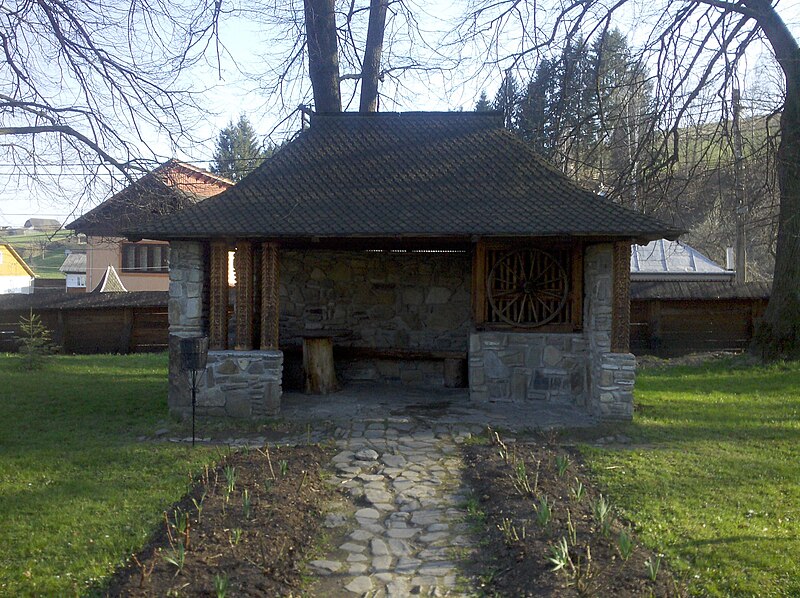
Instead of a grand stone gateway, this place warmly welcomes visitors with a charming wooden bell tower constructed in the nineteenth century. Unlike many other medieval monasteries across Europe that intimidate arriving pilgrims with massive stone fortifications and imposing iron gates, the entrance to Humor Monastery offers an immediate sense of warmth, rustic simplicity, and peaceful embrace. …
03 The Innovative Open Loggia
Because this church was founded by a high-ranking court official rather than a ruling king, it was not permitted to feature a traditional steeple atop its roof, yet it introduced the very first open arched loggia in Moldavian architecture. In medieval Moldavia, ecclesiastical architectural traditions strictly dictated that only royal or princely sponsors could construct churches with high stone towers or steeples rising above the main nave. …
04 The Tomb Chamber and Secret Vault
Deep inside the interior of the church lies a secret vault concealed above a double ceiling, constructed specifically to hide and safeguard the monastery's most precious treasures during enemy invasions. As you move from the brightly lit porch into this quiet, stone-walled chamber, known as the burial room or gropnita, the atmosphere becomes instantly solemn and reflective. …
05 The Red-Toned Exterior Frescoes
Having endured nearly five hundred years of wind, rain, and snow, the master artist responsible for these exterior frescoes secretly painted his own face onto a brave knight hurling a lance at the invading enemy forces. Standing on the southern lawn of the monastery courtyard and looking up at the grand exterior wall of the church, visitors are instantly spellbound by the warm, earthy reddish-brown tones that dominate the painted surface. …
06 The Fortified Vasile Lupu Tower
Standing exactly twenty meters behind the main church building, this three-story stone watchtower features internal staircases so extremely narrow that only one person can pass through them at a single time. Positioned in the northeastern area of the monastery compound, the Vasile Lupu watchtower presents a striking contrast to the gentle, spiritual aesthetic of the painted church, serving as a powerful reminder of the turbulent military history of medieval Moldavia. …
07 Closing
Standing in the center of the monastery courtyard and looking back over the paths we have walked today, a sense of profound warmth, reverence, and timeless tranquility settles deep within the heart. From our first steps beneath the rustic nineteenth-century wooden bell tower to the sunlit arches of Moldavia's first open loggia, through the solemn burial chamber with its hidden secret vault, along the radiant reddish-brown exterior frescoes, and finally to the sturdy Vasile Lupu watchtower, our…