 Photo Wikimedia Commons
Contents
History & cultureBY TELLBY7 sections · numbered as on the map01 Orientation
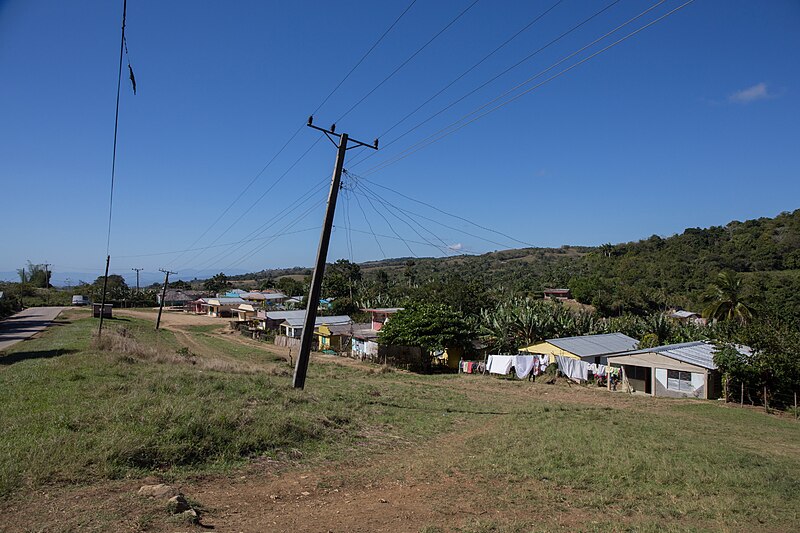
Welcome to Yateras, nestled deep within the rugged mountain ranges of southeastern Cuba. This region forms a vital heartland of the Archaeological Landscape of the First Coffee Plantations in the Southeast of Cuba, inscribed as a UNESCO World Heritage site in the year 2000, and stands as a profound living monument to the enduring resilience of Cuba's indigenous people. For centuries, traditional colonial chronicles and early historians propagated the widespread historiographical myth of total indigenous extinction, reducing native Cubans to an erased memory in order to justify colonial authority and land expropriation. However, as modern archaeological and historical research by scholars such as Jorge Ulloa Hung and Roberto Valcárcel Rojas has decisively demonstrated, native Cubans never vanished. Following the onset of Spanish conquest under Diego Velazquez in 1510, indigenous populations faced unimaginable adversity, including forced labor, brutal exploitation, and devastating European epidemics. Rather than passively surrendering to destruction, native families enacted strategic modes of resistance, movement, and cultural preservation. Escaping the rigid administrative oversight of Spanish towns, migrating indigenous groups moved through established sanctuaries like El Caney and Tiguabos, ultimately establishing permanent mountain settlements deep in the high peaks and secluded valleys of Yateras. Within these mountain refuges, they maintained their ancestral bloodlines, agricultural techniques, architectural traditions, and spiritual identity away from colonial control. The cultural landscape preserved here represents far more than static archaeological artifacts; it is the active physical proof of a resilient population that contributed directly to the formation of modern Cuban identity. Throughout this audio guided tour, you will discover how indigenous communities adapted to high altitude environments, preserved their sacred belief systems, and integrated their deep environmental wisdom into the broader rural history of Cuba. As you walk along these forested paths where mountain wilderness meets historic coffee estate borders, take time to listen to the enduring living memory of the ancestors who shaped this land.
02 Trailhead: Footsteps of the Migrating Indigenous Communities
Contrary to official Spanish colonial reports asserting the complete extinction of native populations, indigenous Cubans did not vanish; instead, they migrated through El Caney and Tiguabos into the deep mountain sanctuaries of Yateras, maintaining independent and resilient communities across generations. Please direct your gaze to the left side of the trailhead, where dense wild vegetation frames an ancient, moss-covered cobblestone pathway stretching into the forest. …
03 Barajagua Lookout: The Legend of the Virgin and Syncretic Faith
The sacred image of the Virgin of Caridad, which ultimately became the supreme spiritual symbol of Cuba, was in fact rescued from the waters of Nipe Bay by two indigenous brothers and a young black boy, who brought it directly to the indigenous spiritual sanctuary of Barajagua. Raise your eyes and look out across the sweeping mountain ridges and deep, verdant valleys stretching across the horizon from this elevated viewpoint. …
04 The Cave Entrance: Rituals and Ancestral Spirits
Indigenous Cubans viewed caves not merely as temporary physical shelters from tropical storms, but as sacred spiritual portals inhabited by ancestral cemi spirits and containing protected cultural heritage. Please direct your eyes to the right, where the dark opening of the cave mouth yawns between jagged rock crevices and surrounding jungle foliage. …
05 The Old Courtyard of the Rojas Family: Persistence of Heritage
Even official Spanish colonial administrative files and land court records explicitly acknowledged that the Rojas family lineage in Yateras maintained their pure indigenous descent and traditional cultural practices across multiple centuries. Look down at the flat, open dirt courtyard and homestead foundation stretching beneath your feet at this historic site. …
06 Coffee Plantation Viewpoint: Fusion of Labor and Nature
The extraordinary economic expansion of the coffee plantation landscape in southeastern Cuba relied fundamentally upon the profound environmental knowledge and skilled labor that indigenous mountain communities had perfected over centuries. Look beyond the viewpoint railing at the sloping coffee fields and lush mountain valley stretching beneath the open sky. …
07 Closing
Today, as we walked along the rugged and majestic mountain trails of Yateras, we witnessed the extraordinary cultural legacy and historical truth of the indigenous Cubans who rooted themselves deep within this highland landscape rather than vanishing into extinction. Following the onset of Spanish conquest in 1510 under Diego Velazquez, native populations refused total destruction, migrating strategically through El Caney and Tiguabos into these high mountain sanctuaries to rebuild their…