Contents
History & cultureBY TELLBY8 sections · numbered as on the map01 Orientation
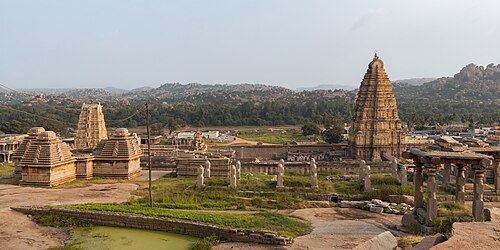
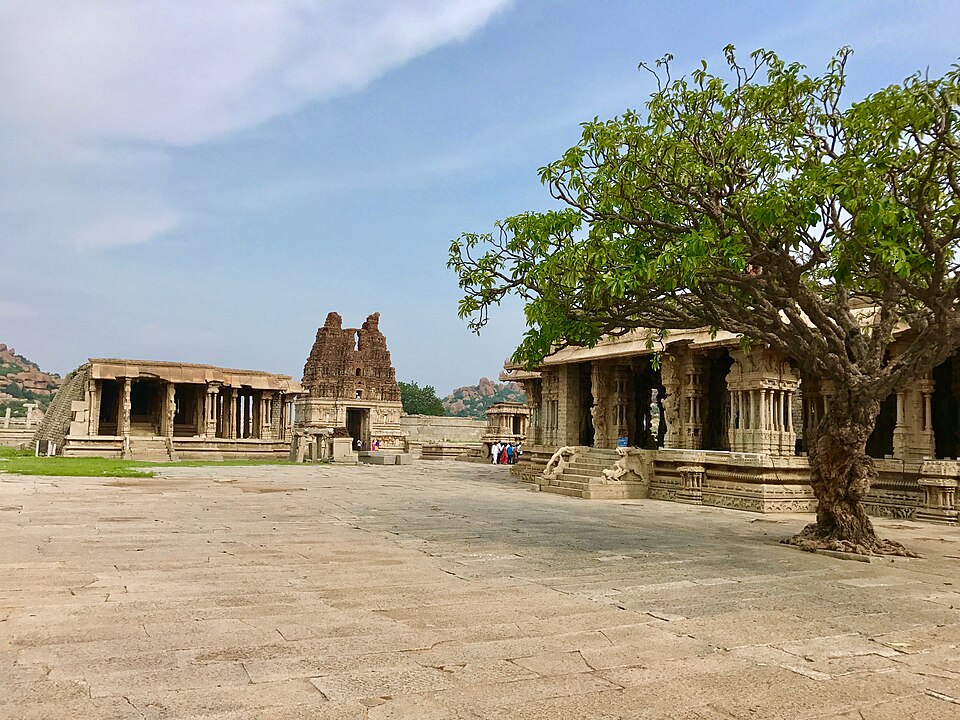
Welcome to the Zanana Enclosure, a historic compound imbued with the timeless elegance and profound heritage of the Vijayanagara Empire. The ancient site of Hampi where you stand today was established as the imperial capital in 1336 by Harihara the First and Bukka the First. For over two centuries, it served as the bustling heart of the last great Hindu empire of South India. Around the year 1500, Hampi Vijayanagara reached its absolute peak of glory, standing as the second largest city in the medieval world after Beijing and arguably the wealthiest metropolis across the Indian subcontinent. Merchants and ambassadors from distant lands, including Persia and Portugal, traveled here to engage in vibrant commerce, marveling at its fortified walls, grand temples, complex aqueducts, and bustling market streets.
However, this magnificent era came to a tragic end in January 1565 during the historic Battle of Talikota. A powerful coalition of Muslim sultanates from the Deccan defeated the Vijayanagara military and beheaded King Aliya Rama Raya on the field. Following their victory, the invading armies entered the defenceless capital, pillaging, looting, and burning its architectural fabric for six whole months. The vast metropolis was reduced to desolate stone ruins and was never rebuilt. For over two centuries, the ruins lay quiet until Scottish Colonel Colin Mackenzie, who became the first Surveyor General of India, systematically surveyed the abandoned site in the year 1800, bringing its forgotten splendor back to light for the modern world.
The title Zanana Enclosure itself carries a fascinating historical story stemming from a nineteenth century translation misnomer. In the early 1880s, English translations of the earlier memoirs written by Abd al Razzaq Samarqandi, a Persian envoy who visited the court of King Devaraya the Second between 1424 and 1446, introduced Islamic terms like zenana to describe several monuments across Hampi. Because the word zenana denotes a secluded residence or private quarters reserved exclusively for royal women, visitors and early researchers assumed that this high walled compound was a secluded palace garden for the royal ladies.
Modern archaeological analysis, however, refutes this long held misconception. Positioned strategically within the northeast section of the Royal Centre, this compound functioned not as an isolated harem, but as an indispensable executive precinct where the emperor met with his most trusted ministers and state councilors to conduct critical governance. As you walk past the high perimeter walls and observe the architectural layout, you will discover how this space seamlessly integrated political authority with syncretic design. Please follow the walking path inside as we explore the captivating stories written into these surviving granite structures.
02 High Perimeter Walls and Eastern Portal
Standing at the perimeter of the Zanana Enclosure, take a moment to closely observe the imposing high walls that encircle this entire historic compound. Constructed from massive granite blocks meticulously carved and fitted together without the use of mortar, these thick fortified boundary walls reflect the defensive architectural traditions of the Vijayanagara Empire. …
03 Balconied Watchtowers of the Enclosure
As you navigate along the inner perimeter of the Zanana Enclosure, look up toward the corners of the massive granite boundary walls, where striking watchtowers rise gracefully above the masonry. The compound features both octagonal and square watchtowers strategically positioned along its fortified perimeter corners. These structures functioned as critical security checkpoints, offering elevated vantage points for sentries tasked with safeguarding the royal administrative precinct. …
04 Lotus Mahal Exterior and Architectural Fusion
Now step into the center of the enclosure courtyard and pause before the stunning exterior facade of the Lotus Mahal, one of the most celebrated architectural treasures in all of Hampi. Also known historically as the Kamal Mahal or Chitrangi Mahal, this two storey pavilion dates back to the height of the Vijayanagara Empire. …
05 Lotus Mahal Interior and Council Chamber
Step closer to examine the interior layout and historic role of the Lotus Mahal. While its graceful and romantic appearance might suggest a mere pleasure pavilion, historical evidence points to a far more significant executive state function. On early British survey maps of the Hampi site dating back to 1799, this very structure was explicitly labeled as the Council Chamber. …
06 Palace Remains and Vaulted Water Structures
As you explore the open courtyard surrounding the Lotus Mahal, take time to examine the intriguing array of structural remains scattered throughout the compound. In addition to the central pavilion, the Zanana Enclosure contains a mysterious vaulted building of uncertain purpose, the stone basements of two major royal palaces, and an elaborate system of water features and stone drainage channels. …
07 Passage to the Elephant Stables
As you approach the eastern edge of the Zanana Enclosure, pause near the passage leading out toward the adjacent Elephant Stables. This pathway forms a direct spatial connection between the internal council precinct and one of Hampi's most grand secular monuments: the Gajashala, or Elephant Stables. The stables consist of eleven massive square chambers aligned in a long north-south row, featuring prominent arched openings and alternating fluted and smooth domes atop its roofline. …
08 Closing
As our guided walk through the Zanana Enclosure comes to a close, take a final quiet look around this peaceful, history-steeped courtyard. Together, we have explored the magnificent Lotus Mahal, the fortified granite perimeter walls, the balconied corner watchtowers, the mysterious vaulted stone building, and the sophisticated ancient hydrological features. …