Contents
History & cultureBY TELLBY8 sections · numbered as on the map01 Orientation
Welcome to the heritage walking audio guide for the Rani Laxmibai Janmasthali and the historic waterfront trails of Varanasi. Located in the heart of the Shivala district, this sacred location marks the birthplace of Rani Laxmibai, the legendary Queen of Jhansi and one of India's most revered freedom fighters. Amidst the ancient, labyrinthine alleys and holy ghats along the Ganges River, this serene memorial stands as a timeless symbol of bravery, sacrifice, and national pride, drawing visitors from across the globe who seek to connect with the roots of Indian independence.
Before we begin our walking tour, please keep a few essential visitor guidelines in mind to ensure a fulfilling experience. The Rani Laxmibai Janmasthali memorial is open to the public every day from 5 am until 10 pm. To fully appreciate the tranquil atmosphere and avoid large tour crowds, visiting early in the morning is highly recommended. Because this site is dedicated to honoring a national hero, visitors are kindly requested to maintain a respectful and contemplative demeanor throughout their stay. Taking time to carefully read the informative display panels and examine the historical visual exhibits will enrich your understanding of her extraordinary legacy. Wearing comfortable walking shoes is also strongly advised, as our itinerary involves exploring both indoor gallery spaces and surrounding historic stone grounds.
Reaching the birthplace memorial is straightforward from various central parts of Varanasi. If you are starting near the famous Kashi Vishwanath Temple, proceed east along Kashi Vishwanath Lane until reaching the intersection at Dashashwamedh Ghat Road. Turn left and walk toward the riverfront, then follow the river bank southward for approximately one kilometer until reaching Shivala Road. A right turn onto Shivala Road will lead you directly toward the memorial grounds. Travelers arriving from Varanasi Junction Railway Station or central urban hubs can conveniently take an auto-rickshaw along Station Road to Shivala Road, a journey taking between 15 to 20 minutes depending on local traffic. If you are starting near Assi Ghat, a cycle-rickshaw can be hired for around 50 to 100 rupees, carrying you through the charming narrow lanes of Shivala. Local buses operating from the main bus stand also drop passengers at the Shivala bus stop, from which the memorial is a pleasant 10-minute walk eastward.
Our walking tour itinerary follows a carefully arranged chronological route along the historic waterfront and inland heritage sites. We will commence at Assi Ghat, experiencing the sacred morning rituals along the Ganges. From there, we will walk to Tulsi Ghat to discover the history of the great poet-saint Tulsi Das and the traditional wrestling practices at the local akhara. Next, we visit Shivala Ghat and enter the tranquil gardens of the Rani Laxmibai Janmasthali memorial, where we will explore the gallery museum celebrating her leadership during the 1857 Revolt. We will then proceed to Chet Singh Ghat to learn about King Chet Singh's rebellion against British rule, before visiting the sacred pool of Lolark Kund and concluding our journey at Harishchandra Ghat. Let us now embark on this inspiring exploration through the living history of Varanasi.
02 Assi Ghat and Morning Aarti
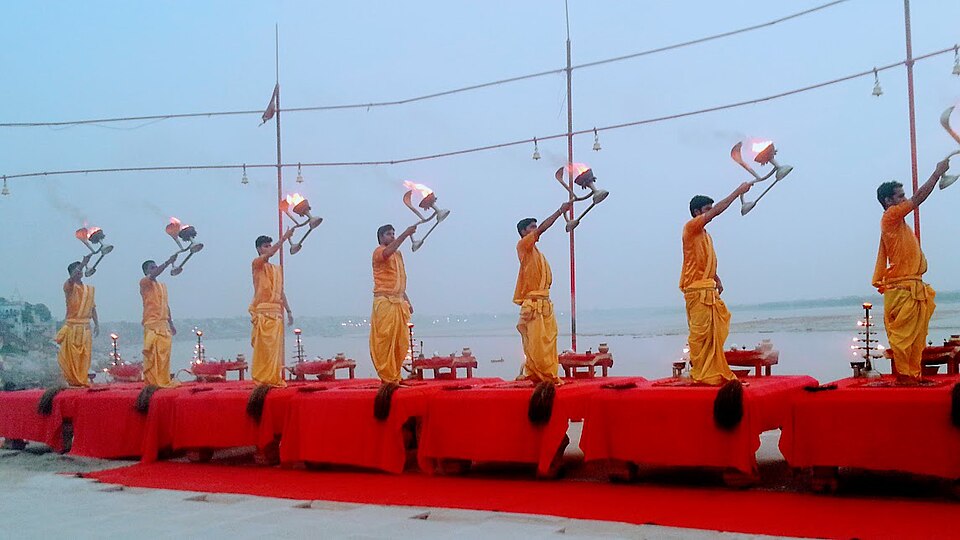
Welcome to Assi Ghat, the inspiring and evocative starting point of our heritage walking tour along the sacred riverfront of Varanasi. Situated at the southernmost reach of the city's celebrated series of steps, Assi Ghat is a vibrant focal point where daily spiritual devotions, ancient customs, and timeless traditions converge along the serene banks of the Ganges River. …
03 Tulsi Ghat and Traditional Akhara
A short and pleasant walk north along the riverfront brings us to our second stop, Tulsi Ghat. This historical site is profoundly tied to the life and enduring legacy of Tulsi Das, one of India's most celebrated poet-saints and influential literary figures. Living during the sixteenth century, Tulsi Das reshaped the spiritual and cultural landscape of northern India by composing the revered epic Ramcharitmanas right here on the banks of the Ganges. …
04 Shivala Ghat and Birthplace Garden Entrance
Continuing north along the sacred riverfront brings us to our third main stop, Shivala Ghat. Constructed during the medieval era by King Balwant Singh, this historic ghat has played a prominent role in the political, military, and cultural history of Varanasi. As its name implies, Shivala Ghat shares a deep and enduring connection with Lord Shiva, serving as a sacred gathering place for Shaivite devotees who come to worship at the numerous shrines dotting the riverfront. …
05 Rani Laxmibai Gallery and Museum
Welcome to the memorial gallery and museum space located directly behind and alongside the equestrian statue at Rani Laxmibai Janmasthali. This dedicated exhibition facility offers visitors an immersive, multi-layered historical journey through the heroic life, tactical leadership, and enduring legacy of the Queen of Jhansi. …
06 Chet Singh Ghat and Fort
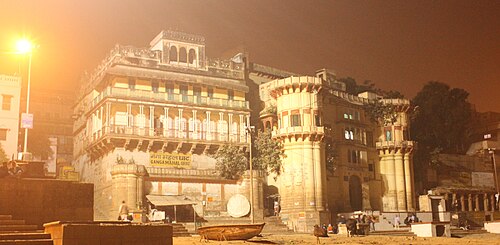
After leaving the memorial garden and returning toward the Ganges waterfront, we arrive at our fifth major destination, Chet Singh Ghat. Among the eighty-four historical ghats that line the western bank of the Ganges in Varanasi, Chet Singh Ghat stands out prominently for its extraordinary fortress-like architecture. …
07 Lolark Kund and Harishchandra Ghat
Welcome to the final segment of our heritage walking tour, encompassing the sacred stepwell pool of Lolark Kund and the solemn, historic Harishchandra Ghat. Stepping inland from the riverbank near Chet Singh Ghat, we first encounter Lolark Kund, an ancient sun pool dedicated specifically to the Sun God, Surya. Recognized as one of the oldest spiritual sites in all of Varanasi, Lolark Kund holds immense religious significance for pilgrims. …
08 Closing
As our heritage walking tour comes to a conclusion, we express our most heartfelt gratitude to you for journeying through the sacred waterfront and historical paths of Varanasi. From the uplifting morning chants of Subah e Banaras at Assi Ghat to the literary legacy of Tulsi Das, the heroic birthplace of Rani Laxmibai in Shivala, the formidable fortress of Chet Singh Ghat, and the solemn spiritual rites of Lolark Kund and Harishchandra Ghat, we have walked together through the living heart of…