Contents
History & cultureBY TELLBY8 sections · numbered as on the map01 Orientation
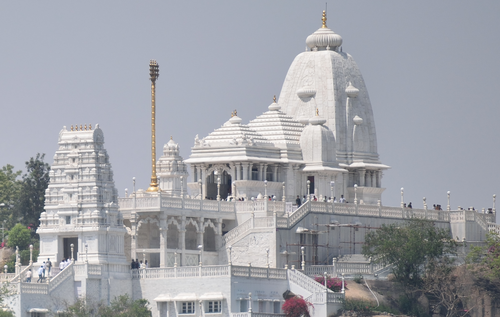
Welcome to Birla Mandir, a sacred sanctuary where pure white elegance meets modern serenity. As you walk along this grand entrance approach, you are stepping away from the bustling noise of the city into a realm of deep tranquility and spiritual reflection. The Birla temples represent an extraordinary cultural and architectural legacy, established across India by the prominent industrialist Birla family, including Baldeo Das Birla and Jugal Kishore Birla, as an integral part of their corporate social responsibility initiatives. Driven by a vision to enrich the spiritual fabric of Indian society and foster universal devotion, the family constructed magnificent white marble temples in major cities across the nation, including New Delhi, Kolkata, Banaras, Bhopal, Bombay, and Hyderabad.
A defining moment in the history of these sacred spaces occurred during the inauguration of the famous Delhi temple in the nineteen thirties. The great leader Mahatma Gandhi was invited to inaugurate the sanctuary, and he agreed to do so on one essential condition. He requested that the temple must be open to people of all castes, classes, and backgrounds without any discrimination whatsoever. The Birla family humbly and wholeheartedly embraced this noble ideal, creating a modern pilgrimage site where the sanctity of Hindu tradition merges seamlessly with universal human equality. Built as the first major Hindu temple in Delhi during the twentieth century colonial era, with its foundation stone laid by Jat Maharaj Udaybhanu Singh and its consecration yagna performed by Swami Keshavanandji, the temple stands as a shining testament to open spiritual devotion.
According to academic research studies from MICA analyzing temples as service sector brand spaces, Birla Mandir offers visitors a uniquely curated sensory and emotional experience. The serene ambience, gentle devotional chanting echoing softly through loudspeakers, the delicate fragrance of camphor, holy basil, and sandalwood, and the cool, impeccably maintained marble floors create an inviting atmosphere of peace and mental clarity. This sanctuary is not merely a place of worship, but a thoughtfully designed space where art, architecture, and modern hospitality principles come together to uplift every visitor. As you begin your tour today, we invite you to take a slow, mindful walk toward the main structure, immersing yourself in the harmony, history, and profound peace of this sacred landmark.
02 High Plinth and Grand Stairs - Nagara Style and Marble Entrance
As you approach the grand staircase leading up to the main structure of Birla Mandir, notice how the entire temple rests gracefully upon a high plinth, elevating the sacred sanctuary above the surrounding landscape. In traditional Hindu temple architecture, the raised plinth serves both a practical and a deeply spiritual purpose. It physically separates the sacred realm from the mundane ground, inviting devotees to ascend step by step while preparing their minds for prayer and contemplation. …
03 Outer Courtyard and Cascading Landscape - Sensory Ambience and Relaxation
As you move into the outer courtyard of Birla Mandir, you enter a thoughtfully designed landscape that offers a refreshing retreat from the surrounding city. The temple grounds feature an artificial landscape complete with miniature mountains and cascading waterfalls that create a soothing, natural environment. Nestled within the gardens are miniature rock temples, intricately carved and charmingly displayed. …
04 Geeta Bhawan - Krishna Scriptures and Mythological Epics
We now direct our attention to the northern wing of the temple complex, where the hall known as Geeta Bhawan is situated. Dedicated specifically to Lord Krishna, Geeta Bhawan serves as a dedicated space for spiritual discourse, study, and reflection on India's most celebrated sacred literature. The founders of Birla Mandir established this hall to preserve and illuminate the immortal wisdom contained within the Bhagavad Gita and the Ramayana, making these classical teachings accessible to…
05 Sanctum Sanctorum and Main Shikhara - Central Shrine and Deities
We now reach the spiritual heart of Birla Mandir: the sanctum sanctorum and the magnificent central shikhara soaring above it. Facing east toward the rising sun, the main shrine is positioned atop a high plinth that emphasizes its architectural dominance. Directly above the inner sanctum, the primary shikhara, or temple spire, reaches an impressive height of one hundred and sixty feet. …
06 Side Shrines and Reliefs - Pluralistic Harmony
As you explore the corridors surrounding the central sanctum, you will encounter a series of auxiliary shrines and elaborate relief carvings that showcase the pluralistic heritage of Indian spiritual traditions. A distinctive feature of Birla Mandir is its non-sectarian philosophy, reflecting the broad, multi-theistic culture of Hinduism. On the left side of the complex, beneath a dedicated dome, is a shrine honoring Goddess Durga, representing divine energy and power. …
07 Hilltop Viewpoint and Deck - Urban Panorama and Sthala Mahima
We now invite you to step onto the hilltop panoramic viewpoint deck at the upper level of the temple complex. Positioned on an elevated hill site, this viewpoint deck offers visitors sweeping vistas of the surrounding city along with refreshing mountain breezes. The wide open view creates a striking visual contrast between the bustling urban expanse below and the calm, white marble sanctuary above, offering guests an invigorating sense of space, freedom, and emotional liberation. …
08 Closing
As you walk toward the exit walkway of Birla Mandir, our audio guide tour comes to a thoughtful conclusion. We hope this journey through the sanctuaries, halls, gardens, and viewpoints has offered you a memorable glimpse into the unique harmony of classical tradition and modern dedication. Built through the vision of the Birla family as a public sanctuary open to all, this temple stands as a testament to the enduring power of faith, art, and universal inclusion. …