Contents
History & cultureBY TELLBY8 sections · numbered as on the map01 Orientation
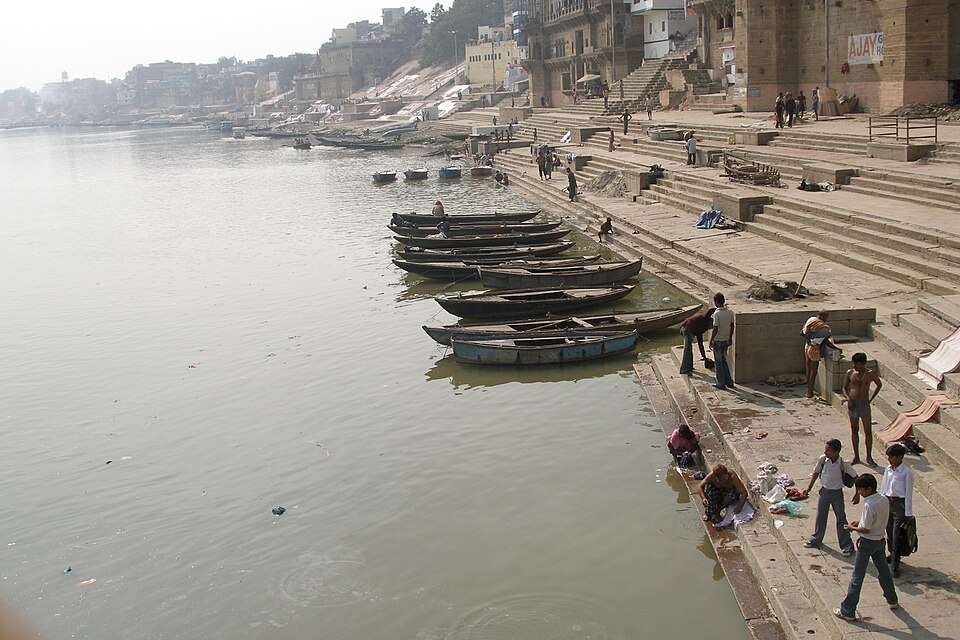
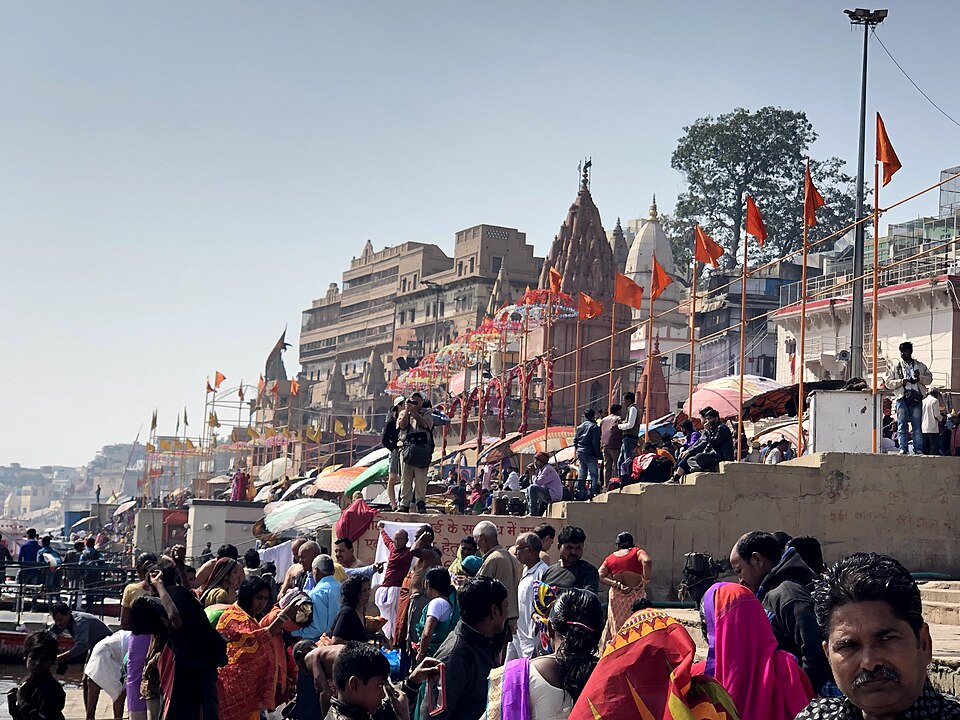
Welcome to the sacred Ganges boat tour in Varanasi, one of the oldest continuously inhabited cities in human history. As your Chief Cultural Heritage Information Architect, I invite you on a profound journey floating along a living riverine ecosystem sculpted by centuries of spiritual devotion and extraordinary hydrological engineering. The Ganges rises in the western Himalayas of northwestern India, flowing south and east across the vast Gangetic plain before emptying into the Bay of Bengal. Upon reaching Varanasi, the river forms a dramatic concave meander, carving deeply into the western high bank while depositing silt on the opposite shore. This natural fluvial process created a steep western cliff rising more than twenty meters above the water line, stretching between the Asi River tributary in the south and the Varuna River in the north. Along this high concave bank, an awe-inspiring series of eighty-four masonry ghats extends over six kilometers, covering a total riverfront length of six point eight kilometers. The opposite eastern bank remains a low convex floodplain completely submerged during monsoons, creating a striking dichotomy between the urban masonry landscape of the city and the undeveloped agricultural shore. Following the ancient water wisdom analyzed by Sir William Willcocks, these ghats do not function as rigid artificial barriers against the current. Instead, they form an organic hydrological network that allows seasonal floodwaters to spread naturally across the land, cleansing the soil and sustaining the riverine ecology without causing destructive erosion. During dry summer months, the lowest steps provide clean access to the water. During the monsoon season from July through September, water levels rise by five to ten meters and extraordinary floods reach up to twenty meters high, nearly doubling the river width from five hundred meters to almost one kilometer. The optimal windows for a boat tour are sunrise between five and seven in the morning and sunset between six and seven thirty in the evening. At dawn, golden morning light reveals bathers participating in traditional purification rituals known as Subah-e-Banaras. At dusk, boats gather opposite Dashashwamedh Ghat to provide an unobstructed view of the Ganga Aarti, a synchronized fire ceremony performed by five priests accompanied by conch shells and sacred chants. While on board, guests are requested to observe essential river etiquette to honor the sanctity of the Ganges. Please dress modestly by covering shoulders and knees, and remove shoes if requested by your boatman. Photography and videography are strictly prohibited near the cremation ghats of Harishchandra and Manikarnika out of respect for mourning families. Do not discard waste into the sacred river, and refrain from pointing your feet toward temples, priests, or the water during prayer rituals. As our boat glides gently across the current, prepare to experience the enduring heritage of Banaras.
02 Assi Ghat - Confluence of Assi and Ganges and Morning Purification
Assi Ghat marks the southern geographic boundary of Varanasi's riverine system and serves as the primary southern launch point for boat journeys along the Ganges. Located at the historic confluence where the small Assi River flows into the Ganges, this site exemplifies the sacred spatial concept of Tirtha, signifying both a physical river crossing and a spiritual threshold between the earthly domain and the divine. Historical research by scholar C.A. …
03 Kedar Ghat and Harishchandra Ghat - Southern Pilgrims and Spiritual Threshold
As our boat glides smoothly past Assi Ghat toward the north, the striking architectural facade of Kedar Ghat and the adjacent Harishchandra Ghat unfold gracefully along the western high bank. Kedar Ghat is immediately recognizable from the water by its vibrant vertical stripes of red and white painted across the heavy masonry retaining walls. …
04 Dashashwamedh Ghat - Vibrant Heart of the Ganges and Ganga Aarti
Dashashwamedh Ghat stands at the absolute geographic and emotional heart of Varanasi's riverfront, representing the most vibrant, historic, and public space among all eighty-four ghats. Mythological tradition relates that Lord Brahma created this site to welcome Lord Shiva by performing a monumental sacrifice involving ten horses, bestowing upon the ghat its sacred name. …
05 Man Mandir Ghat - Rajput Palace Architecture and Jantar Mantar Observatory
Just north of Dashashwamedh Ghat, the majestic facade of Man Mandir Ghat rises dramatically above the water line, displaying the finest Rajput palace architecture along the Ganges. Constructed in the early seventeenth century by Raja Man Singh the First of Amber, this monumental palace rests upon an extraordinarily massive masonry retaining wall and plinth that stands ten to twelve meters high directly above the riverbank slope. …
06 Scindia Ghat - Leaning Temple submerged in the Ganges and Riverine Topography
Continuing our boat journey past Man Mandir Ghat brings us to Scindia Ghat, home to one of the most remarkable hydrological and architectural wonders along the riverfront, the leaning Ratneshwar Mahadev Temple. As our boat approaches the waters directly in front of Scindia Ghat, you will notice a magnificent stone Shiva temple tilted precariously toward the bank, with its lower sanctum garbhagriha, columned mandapa hall, and entrance ardha-mandapa partially submerged in the flowing river. …
07 Manikarnika Ghat - Sacred Cremation Ground of Moksha and Adi Manikarnika Tirth
Manikarnika Ghat stands as the undisputed spiritual heart of Varanasi, revered among all eighty-four ghats as the principal cremation ground, the Maha-Smashaan, and supreme pilgrimage destination, the Maha-Tirth. If Kashi is considered the navel of India, Manikarnika is truly the navel of Kashi. According to sacred Puranic legends in the Kashi Khand, Lord Vishnu dug a sacred well here using his Sudarshana Chakra and filled it with his own perspiration during fifty thousand years of intense…
08 Closing
As our Varanasi Ganges boat tour draws to a close, we arrive opposite Panchganga Ghat, where legendary tradition speaks of the mythic confluence of five sacred rivers. Looking up from the water, Panchganga presents a striking visual image of religious coexistence, featuring traditional Hindu masonry ghat steps at the lower river level surmounted by the imposing Mughal minarets of the Alamgir Mosque at the top of the cliff. …