Contents
History & cultureBY TELLBY8 sections · numbered as on the map01 Orientation
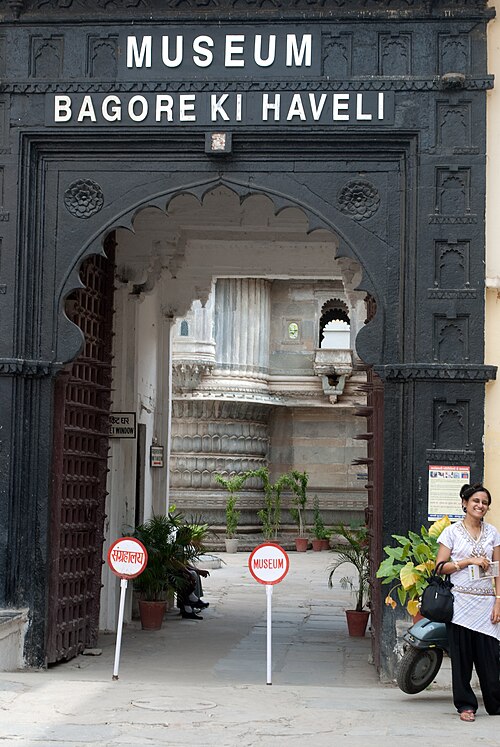
Welcome to Bagore Ki Haveli Museum, magnificently situated on the serene waterfront of Lake Pichola at Gangaur Ghat in Udaipur, Rajasthan, India. This noble mansion was constructed in the eighteenth century by Thakur Amar Chand Badwa, who served as the Prime Minister of the Mewar Kingdom from 1751 to 1778. His long and distinguished tenure spanned the successive reigns of four prominent Mewari rulers, namely Maharana Pratap Singh the Second, Raj Singh the Second, Ari Singh, and Hamir Singh. Following the passing of Amar Chand Badwa, the grand residence transitioned into the personal domain of the Mewar royal family, becoming the home of Nath Singh, a close relative of the ruling maharana. Later in the year 1878, Maharaj Shakti Singh of Bagore, who was the natural father of Maharana Sajjan Singh, undertook a major expansion of the complex. During this extensive renovation, he erected the landmark triple arched gateway that serves as the main entrance to the estate today, and from that era onward, the structure became permanently known as Bagore Ki Haveli. The property remained under the ownership and administrative care of the Mewar State until the historic independence of India in 1947. After independence, the State Government of Rajasthan assumed control of the premises and utilized the expansive rooms to provide housing for government employees. Regrettably, without dedicated individual caretakers vested in maintaining high preservation standards, the unchecked deterioration and physical neglect over a period of nearly forty years reduced this architectural gem to a truly deplorable condition. Recognizing the vital historical urgency of rescuing the site, persistent advocacy successfully persuaded the government to relinquish control, leading to the official transfer of the property to the West Zone Cultural Centre in 1986. The West Zone Cultural Centre initially envisioned converting the vast structure into a multi regional museum displaying the diverse traditional heritage of all four western states, including Maharashtra, Goa, Gujarat, and Rajasthan. However, upon closer evaluation, scholars and conservationists realized that the building itself constituted a splendid living museum of traditional architecture. Consequently, they shifted their focus toward restoring the entire complex as a dedicated museum showcasing the refined aristocratic culture and artistic legacy of Mewar. Expert historical advisors and members of the Mewar royal lineage were extensively consulted throughout the process, allowing master craftsmen to revive the original aesthetic brilliance of the mansion. Today, as you begin your walk through these ancient corridors, Bagore Ki Haveli stands as a resurrected masterpiece where history, art, and the royal traditions of Rajasthan continue to inspire visitors from all over the world.
02 The Majestic Triple-Arched Gateway
As you stand before the main entrance of Bagore Ki Haveli, the very first architectural marvel that commands your attention is the majestic triple arched gateway. This magnificent entrance was constructed in the year 1878 by Maharaj Shakti Singh of Bagore, who was the natural father of Maharana Sajjan Singh, during a comprehensive expansion of the royal estate. …
03 The Central Courtyard and Cultural Stage
Stepping deeper into the heart of Bagore Ki Haveli, you emerge into a magnificent open air central courtyard, known in traditional Indian architecture as a chowk. In Rajasthani haveli design, the chowk functions as the essential spatial anchor around which all domestic, social, and ceremonial life revolves. …
04 The Queen's Chamber and Mewari Frescoes
Ascending to the upper levels of the haveli, we enter the Chambers of the Royal Ladies, historically designated as the zenana or private quarters. This secluded section of the mansion was carefully engineered to accommodate the daily lives, domestic routines, and artistic pursuits of royal and aristocratic women. …
05 Coloured Glass Windows and Glass Peacock Mosaic
Moving forward from the royal quarters into the inner galleries, visitors enter an extraordinary space dedicated to the glittering art of glasswork and mirror mosaic. Traditional haveli architecture in Rajasthan is world renowned for its opulent interior embellishments, but the decorative glasswork preserved inside Bagore Ki Haveli represents an absolute pinnacle of historic Indian craftsmanship. …
06 Rajput Clan Treasures and Cultural Artifacts
With one hundred and thirty eight individual rooms connected by an intricate maze of corridors, balconies, and courtyards, Bagore Ki Haveli stands as an expansive museum preserving the aristocratic culture of Mewar. Across these historic chambers, the West Zone Cultural Centre has curated a world class collection of cultural artifacts, offering visitors an unparalleled journey into the daily life, social customs, and material luxury of the Rajput royal clan. …
07 Jharokhas, Upper Terraces, and Lake Pichola Views
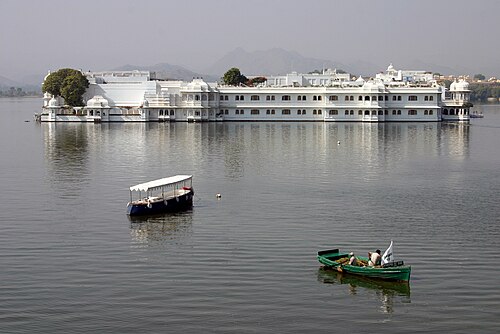
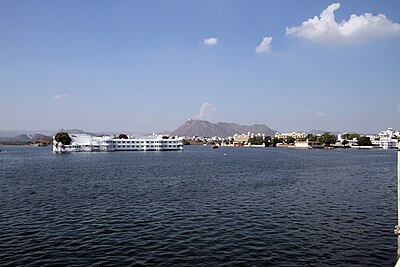
Ascending to the upper terraces and open rooftops of Bagore Ki Haveli, visitors are rewarded with breathtaking panoramic vistas over Lake Pichola and the distant, rolling peaks of the Aravalli Range. From this elevated vantage point, one can examine the quintessential features of Rajasthani vernacular architecture up close, including jharokhas, chhajjas, and jallis. …
08 Closing
As you complete your exploration of Bagore Ki Haveli and step through the exit gateway, you find yourself on the historic waterfront steps of Gangaur Ghat, also known locally as Gangori Ghat. Situated near the bustling Jagdish Chowk area in the heart of Udaipur, this waterfront setting offers a perfect natural conclusion to your tour. Gangaur Ghat is deeply renowned throughout Rajasthan as the primary venue for several major cultural and religious festivals. …