Contents
History & cultureBY TELLBY8 sections · numbered as on the map01 Orientation
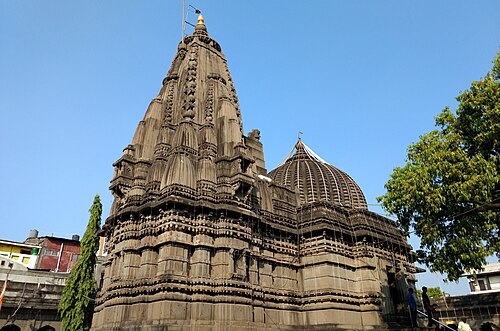
Welcome to the historic Kalaram Temple in Nashik. This sacred complex is far more than a conventional religious shrine. It stands as a monumental sanctuary where the struggle for human dignity and fundamental equality was courageously waged in modern Indian history. As you stand within these historic grounds, you are stepping into the living legacy of Babasaheb Doctor Bhimrao Ramji Ambedkar, the chief architect of the Indian Constitution and a visionary social revolutionary. Born in eighteen ninety one and passing in nineteen fifty six, Doctor Ambedkar dedicated his entire life to the emancipation of the marginalized and downtrodden masses who were denied even the most basic human rights under a rigid social hierarchy. The historical foundation of this civil rights movement was laid when the Bombay Legislative Council adopted a landmark resolution moved by S K Bole in nineteen twenty three, which was reaffirmed with minor modifications in nineteen twenty six. This resolution mandated that all public water bodies, schools, and civic facilities maintained by public funds should be thrown open to every citizen regardless of caste. In pursuance of this official declaration, the Mahad Municipality resolved in nineteen twenty four to open the historic Chawdar Tank to the depressed classes. However, due to deep rooted prejudice and fierce hostility from orthodox caste Hindus, the marginalized people were unable to exercise their lawful rights, leaving the municipal resolution as an empty gesture on paper. To transform this paper right into a living reality, the leaders of the Kolaba District Depressed Classes organized a historic conference at Mahad on March nineteenth and twentieth in nineteen twenty seven. Dedicated organizers like Surendranath Tipnis, Subhedar Savadkar, and Anantrao Chitre spent two full months traversing hills, dales, and remote villages to awaken the people. Their tireless efforts bore extraordinary fruit as over ten thousand delegates, ranging from young boys of fifteen to elderly men of seventy, plodded distances of over a hundred miles on foot with small bundles of bread slung over their shoulders. So severe was the social blockade that the conference organizers had to purchase drinking water from caste Hindus at a rate of fifteen rupees each day, spending forty rupees in total just to satisfy the basic thirst of the assembled crowd. Standing before this earnest gathering, Doctor Ambedkar delivered a stirring presidential address, declaring that the sun of self respect had now arisen in the sky and the clouds of oppression had begun to flit away. He exhorted the people to rise up, embrace self help, and reclaim their natural rights as human beings. As you begin your tour around this sacred precinct, you are invited to reflect upon this historic struggle that transformed a traditional religious center into an enduring beacon of human rights, constitutional justice, and social democracy.
02 The Main Gate and the Declaration of Self Respect
Please stand before the main gate of the temple and take a moment to view the expansive entrance courtyard. This main portal is far more than a structural entry point. It represents a historic threshold where centuries of deep seated social oppression were challenged and where a resounding declaration of self respect was proclaimed to the nation. As Doctor Ambedkar addressed the vast assembled gathering near this historic gate, his voice resonated with deep emotion and intellectual clarity. …
03 Outer Corridor and Restoring Basic Civic Rights
As you walk slowly along the outer corridor of the temple, take in the surrounding architectural layout and serene atmosphere. This open passageway evokes the memory of the profound suffering endured by the marginalized communities who were historically denied even the most elementary civic rights, including access to public water sources and common facilities. …
04 Side Courtyard and the Constitutional Struggle
Please move towards the side courtyard of the temple. This area symbolizes the intellectual and legal battlefield where Doctor Ambedkar faced formidable legal hurdles mounted by orthodox forces and navigated them with unwavering commitment to constitutional methods, strict non violence, and rule of law. As preparations were underway for the second massive Satyagraha conference in December nineteen twenty seven, the orthodox section shrewdly opened a legal front against Doctor Ambedkar. …
05 Central Courtyard and the Burning of Injustice
Please stand in the central courtyard facing the main sanctum of the temple and observe the open space around you. As you stand in this central courtyard of Kalaram Temple in Nashik, this space serves as an ideological bridge connecting this sanctuary to one of the most audacious acts in civil rights history, the public bonfire of the ancient text that codified caste discrimination, which served as the moral prelude for the Kalaram Temple entry movement. …
06 Temple Sanctum and Religious Equality
Please direct your gaze towards the main temple sanctum. This sacred core of the complex serves as a profound symbol for reflecting upon Doctor Ambedkars impassioned argument for religious equality and the total democratization of faith. During the temple entry agitation, Doctor Ambedkar challenged the traditional orthodoxy that allowed a privileged few to monopolize access to the divine while excluding millions of devoted believers based solely on the accident of their birth. …
07 Rear Assembly Area and the Resolve of the Masses
Please walk towards the spacious assembly area located at the rear of the temple. This open ground echoes with the vibrant memories of thousands of marginalized men and women who gathered in massive rallies to listen to Doctor Ambedkars transformative speeches and to forge an iron resolve to win their freedom through self reliance. During the historic Mahad movement and the subsequent temple entry agitations, this assembly ground was filled to capacity with over fifteen thousand people. …
08 Closing
As we conclude our audio tour of Kalaram Temple and the historic struggle for human rights led by Doctor B R Ambedkar, let us reflect upon the enduring significance of this sacred site. The courtyards, gates, and corridors you have walked through today are not merely architectural relics of a bygone era. They represent the sacred birthplace of modern Indian constitutionalism, social democracy, and the universal declaration of human dignity. …