Contents
History & cultureBY TELLBY8 sections · numbered as on the map01 Orientation
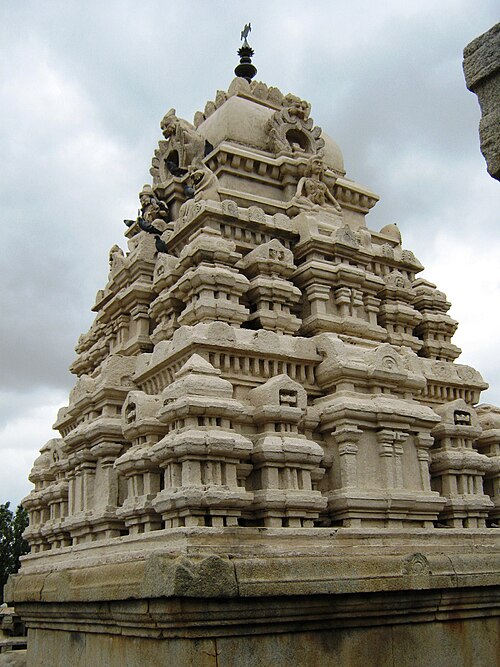
Welcome to the Veerabhadra Temple at Lepakshi, one of the most magnificent architectural and artistic achievements of the Vijayanagara Empire. Located in the Sri Sathya Sai District of Andhra Pradesh, approximately one hundred twenty kilometers north of Bengaluru near the border of Karnataka, this sacred monument stands proudly upon a low granite hillock known as Kurmasaila or Kurma Saila. The name Kurmasaila translates to tortoise hill, named after its natural rock formation that closely resembles the shell of a giant tortoise. In Hindu tradition, the tortoise is a sacred cosmic symbol of stability, endurance, and divine support, making this natural elevation a fitting foundation for a monumental complex. Built around the year fifteen thirty AD during the prosperous reign of the Vijayanagara King Achyuta Deva Raya, the temple was sponsored and constructed by three influential brothers, Virupanna Nayaka, Viranna Nayaka, and Chikka Mallappanayaka, who served as regional governors and royal officers. Historical records reveal that Virupanna began his career as a royal door keeper before rising to high administrative positions over key provinces such as Penukonda and Chandragiri. Virupanna was a devoted follower of Lord Venkateswara of Tirumala and made numerous valuable offerings throughout his life. Together with his brothers, he formed part of an elite network of patrons who funded religious enclosures and shrines across the region, including notable sites at Narayanavanam and Kalahasti. Epigraphical records demonstrate that temple maintenance was supported by local democratic assemblies known as mahajanas, who collaborated with royal authorities to grant lands such as the village of Kanchasamudram, also designated as Pratapadevarayapura. Furthermore, inscriptions from fifteen thirty three AD record the grant of three villages, Hampanahalli, Kancarlahalli, and Timmagondanahalli, collectively named Venkatadri samudra in honor of Prince Kumara Venkatadri. Merchant communities operating near Viresvaradevarayapura also allocated market tolls and commercial revenues to sustain the temple rituals. Architecturally, the Veerabhadra Temple represents a highly sophisticated synthesis, harmoniously blending earlier design elements from the Chalukya, Hoysala, and Kakatiya traditions into the mature Tuluva Vijayanagara structural style. The name Lepakshi carries rich legendary and historical lore. The first tradition is deeply tied to the ancient Ramayana epic. It is said that when the divine eagle Jatayu was mortally wounded by Ravana while bravely trying to rescue Sita, he collapsed upon this very hillock. When Lord Rama came across the dying bird, he spoke to him with deep compassion in Telugu, saying Le Pakshi, which translates to Arise, bird. This sacred encounter gave the location its name, and the site is commemorated in the Skanda Purana as Lepakshya Papanasanah, one of the one hundred eight sacred Shiva pilgrimage destinations. The second narrative relates to the tragic local legend of Virupanna himself. According to popular memory, when false rumors reached the royal court that Virupanna had embezzled treasury funds to construct the elaborate temple, he chose to forestall royal execution by gouging out his own eyes and hurling them against the temple wall. The phrase Lape Akshi, meaning village of the blinded, is thus cited as an alternate origin of the name. Although dark stains on the stone wall are still pointed out by locals as the marks of his blood, historical epigraphy provides a different perspective. Inscriptions dating to fifteen thirty seven and fifteen thirty eight AD record Virupanna purchasing land at Kalanuragrahara and making further endowments long after the supposed incident, proving that he continued his administrative and devotional duties alive. Thus, scholars view the blinding story as an evocative symbolic legend created to emphasize unyielding loyalty and sacrifice. Your walking audio tour today will guide you through eight carefully selected stops, beginning with this orientation at Kurmasaila, moving to the massive Monolithic Nandi, continuing through the Northern Gopura and its rhythmic corridors, entering the breathtaking Natyamantapa with its mysterious hanging pillar, examining the ceiling frescoes of the Ardhamantapa, admiring the iconic Nagalinga, exploring the unfinished Kalyanamantapa and the sacred footprint of Sita, and concluding with a heritage reflection on the UNESCO significance of Lepakshi.
02 The Giant Monolithic Nandi
You are currently standing before one of the most awe inspiring monuments of South Asian art, the giant Monolithic Nandi Bull, situated approximately two hundred meters east of the main temple enclosure. In Hindu iconography, Nandi is the sacred bull, the divine vehicle of Lord Shiva, and his most devoted guardian. …
03 Northern Gopura and Rhythmic Corridors
As you pass through the northern gateway tower, or the Northern Gopura, you step into the main outer courtyard and the extensive system of pillared corridors. Although the upper brick superstructure of this gopura is now partially ruined by the passage of time, the surviving stone foundation and soaring passageway still clearly convey the monumental scale and artistic grandeur typical of Vijayanagara ceremonial entrances. …
04 Natyamantapa and the Mysterious Hanging Pillar
Step into the Natyamantapa, or Dance Hall, a remarkably spacious and richly decorated pavilion situated near the primary entrance of the main temple structure. Historically, this elevated hall served as a vibrant stage for ritual dance performances, sacred music offerings, and high congregational gatherings during major religious festivals. The hall is supported by numerous masterfully carved stone columns, each transformed into a detailed relief sculpture. …
05 Ceiling Murals of Ardhamantapa
Proceeding inward from the dance hall, you now enter the Ardhamantapa, or the central antechamber. The Ardhamantapa functions as a sacred transitional space leading directly into the antarala vestibule and the innermost sanctum sanctorum, known as the garbhagriha. Take a moment to observe the structural base, or adhisthana, of the sanctum walls. …
06 Monolithic Nagalinga Sculpture
Step out into the outer enclosure adjacent to the main mantapa to stand before one of the most iconic monumental sculptures in India, the breathtaking Nagalinga. Along with the giant Nandi, this monolithic carving represents a supreme symbol of Lepakshi and an enduring masterwork of Shaivite rock cut art. …
07 Unfinished Kalyanamantapa and Sacred Relics
Your tour now brings you to the south western area of the inner enclosure, where you stand amidst the magnificent yet haunting ruin of the unfinished Kalyanamantapa, or Marriage Hall. This expansive structure was originally conceived as an opulent ceremonial hall dedicated to performing the annual divine wedding rituals of Lord Shiva and Parvati. The hall contains approximately eighty extraordinarily detailed granite pillars, displaying immense structural variety. …
08 Closing
As our audio guide tour comes to a conclusion, we reflect upon the remarkable historical, architectural, and spiritual journey through the Veerabhadra Temple at Lepakshi. From its position atop the sacred Kurmasaila tortoise hillock, this monument stands as an enduring testament to the engineering sophistication, sculptural genius, and artistic brilliance of the sixteenth century Vijayanagara Empire. …