Contents
History & cultureBY TELLBY8 sections · numbered as on the map01 Orientation
Welcome travelers to this immersive walking guide of Byculla and Dhobi Ghat in South Mumbai. I am your senior audio guide producer and I am thrilled to accompany you on a journey through one of the most historically rich and culturally vibrant areas of the city. As you stand in Byculla today within the administrative E Ward of the municipal corporation you are situated in a neighborhood whose very name carries echoes of ancient times. Historical Marathi texts known as the Mahikavatichi Bakhar written between the fifteenth and seventeenth centuries mention a place called Bhaikhale. This designation is believed to refer to a farm owned by an individual named Bhai combined with the word khale meaning a threshing floor or farm. Alternatively local linguistic history suggests the name originated from sbhay khala representing a priests grain storage area. Centuries ago this bustling urban landscape was merely a quiet rural expanse of farmland and granaries. During the late eighteenth century Byculla functioned primarily as a low lying extension of Mazagaon which was one of the original seven islands that constituted Bombay. The area consisted of flat marshy grounds that were regularly inundated during high tides through the Great Breach at Mahalaxmi. A dramatic transformation occurred in seventeen eighty four with the completion of the Hornby Vellard project. This monumental engineering feat closed the Great Breach and successfully merged all seven separate islands into a single consolidated landmass. Following this reclamation the construction of the Bellasis Road causeway in seventeen ninety three rendered the area dry and habitable prompting European residents from Mazagaon to shift their homes to Byculla. The area grew into a fashionable residential suburb marked by the establishment of the prestigious Byculla Club in eighteen thirty three. The arrival of Indias first railway line in eighteen fifty three accelerated industrialization leading to the construction of massive textile mills across Byculla. Although most of these historic mills have closed down making way for modern high rise developments the industrial heritage remains deeply embedded in the fabric of the neighborhood. Byculla is also celebrated for its extraordinary demographic diversity. Over the decades it has welcomed Parsis Christians Jews Hindus Muslims affluent Jain communities around Motisha Lane and Dawoodi Bohra merchants creating a rich tapestry of faith and traditions. Surrounding us are historic quarters such as Nagpada Mumbai Central Mahalaxmi Agripada Jacob Circle Chinchpokli Madanpura Reay Road Ghodapdeo Mazagaon Dockyard Road Sandhurst Road and Bhendi Bazaar. Today we will explore this unique historical layer from magnificent heritage railway architecture and colonial botanical gardens to the bustling energy of the worlds largest open air laundry at Dhobi Ghat. Step forward with curiosity and let us discover the living history of South Mumbai together.
02 Section 1
Now please follow me as we walk towards the main entrance of our first landmark Byculla Railway Station. Before you stands the magnificently restored Byculla Railway Station a Grade I heritage site recognized internationally with a prestigious UNESCO Asia Pacific Heritage Award for its architectural and historical significance. …
03 Section 2
Leaving the station behind as we stroll down the avenue we arrive at one of South Mumbais most iconic traffic intersections defined by the historic Khada Parsi statue and the famous Y Bridge. Rising majestically above the bustling street level atop a high Corinthian pillar is the cast iron fountain monument known locally as Khada Parsi or the Standing Parsi. …
04 Section 3
Now walking past the Y Bridge along the tree lined pavement we arrive at a prominent street corner dominated by a magnificent Catholic sanctuary. Standing gracefully before you is the iconic Our Lady of Gloria Church widely known simply as Gloria Church. With its soaring Gothic Revival spires elegant pointed arches and magnificent stone facade Gloria Church dominates the Byculla skyline as one of South Mumbais most beloved architectural landmarks. …
05 Section 4
Leaving the church behind as we take a relaxing stroll eastward away from the urban noise we arrive at the grand entrance of a tranquil green sanctuary. Welcome to the lush green oasis of Jijamata Udyaan spanning fifty tranquil acres in the heart of Central Mumbai. Also known historically as the Victoria Gardens Rani Baug or Byculla Zoo this botanical garden and zoological complex holds the proud distinction of being the oldest public park in the city. …
06 Section 5
Leaving the serene botanical gardens behind as we walk westward into the lively residential quarters we approach Dagdi Chawl a neighborhood that captures the authentic working class grit and social history of South Mumbai. To understand Dagdi Chawl one must first understand the concept of the Mumbai chawl. …
07 Section 6
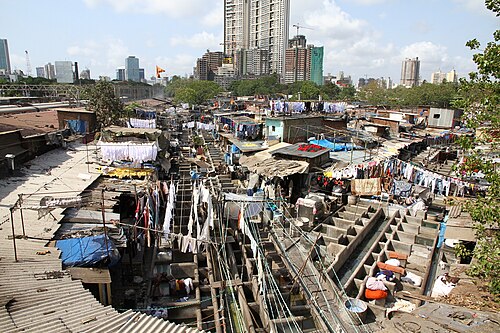
Walking north from Dagdi Chawl and ascending the pedestrian overpass platform you are suddenly presented with one of the most astonishing human spectacles in Asia the world famous Mahalaxmi Dhobi Ghat constructed in eighteen ninety. Widely celebrated as the worlds largest open air laundry this massive operational complex sits adjacent to Mahalaxmi Railway Station on the Western Line easily accessible from the Jacob Circle Monorail station Mahalaxmi Metro Station on the Aqua Line and the Saat…
08 Closing
Dear travelers our journey through Byculla and Dhobi Ghat has come to a meaningful conclusion. Reflecting on the paths we have walked today we have traversed the remarkable historical layers of South Mumbai. From low lying marshlands inundated by high tides to the land reclamation of the Hornby Vellard in seventeen eighty four which united seven separate islands into one Byculla emerged as a beating heart of Indian industrial and transport history. …