Contents
History & cultureBY TELLBY8 sections · numbered as on the map01 Orientation
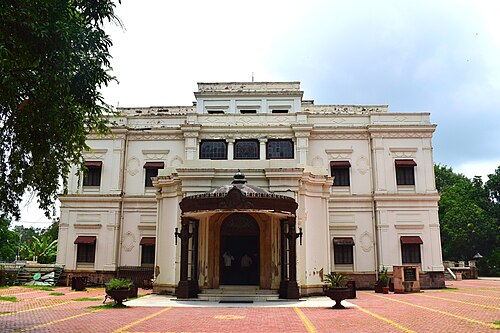
Welcome to Lalbagh Palace, one of the most iconic royal heritage sites in Indore, Madhya Pradesh, India, and an enduring monument to the grand legacy of the Holkar dynasty. Situated on the Malwa Plateau at an altitude of 553 meters, the historic city of Indore traces its origins to the sacred Indreshwar Mahadev temple and its 16th-century role as a vital commercial hub connecting the Deccan region with Delhi. After Maratha control was established in 1724 under Peshwa Baji Rao I, Indore grew into a prestigious princely state under the Holkars, honored with a 19-gun salute during the British Raj. Nestled on the outskirts of Indore along the tranquil banks where the Khan and Saraswati rivers meet, this majestic three-story residence offers an extraordinary window into the lavish lifestyle, administrative power, and refined artistic sensibilities of the Maratha sovereigns. Construction of this magnificent palace commenced in 1886 under the visionary patronage of Maharaja Shivaji Rao Holkar. The ambitious enterprise demanded 31 years of painstaking craftsmanship and engineering, reaching its final culmination 35 years after its inception in 1921 under his successor, Maharaja Tukoji Rao Holkar. The primary political and social objective behind building this grand residence was to facilitate high-level diplomatic meetings among the key figures of the state and to provide an astonishing venue for hosting lavish royal receptions. Sprawling over a vast 28-acre estate encompassing 113,312 square meters, Lalbagh Palace architecturally reflects the new palace of the Holkars, standing as a triumphant symbol of princely dignity. The architectural vision was masterfully executed by designer Bernard Triggs, who harmoniously synthesized the grandest European structural traditions of the era. The palace seamlessly blends the symmetrical elegance of Renaissance architecture, the harmonious classical proportions of the Palladian style, and the dramatic, ornate theatricality of the Baroque movement. It embodies every extravagant architectural whim and sophisticated trend favored by contemporary European master builders. Until 1978, this breathtaking palace served as the active private residence of the ruling Holkar family before being preserved for posterity. Today, as you embark on this audio journey through its restored chambers and lush grounds, you will immerse yourself in an unforgettable atmosphere of imperial majesty and timeless artistry. Please enjoy your walk through this legendary monument.
02 The Imposing Replica Gates
As you approach the grand entrance of the Lalbagh Palace estate, your eyes are immediately drawn to the extraordinary, soaring main gates that frame the property. Far more than a mere barrier or access point, these imposing gates stand as a breathtaking statement of imperial ambition, international craftsmanship, and sovereign pride. Astonishingly, these entrance gates are an exact architectural replica of the world-famous main gates of Buckingham Palace in London. …
03 French and English Landscaped Gardens
After passing through the monumental replica gates, visitors step into a breathtaking green expanse that gracefully frames the main palace residence. The entire Lalbagh Palace estate encompasses a vast area of twenty-eight acres, equivalent to 113,312 square meters, with a significant portion of this sprawling property devoted to meticulously maintained gardens and lush natural surroundings. …
04 The Entrance Lounge and Royal Portraits
Stepping across the threshold into the interior of Lalbagh Palace, you enter the majestic entrance lounge area, a formal reception hall designed to immediately impress arriving diplomats, dignitaries, and guests with the royal dignity and sovereign pride of the Holkar dynasty. As you look around this refined space, your attention is drawn to either side of the lounge, where large, elegantly proportioned doors fitted with tinted glass stand. …
05 The Grand Spring-Mounted Ballroom
Among all the breathtaking interior spaces within Lalbagh Palace, the Grand Ballroom is indisputably one of the most engineeringly ingenious and visually dazzling reception halls in all of India. Specifically commissioned to host grand social galas, international waltzes, and celebratory royal dances, this magnificent room stands as a supreme triumph of princely luxury and architectural innovation. …
06 Royal Banquet Hall with Mythological Ceiling
Passing through the grand corridors beyond the ballroom, you step into the regal expanse of the Royal Banquet Hall, a formal dining chamber constructed specifically to host state banquets, diplomatic dinners, and ceremonial feasts. Every architectural element within this magnificent hall was calculated to project royal authority while honoring classical European artistic traditions. …
07 Museum Galleries & Rare Collections
Moving beyond the expansive public state halls, visitors enter the private chambers and residential suites that have been systematically restored, beautifully furnished, and converted into an extraordinary museum gallery. These converted museum rooms offer an intimate window into the daily lives, personal antiquities, and artistic patronage of the Holkar royal family. As you explore chamber after chamber, pay close attention to the exquisite period interior furnishings and ornamental woodwork. …
08 Closing
We hope you have thoroughly enjoyed your audio guide tour through the magnificent Lalbagh Palace, one of the most remarkable historical monuments in Indore and Madhya Pradesh. This iconic residence is far more than a monument of stone and glass; it is a living document of the Holkar dynasty's enduring legacy. The ruling Holkar family resided continuously within these grand walls until 1978. …