Contents
History & cultureBY TELLBY8 sections · numbered as on the map01 Orientation
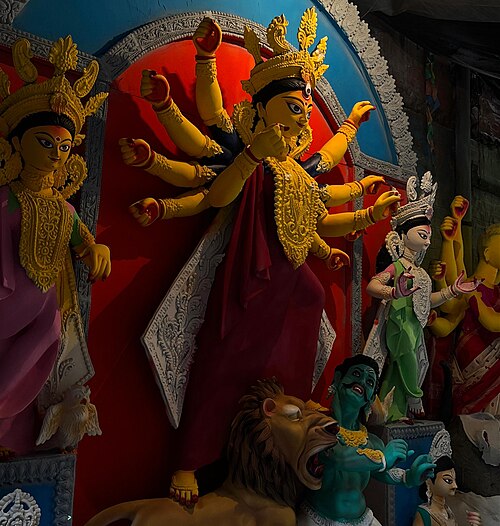
Welcome to Kumartuli, nestled along the historic banks of the Hooghly River in North Kolkata. For over three centuries, this iconic neighbourhood has served as the undisputed center of clay idol craftsmanship in West Bengal, where raw alluvial soil, intense manual labor, and profound spiritual devotion continuously converge. The ground beneath your feet holds a complex multi-layered history rooted in the early eighteenth century during the expansion of British East India Company rule. Following their strategic victory at the Battle of Plassey in 1757, the East India Company decided to strengthen its military hold over Bengal by constructing the new Fort William on the site of Gobindapur village. This massive structural project forced the original inhabitants of Gobindapur to relocate to Sutanuti, while various traditional artisan guilds scattered across the region settled in the surrounding tracts. John Holwell, a senior official of the East India Company, systematically allocated designated quarters to workforces based on their specific occupational trades. Among the areas assigned to wine vendors in Suriparah, oil pressers in Collotollah, carpenters in Chuttarparah, and cowherds in Aheeritollah, the quarter set aside for traditional potters was designated as Coomartolly, which gradually evolved into the modern name Kumartuli, meaning the potters quarter.
Originally, these hereditary craftsmen gathered wet alluvial mud directly from the adjacent Hooghly riverbank to fashion functional earthenware such as bhar, the traditional clay tea cups of Kolkata, and ghat, the sacred ritual water pots, selling their daily wares at Sutanuti Bazar. As sweeping commercial transformations and urban expansion swept through nineteenth-century Kolkata, many traditional craft guilds were flushed out of North Kolkata. However, the potters belonging to the hereditary Kumbhakar and Pal lineages managed to endure and preserve their ancestral enclave. Over generations, these master sculptors transitioned from utility pottery to sculpting monumental clay idols of Goddess Durga and other deities for wealthy aristocratic mansions and community pujas across the city.
As you step into these narrow winding lanes, immerse your senses in the unmistakable aroma of wet river clay blending with the dry crackle of straw underfoot. Inside the cramped eight-by-eight foot timber and mud studios, intricate bamboo armatures form the structural skeletons of future deities. Historically recognized within the Navashakha framework as clean Shudra artisans whose vessels were accepted by all tiers of society, the Kumbhakar potters have elevated their hereditary trade into a globally celebrated art form. Today, their masterpieces are exported across India and to diaspora communities throughout North America, Europe, and the Middle East. Step gently through these ancient alleyways and listen to the enduring echoes of three hundred years of clay, labor, and faith.
02 Banamali Sarkar Street: Spatial Dynamics of Male-Dominated Workshops
As you walk down Banamali Sarkar Street, the primary arterial lane of Kumartuli, you are surrounded by dense clusters of traditional clay workshops that form the heart of this historic quarter. Named after a prominent nineteenth-century historical figure immortalized in classic Bengali proverbs, this winding street serves as both the physical workplace and the social battleground for generations of artisans. …
03 The Raw Earth Yard: Mythological Origins and Ancestral Crafts
Standing in the raw earth and armature yard nestled between the workshops, you are witnessing the fundamental raw elements of clay sculpting. Every physical action performed in this space is intimately tied to ancient Puranic scriptures, particularly the Brahma Vaivarta Purana and the Brihaddharma Purana. …
04 Women Artisans' Studios: Navigating Emotional Labor and Identity
Standing before the studios operated by women artisans, we encounter the remarkable stories and profound struggles of women who shattered the rigid boundaries of a patriarchal craft society to emerge as master sculptors. Historically, women in Kumartuli were confined to supportive domestic roles behind the scenes. …
05 The Eye-Painting Workshop: Chakkhu Daan and Sacred Artistry
Entering the eye-painting workshop, we stand at the sacred locus where raw clay sculptures undergo their ultimate spiritual transformation into living deities. The most revered milestone in this space is the ceremonial ritual of Chakkhu Daan, meaning the giving of sight, which takes place on the auspicious morning of Mahalaya, marking the official commencement of the annual Durga Puja festival. …
06 Dhakeswari Mata Temple: Sanctuary of Partition Heritage
Situated in the heart of Kumartuli near Sovabazar along the eastern bank of the Hooghly River, the Dhakeswari Mata Temple stands as a poignant historical sanctuary preserving both the spiritual devotion and traumatic heritage of the 1947 Partition of India. The presiding deity housed within this temple was originally the centuries-old guardian deity of Dhaka, Bangladesh, relocated under extraordinary and urgent circumstances during the geopolitical turmoil leading up to Partition. …
07 Innovation Alley: Terracotta Jewelry and Modern Artisanal Resistance
Stepping into Innovation Alley, we encounter the dynamic intersection where centuries-old traditions meet modern artistic resistance and economic transformation. This alley showcases how younger generations of sculptors are reshaping the boundaries of their craft. A defining example of this artisanal adaptation is found in the story of Rani Pal, the daughter of master sculptor Arati Pal. …
08 Closing
As our tour comes to an end, we return to stand at Kumartuli Ghat along the banks of the Hooghly River. Listening to the gentle flow of the river, we reflect upon the grand cycle of clay, creation, and devotion. The very silt gathered from these waters is molded through the sweat, skill, and spiritual dedication of master artisans to bring forth divine deities. After the grand festivities culminate, the idols are immersed back into these river waters, returning the clay to its natural origin. …