Contents
History & cultureBY TELLBY8 sections · numbered as on the map01 Orientation
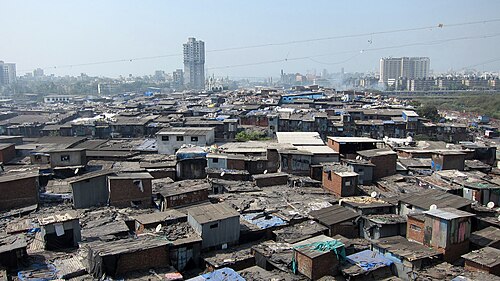
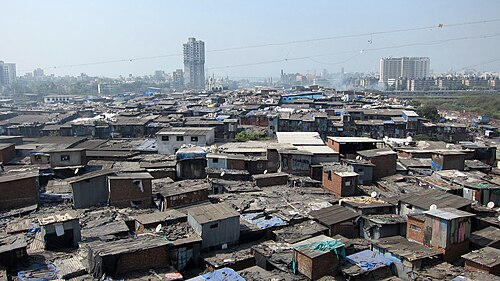
Welcome to Dharavi. As a cultural geographer, I invite you to step beyond surface impressions and explore one of the most dynamic human landscapes in modern urban history. We begin our tour near Mahim Junction, a critical geographic nexus situated at the intersection of Mumbai's two suburban rail arterial networks, the Western Railway and the Central Railway. As you look around, orient yourself: to our west lie the bustling districts of Mahim and Bandra; to the north, the Mithi River and Mahim Creek curve out toward the Arabian Sea; to the east stands Antop Hill; and to the south lies Matunga. Spanning an area of just over two point three nine square kilometers, or roughly two hundred hectares, this compact wedge of land accommodates an estimated resident population ranging from three hundred thousand to nearly one million people. This produces an extraordinary population density exceeding four hundred eighteen thousand people per square kilometer, or over eight hundred sixty-nine thousand per square mile, making Dharavi one of the most densely populated territories on Earth. To understand how this spatial reality emerged, we must look back to the eighteenth century, when this terrain was merely an isolated island surrounded by dense mangrove swamps. At that time, it was home to the Koli fisherfolk, who called their settlement Koliwada. However, during the nineteenth century, as Bombay expanded rapidly under the East India Company and the British Raj, the island underwent a dramatic metamorphosis. By the eighteen fifties, the population of peninsular Bombay had surpassed half a million, creating an urban core density more than ten times that of Victorian London. Facing rampant overcrowding and public health crises, the British colonial administration systematically evicted heavily polluting trades and working-class populations from the southern peninsula, driving them to the northern periphery. In eighteen eighty-four, Dharavi was formally established as an informal peripheral settlement. As millions of rural migrants poured into Bombay seeking industrial labor, pushing the city overall population past one million, Dharavi expanded haphazardly. Lacking any municipal planning, drainage, paved roads, or clean drinking water, arriving settlers relied entirely on self-organization. Migrants speaking Gujarati, Hindi, Marathi, Tamil, and Telugu built their own residential quarters, civic structures, and economic networks. Positioned adjacent to Mumbai Airport and right at the geographic center of the modern megacity, Dharavi stands not as a place of squalor, but as an irreplaceable economic engine and a monument to human adaptability. Let us now walk forward into the inner alleyways to uncover the rich history woven into these narrow streets.
02 Tamil Settlers and the Legacy of Tanneries
As we step into this vibrant corridor, welcome to the Tanneries and Leather District of Dharavi, where the rich aroma of treated leather and the rhythmic staccato of cobblers' hammers fill the air. Look to your left and right: inside these compact, multi-level workshops, master craftspeople work under low-hanging fluorescent bulbs, meticulously cutting, stitching, and finishing leather hides. To fully appreciate this spatial cluster, we must trace its roots back to eighteen eighty-seven. …
03 Kumbharwada Artisans and the 99 Year Lease
Wandering east from the leather district, the sensory atmosphere shifts as the sharp scent of raw hides gives way to the rich, earthy fragrance of damp clay and woodsmoke. Welcome to Kumbharwada, the legendary potters' village of Dharavi. This residential and industrial enclave is home to the Kumbhars, a distinct community of traditional artisans from the western state of Gujarat. …
04 The Recycling Hub Powered by 250,000 Workers
Step now into the intense activity of the Recycling Hub, perhaps the most economically extraordinary district in all of Dharavi. This area functions as an indispensable environmental engine for the entire megacity of Mumbai, capturing, sorting, and reprocessing thousands of tons of urban solid waste every single day. Recent municipal and industrial reports reveal that this recycling ecosystem alone directly employs an incredible two hundred fifty thousand workers. …
05 Uttar Pradesh Artisans and the Garment Industry
Welcome to the Garment and Embroidery District of Dharavi, a sensory corridor reverberating with the rhythmic hum of sewing machines and the brilliant colors of woven textiles. As you look into the doorways along this alley, you will see rows of tailors and embroiderers leaning over long wooden cutting tables under warm hanging lightbulbs. The historical rise of Dharavi apparel industry is deeply tied to the migration of skilled craftspeople from the northern state of Uttar Pradesh. …
06 Ganesh Mandir and Badi Masjid: Harmony in Diversity
Standing in this open precinct, you are positioned at the spiritual and civic heart of Dharavi. As you look around this neighborhood, notice the close spatial coexistence of historic religious structures. Right here stands the Ganesh Mandir, Dharavi's very first Hindu temple constructed in eighteen eighty-three, while just a short distance away rises the minaret of the Badi Masjid, the oldest mosque in the settlement, opened in eighteen eighty-seven. …
07 High Literacy and Cozy Homes Amidst Urban Challenges
As we journey deeper into the narrow residential residential lanes of Dharavi, you will experience a striking contrast between external infrastructural vulnerabilities and the warmth of private domestic spaces. To understand Dharavi honestly, one must acknowledge its acute public health challenges. Open drainage channels line the alleyways, emptying untreated waste into Mahim Creek, producing foul odors and severe water contamination. …
08 Closing
As our tour concludes, we stand at a historic crossroads where Dharavi faces one of the largest urban transformation and resettlement initiatives in global history. Proposals to redevelop Dharavi have circulated since the nineteen fifties, though financial constraints and political complexities continuously delayed execution. …