Contents
History & cultureBY TELLBY8 sections · numbered as on the map01 Orientation
Welcome to Colaba Causeway Market, officially designated as Shahid Bhagat Singh Road, situated at the southern tip of Mumbai. As you stand at the lively entrance of this legendary street, you are treading upon a historic stretch of land that literally stitched the island city together. Centuries ago, Mumbai was not the unified continuous landmass you see today, but rather an archipelago of seven distinct islands separated by the tempestuous waters of the Arabian Sea. These seven landmasses comprised Dongri, Malabar Hill, Mahim, Parel, Worli, Mazgaon, and the southern islands of Colaba and Old Woman's Island. During high tides, seawater rushed aggressively between these isolated landmasses, creating treacherous swamps that made travel between the islands extremely hazardous for locals and merchants alike. To overcome these geographical constraints and expand the municipal boundaries, the British East India Company initiated a monumental engineering project under the leadership of Sir Robert Grant, who served as the Governor of Mumbai. Completed in 1838 after nearly a decade of grueling reclamation work, this solid causeway permanently forged a vital sea link connecting Colaba Island and Old Woman's Island directly to the main island of Bombay. Almost immediately after this raised stone passage over open seawater was opened, land values across the area surged dramatically, rapidly transforming Colaba into a thriving commercial epicenter. Between 1861 and 1863, the causeway underwent extensive widening and structural reinforcement to accommodate the relentless growth of vehicular and pedestrian traffic. Today, this historic nineteenth-century sea bridge has evolved into one of Mumbai's most vibrant commercial thoroughfares and world-famous street shopping destinations. As you begin walking along the bustling footpaths, you will discover hundreds of colorful market stalls displaying hand-crafted brass items, vibrant garments, fragrant incense sticks, artisanal jewelry, and vintage curiosities, all resting against the backdrop of imposing colonial architecture. To experience this iconic market at its finest, the late afternoon hours between three o'clock and six o'clock offer the most pleasant strolling temperature and fully stocked displays. The street market welcomes visitors daily from around ten thirty or eleven o'clock in the morning until nine thirty or ten o'clock at night with completely free access. Navigating these energetic and crowded walkways requires comfortable walking shoes and attentive care for your personal belongings. When shopping at the street stalls, remember that haggling is an essential local tradition, so feel free to start your bargaining at fifty percent of the vendor's initial quoted price. Now, let us embark on our walking journey through this living monument of Mumbai's rich maritime history and commercial spirit.
02 Northern Entrance and Sassoon Library Precinct
We are now standing near the northern entrance of Colaba Causeway, close to the prominent intersection of Regal Circle where the bustling market officially begins. As you pause at this grand street corner, look down at the pavement beneath your feet and pause to imagine that this very ground was once completely submerged under the turbulent waters of the ocean. …
03 Bustling Street Market Stalls
As we walk deeper along the narrow walkways of Colaba Causeway, we step right into the lively heart of the street market. Pause for a moment and look around at the energetic scene surrounding you. Here, the narrow footpaths are tightly lined with an astonishing variety of vibrant stalls, sitting side-by-side beneath the overhangs of historic colonial structures. Look closely at the merchandise overflowing onto the pavement. …
04 Historic Leopold Cafe and Memorial Scars
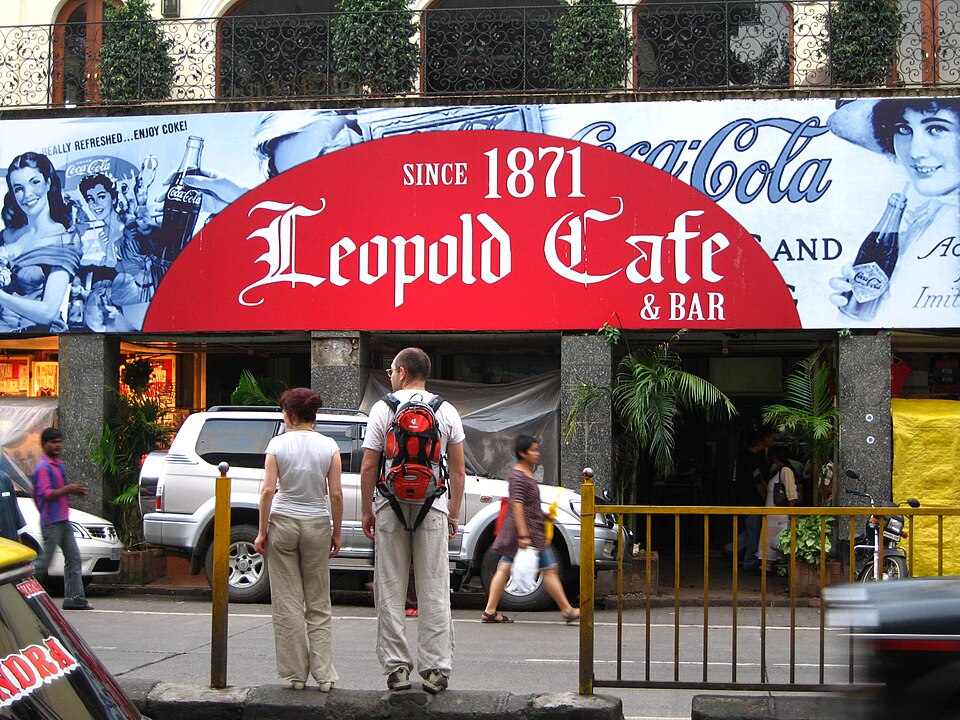
We have now arrived directly across from the historic Colaba Police Station, standing before one of Mumbai's most iconic culinary and cultural landmarks, the legendary Leopold Cafe and Bar. Established in 1871, over one hundred and fifty-five years ago, this landmark establishment was founded by Irani Zoroastrian immigrants who migrated from Iran to India during the late nineteenth century. …
05 Colonial Residential Facades and Heritage Cafes
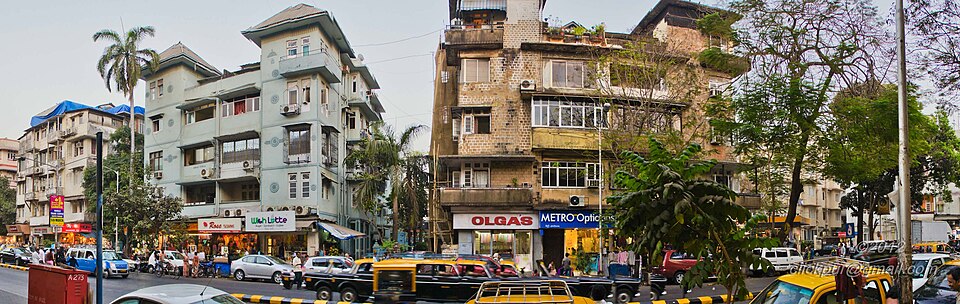
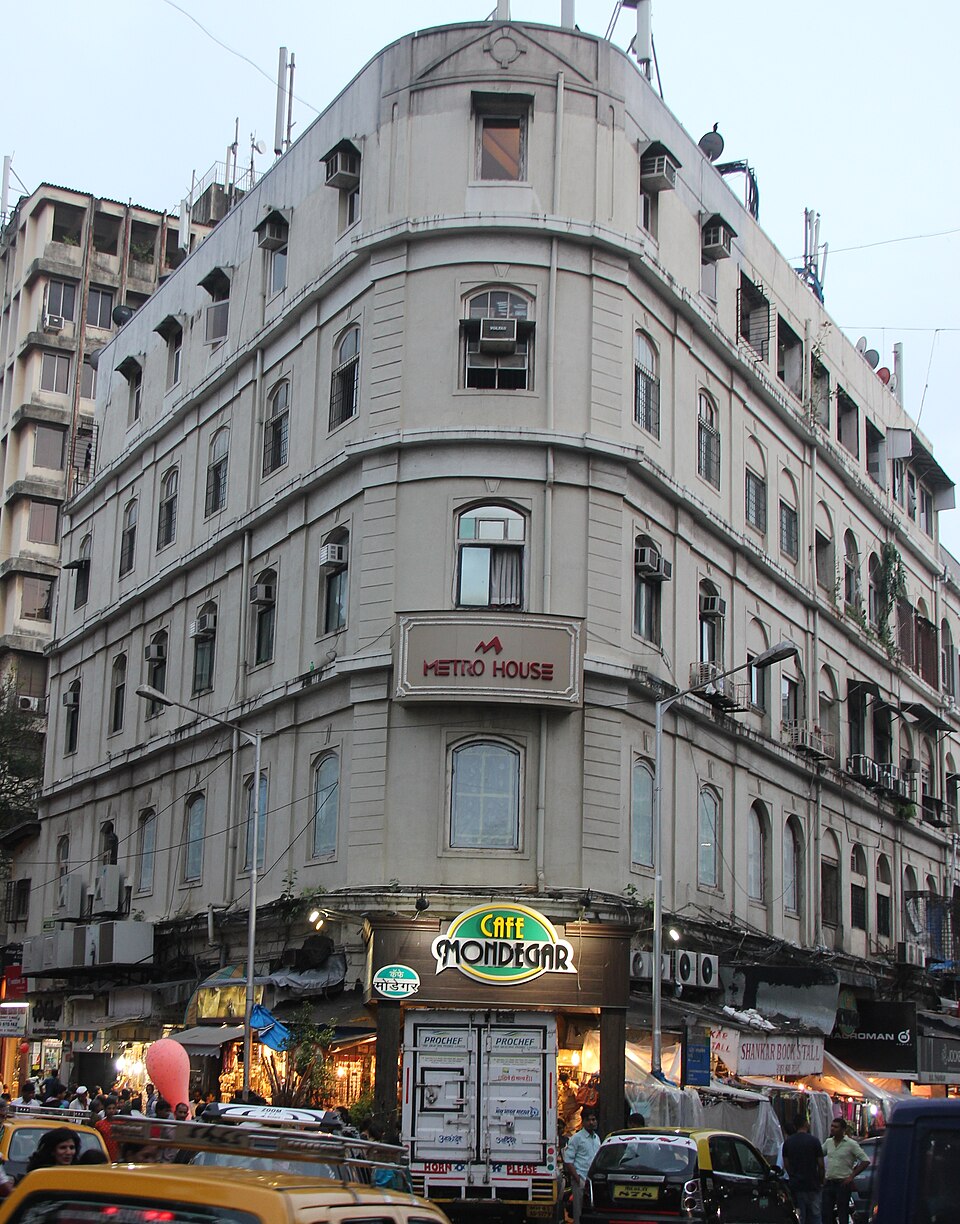
As we continue our stroll along Colaba Causeway, take a moment to lift your eyes above the eye-level confusion of the street stalls and look upward at the upper floors of the buildings lining the thoroughfare. Here, you will be rewarded with a view of grand nineteenth-century residential structures displaying faded elegance and timeless colonial architectural character. …
06 Sassoon Docks Reclamation History
As we proceed further south along the causeway, we approach the historic zone intrinsically linked to the famous Sassoon Docks. The history of this precinct is deeply tied to massive maritime infrastructure and ambitious land reclamation projects that fundamentally reshaped Mumbai's commercial economy. In 1875, the prominent merchant David Sassoon constructed Sassoon Docks directly upon newly reclaimed coastal land. …
07 Afghan Church and Heritage Conservation Zone
As we approach the southern stretch of Colaba Causeway, we enter a district defined by exceptional architectural heritage and refined urban conservation. Located near this southern precinct stands the magnificent Afghan Church, another extraordinary architectural masterpiece that stands alongside the David Sassoon Library in renown. …
08 Closing
We have now reached the official conclusion of our walking audio tour along Colaba Causeway Market. Looking back on our journey, we have traveled through an extraordinary urban landscape where living history and vibrant street culture interweave seamlessly. What began in 1838 as an ambitious marine engineering undertaking by the British East India Company under Governor Sir Robert Grant to bridge open ocean waters and unite isolated islands has evolved into Mumbai's most dynamic and democratic…