Contents
History & cultureBY TELLBY8 sections · numbered as on the map01 Orientation
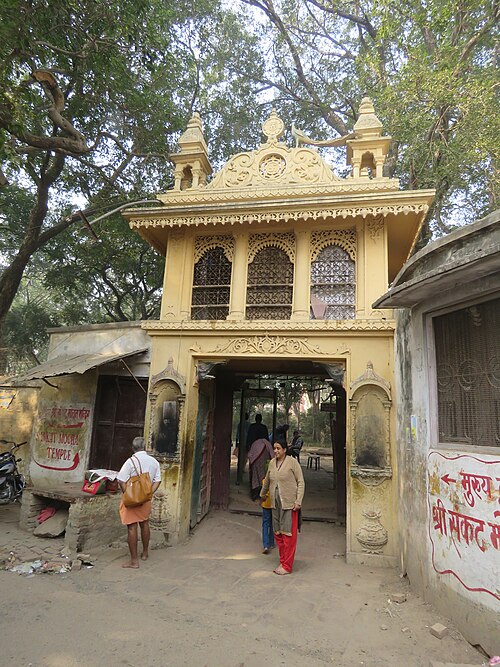
Welcome to the sacred city of Varanasi in the northern state of Uttar Pradesh, India. As you stand here in the Saket Nagar area along Durga Kund Road in Sigra, you are about to enter the revered precincts of the Sankat Mochan Hanuman Temple. Nestled peacefully near the banks of the Assi River, this sanctuary derives its holy name Sankat Mochan from the ancient Sanskrit words signifying the reliever from troubles or the one who removes all life obstacles. Established in the early sixteenth century by the revered preacher, poet-saint, and scholar Goswami Tulsidas, who composed the monumental Hindi epic Ramcharitmanas, this holy site has served as a luminous sanctuary of faith for over four centuries. In Hindu astrological traditions and religious beliefs, Lord Hanuman is devoutly worshipped as a supreme protector who shields his followers from the adverse celestial influences that disrupt human existence. Devotees routinely seek astrological remedies here to counteract the malefic cosmic alignments associated with Shani, representing the planet Saturn, and Mangala, representing the planet Mars. Consequently, thousands of pilgrims facing personal afflictions, health crises, and daunting life challenges travel from all corners of India to seek divine grace and spiritual healing at this shrine. Unlike the bustling ghats along the Ganges River that overflow with intense activity, the Sankat Mochan Temple offers an exceptionally peaceful and contemplative environment. Conveniently situated approximately six kilometers from the Varanasi Junction railway station, about twenty-five to thirty kilometers from the Lal Bahadur Shastri International Airport at Babatpur, and just three kilometers from Banaras Hindu University, it is easily accessible yet wonderfully tranquil. The temple welcomes worshippers early each morning at four thirty and remains open until ten thirty at night. On Tuesdays and Saturdays, which are regarded as immensely auspicious days for honoring Lord Hanuman, the complex experiences a massive surge of devoted pilgrims and extends its operational hours until midnight. Visitors should kindly note that the inner sanctum pauses darshan every afternoon between twelve noon and three oclock. Entry is completely free for all people regardless of their cultural or religious background. As you begin your walk through these sacred grounds, allow the serene atmosphere and the continuous rhythmic chants of the Hanuman Chalisa to bring peace to your mind and spirit.
02 Main Entrance Gate and Security Locker Pavilion
As you approach the main entry gate, you are standing at the threshold of the Security Locker Pavilion, the vital orientation area leading into the inner sanctum. Stepping onto this paved walkway, you are partaking in ancient traditional rituals of respect that have guided generations of pilgrims. In strict accordance with Hindu temple customs, all visitors are required to remove their footwear before entering the holy sanctuary. …
03 Courtyard of the Sacred Fig Tree
Passing through the security pavilion and stepping into the open air, you find yourself in the tranquil Courtyard of the Sacred Fig Tree. This shaded courtyard serves as the emotional and spiritual core of the Sankat Mochan Temple, holding deep sacred memories of the legendary encounter between the poet-saint Goswami Tulsidas and Lord Hanuman. …
04 Inner Sanctum of Lord Hanuman
Leaving the peaceful shaded courtyard behind, you now step into the very heart of the temple complex, the Inner Sanctum of Lord Hanuman. Housed within this sacred shrine is the ancient stone deity of Lord Hanuman, which scholarly tradition attributes directly to the era of the poet-saint Goswami Tulsidas in the late sixteenth century. …
05 Prashad Stalls and Subsidiary Shrines
Moving slowly toward the side precincts of the temple complex, you arrive at the vibrant area housing the official Prashad Stalls and Subsidiary Shrines. This section forms an integral part of the daily pilgrimage experience, offering devotees the opportunity to purchase sacred offerings, receive free religious texts, and pay homage to accompanying deities. …
06 Sangeet Samaroh Cultural Stage Courtyard
Advancing beyond the prashad stalls and walking into the open air of the northern precinct, you now stand in the spacious courtyard that serves as the stage for the world-renowned Sankat Mochan Sangeet Samaroh. This remarkable courtyard represents a unique convergence of profound religious devotion and classical Indian performing arts. …
07 Sankat Mochan Foundation and Ganges Sanctuary Grounds
Proceeding beyond the cultural courtyard, your tour takes you along the peaceful shaded pathways of the Ganges Sanctuary Grounds, which house the headquarters of the renowned Sankat Mochan Foundation. Covering an extensive eight and a half acre semi-wild preserve surrounding the temple, these green grounds protect local biodiversity along the Assi River and stand as a remarkable monument to the fusion of spiritual faith and environmental stewardship. …
08 Closing
As our audio tour comes to its peaceful conclusion, we bid a fond farewell to the holy sanctuary of the Sankat Mochan Hanuman Temple. Throughout our walk together, we have explored the dapple-shaded Courtyard of the Sacred Fig Tree where the poet-saint Goswami Tulsidas experienced his divine vision, witnessed the unique inner sanctum where Lord Hanuman's stone idol eternally gazes upon Lord Ramachandra, celebrated eighty-eight years of classical musical tradition on the cultural stage, and…