Contents
History & cultureBY TELLBY8 sections · numbered as on the map01 Orientation
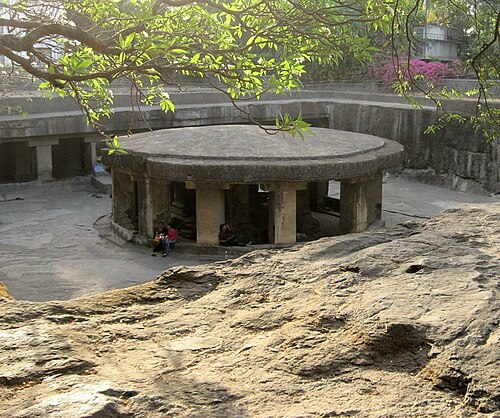
Walking along the bustling Jangali Maharaj Road in the heart of modern Shivajinagar in Pune, turning just a few steps aside brings an astonishing shift where the relentless noise of urban traffic abruptly vanishes. As you slowly walk down the historic stone staircase into the subterranean realm, you are greeted by an extraordinary serenity that feels completely detached from the fast-paced life of the modern city above. This is the Pataleshwar Cave Temple, a monumental rock-cut sanctuary carved in the eighth century during the reign of the powerful Rashtrakuta Dynasty. Geographically, this sacred site was chosen on a rocky hillock situated immediately west of the sangam, the revered confluence of the Mula and Mutha rivers. Historic Sanskrit treatises on temple architecture specifically recommended such elevated rocky locations near river confluences as ideal holy sites for divine worship. Twelve hundred years ago, this surrounding area was not the sprawling metropolis of Pune we see today, but a quiet, humble settlement known as the village of Mouje Bhamburde. Unlike traditional temples that were constructed by piling up stones or bricks from the ground up, this entire sacred site was excavated downwards into the earth. Ancient artisans took a massive, continuous sheet of volcanic basalt bedrock from the Deccan Traps and patiently carved inward and downward, hollowing out the stone to create courtyards, majestic halls, pillars, and holy shrines from a single monolithic rock mass. The basalt of the Deccan Traps, formed by ancient volcanic lava flows, possesses a remarkably uniform grain that made it exceptionally durable yet perfectly suited for intricate stone carving. The name Pataleshwar literally translates to the Lord of the Underworld, a title directly inspired by the dramatic underworld symbolism of its deeply excavated subterranean sanctum. In early colonial surveys, eighteenth-century historical records, and famous artistic depictions by Thomas Daniell in eighteen03 and James Wales in the seventeen-nineties, this place was documented under names such as the Panchaleshvara temple, the Bhamburde caves, or Pandoo's cave, after a popular local legend claiming that the heroic Pandava brothers from the Mahabharata epic sought shelter here during their long exile. Historical archives further reveal that in eighteen ten, Peshwa Bajirao the Second presented a ceremonial offering of one rupee to Bhuyaratil Mahadev, meaning the God Mahadeva in the Underground, while in eighteen eighty-two, ascetic Gosavis monastics gathered here in great numbers. Today, preserved as a protected monument under the care of the Archaeological Survey of India, Pataleshwar stands as Pune's oldest surviving structure. As we begin this audio tour, let yourself adjust to the cool shade and solemn silence of this rock-cut retreat as we prepare to explore its breathtaking architecture, starting from the iconic circular Nandi pavilion standing before you in the open courtyard.
02 The Monolithic Circular Nandi Pavilion
As you step down into the open subterranean courtyard, the most striking feature that immediately draws your attention is the magnificent circular Nandi Mandapa standing proudly at the center. In Hindu tradition, Nandi is the sacred bull and the faithful vehicle of Lord Shiva, and this pavilion was designed specifically as his holy shrine. …
03 Echoes of Chisels: The Unfinished Rock Wall
As you step across the spacious outdoor courtyard surrounding the circular Nandi pavilion and walk along the circumambulation passage known as the pradakshinapatha, you are confronted with a truly fascinating historical sight. The open courtyard itself forms an expansive square, measuring approximately ninety-five feet in north-south length by ninety feet across east and west. Cut deep into the basaltic earth, this open-air court provides a dramatic sense of subterranean grandeur. …
04 The Twin Stone Tigers Guarding the Sacred Cave
To transition from the open, sunlit courtyard into the shaded interior of the primary hall, you ascend a short flight of stone steps carved directly into the basalt bedrock. Guarding this sacred portal on either side are two remarkable rock-cut sculptures of couchant stone tigers. Like every major structural element at Pataleshwar, these guardian tigers were not sculptured separately and brought to the site; they were carved in-situ directly from the natural living rock mass as part of the…
05 Forest of Pillars and the Ancient Inner Nandi
Stepping past the guardian tigers into the covered hall, you enter a cool, shadowed sanctuary defined by an impressive forest of stone pillars. This massive interior pillared mandapa is a masterclass in ancient spatial design and structural engineering. The cavernous ceiling is supported by five distinct rows of square basalt columns, monolithically excavated from the body of the rock mass. …
06 The Three Sanctums and Mahadeva Panchalesvara Linga
At the innermost eastern end of the pillared hall lie the sacred rock-cut inner sanctums, the spiritual heart of the entire complex. Together, the three cave cellas span a total length of thirty-nine feet and a depth of twenty-seven and a half feet. A defining feature of these sanctums is that they are excavated at a noticeably lower level, stepping down deeper into the earth than the rest of the cave floor. …
07 Mythological Reliefs, Durga Shrine, and the Heritage Garden
As you explore the side walls, corridors, and outer surfaces of the cave complex, a careful look reveals traces and remnants of ancient mythological reliefs that once richly decorated this sanctuary. Although centuries of natural erosion and historical damage have claimed many of the original carvings, the surviving sculpted fragments offer fascinating glimpses into eighth-century iconography. …
08 Closing
Leaving behind the cool subterranean shadows and twelve hundred years of sacred silence, it is now time to reascend the historic stone staircase back into the warm sunlight and vibrant energy of modern Pune. As you step back onto Jangali Maharaj Road, the profound sense of stillness experienced deep within the earth lingers as a memorable contrast to the bustling city above. …