Contents
History & cultureBY TELLBY8 sections · numbered as on the map01 Orientation
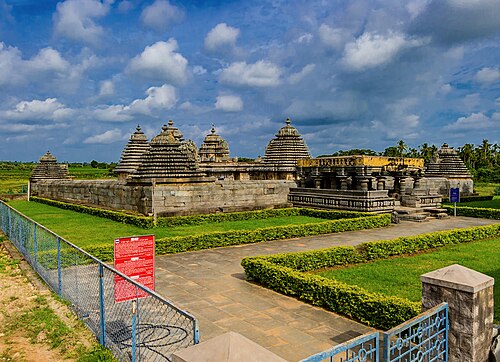
Welcome to the historic shores of the ancient water reservoir located on the southern side of Doddagaddavalli village in the Hassan District of Karnataka, India. In historic inscriptions, this tranquil location is recorded under the ancient name of Gadumballi, and the original town was likely situated right near this manmade reservoir. As you stand here today, you are looking at the extraordinary Lakshmi Devi Temple, which was completed in approximately eleven thirteen CE during the illustrious reign of King Vishnuvardhana of the Hoysala Empire. Unlike many of the grand state monuments constructed directly by royal decree, this complex possesses a remarkably unique secular and devotional history. It was commissioned and generously funded by a prosperous merchant named Kalhana Ravuta and his devoted wife Sahaja Devi, demonstrating the vital role played by wealthy merchant patrons in fostering early Hoysala artistic and religious traditions. Geographically, Doddagaddavalli occupies a strategic position, situated roughly twenty kilometers northwest from the city of Hassan, sixteen kilometers south of the historic capital of Halebidu, and twenty five kilometers southeast from the famous site of Belur along National Highway three seventy three. Among the eighty to ninety surviving Hoysala temples scattered across the Malnad region of Karnataka, the Lakshmi Devi Temple holds an extraordinary place as the earliest known temple constructed under Hoysala rule. Remarkably, while many other monuments suffered destruction over the centuries, this temple remains virtually intact, preserving its original twelfth century structural layout and architectural elements. From an architectural perspective, this monument serves as a quintessential transitional bridge between the earlier traditions of the Later Chalukya and Kadamba dynasties and the highly distinctive, fully developed Hoysala aesthetic. Furthermore, unlike the world famous later Hoysala monuments that sit elevated upon a high star shaped or rectangular platform known as a jagati, this temple rests directly on ground level. The building material utilized throughout the construction is Chloritic schist, commonly referred to as soapstone, which is renowned for its soft workability when first quarried and carved, but gradually hardens into enduring stone upon exposure to air. Typical of Later Chalukya inspired designs, the temple lacks an enclosed circumambulatory passageway and eschews the densely packed narrative sculptured friezes that characterize later ornate Hoysala masterworks like Belur, Halebidu, or Somanathapura. Instead, it presents a balanced, structural clarity featuring fine decorative moldings and elegant miniature tower pilasters. Take a moment to absorb the peaceful atmosphere near the historic water reservoir, reflecting on how this early twelfth century sanctuary laid the artistic foundation for one of Southern India's most celebrated architectural traditions. When you are ready, let us step forward toward the outer compound wall to examine the overall layout of this fascinating nine shrine precinct.
02 The Outer Compound Wall & Corner Shrines
Now, please walk along the impressive stone boundary wall known as the praakara, which encloses the entire temple precinct. This outer compound wall stands approximately seven feet high and forms a remarkably precise square measuring nearly one hundred fifteen feet on each side. The praakara serves not merely as a perimeter wall, but as a sacred architectural boundary that separates the hallowed grounds within from the mundane world outside. …
03 The Open Ranga-Mantapa & Lathe-Turned Pillars
Now, please step past the ornate stone elephant balustrade framing the main eastern entrance step and enter the central shared hall, known as the ranga mantapa. The beautifully sculpted elephant balustrades flanking the entrance steps serve as a grand welcoming element, showcasing the masterful stone carving of early Hoysala artisans. Because this temple lacks an elevated jagati platform, you step directly up from the courtyard level into this atmospheric interior. …
04 The East Sanctum – Mahalakshmi Shrine
Now, please face east toward the principal sanctum of the complex, which houses the revered three foot tall idol of Goddess Mahalakshmi. In local Hindu tradition, this deity is venerated as a jagrat devi, meaning an awake and highly responsive divine presence who directly hears and grants the prayers of her devotees. As you gaze toward the sanctum, take note of the extraordinary iconographic attributes held by the goddess. …
05 The North Sanctum – Kali Shrine & The Vetala
Now, please follow me northward from the central hall into the distinctive northern extension that leads directly toward the shrine dedicated to Goddess Kali. As you walk through this section, notice that unlike the strictly square rooms found elsewhere in the temple, this area is designed as an oblong rectangular hall extension. …
06 The West & South Sanctums – Shiva Linga & Historic Vandalized Shrine
Now, let us turn our attention toward the western and southern sanctums within the main temple building. First, move west to inspect the sanctum dedicated to Lord Shiva, who is worshipped here in the form of the Boothanatha Linga. In local folklore and devotional tradition, Lord Boothanatha Shiva is affectionately considered to be the divine brother of Goddess Mahalakshmi, establishing a sacred familial bond between the eastern and western shrines. …
07 Northeast Bhairava Shrine & Water Drainage System
Now, please step out of the central interior hall into the open courtyard and walk toward the northeastern precinct of the inner enclosure. Here in the quiet northeastern corner of the courtyard stands a completely independent fifth shrine, constructed apart from the main central building. This freestanding structure is dedicated to Lord Bhairava, a powerful and protective manifestation of Lord Shiva. …
08 Closing
This concludes our comprehensive audio guide tour of the Lakshmi Devi Temple in Doddagaddavalli. Standing here within this remarkably intact twelfth century compound, preserved since its consecration in eleven thirteen CE, offers a deeply moving encounter with the origins of Hoysala architecture. The Lakshmi Devi Temple stands as an enduring monument to the generous patronage of private citizens—the wealthy merchant Kalhana Ravuta and his devoted wife Sahaja Devi—whose devotional investment…