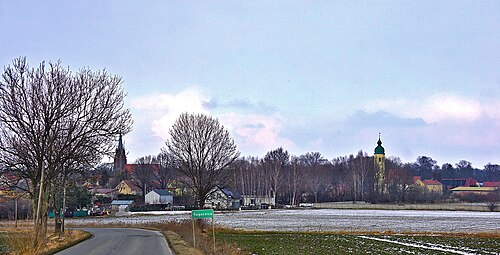

Gross-Rosen Museum in Rogoznica
Poland
This tour is designed to show you the complicated heritage of World War II and its lasting impact on the province. You will learn about the inhumane system of forced labor and human suffering in the former Concentration Camp of Gross Rosen, you will visit a mysterious complex of underground tunnels whose purpose still eludes historians to this day, and you will discover facts about German aristocrat Helmuth James von Moltke, who established an anti-Nazi resistance group which became an important symbol in Polish-German reconciliation. The tour starts in the state museum and a former German Nazi concentration camp of Gross Rosen. Originally a sub-camp of Sachsenhausen, from 1941 it became the largest fully autonomous camp in the Silesian province and was known for its deadly work conditions in the granite quarry. Find out about the German state's machine of brutal forced labor and human annihilation. Experience the sobering feeling of visiting the former SS Cantine building, field crematoria, and memorial site while taking some time to reflect upon approximately 40,000 victims of Nazi terror.
Contents
9 sections · tap a section for its opening lines1Orientation
Welcome to the Gross-Rosen Museum in Rogoznica. I am honored to be your guide through this deeply sobering historical landscape. …
Listen in the app2The Main Gate and the Reality of Arrival
We are now standing near the main gate and the entrance path of the camp. I ask you to pause and look closely at this entryway. …
Listen in the app3The Roll Call Square (Appellplatz)
As we move inward from the entrance, we arrive at this vast, open expanse of ground. This is the Appellplatz, the roll call square. …
Listen in the app4The Foundations of the Prisoner Barracks
We now step toward the area where the prisoner barracks once stood. Look at the foundations and the markers that outline the footprint of these structures. …
Listen in the app5The Washroom and Morning Routine Area
Let us continue to the area that functioned as the washroom and sanitary facility for the camp. When analyzing the daily schedule of a prisoner at Gross-Rosen, we see a meticulously timed system of control designed to afford no…
Listen in the app6The Camp Kitchen and Food Distribution Area
We have now reached the site where food distribution took place, a location that represents perhaps the most insidious weapon used against the prisoners of Gross-Rosen: calculated starvation. As I mentioned earlier, this was a…
Listen in the app7The Perimeter Fence and Guard Towers
Let us walk toward the reconstructed perimeter fence and look up at the position of the guard towers. It is vital to comprehend the sensory landscape of fear that was maintained along these boundaries. …
Listen in the app8The Path Toward the Labor Sites
Our final stop on this specific route takes us to the pathway leading out of the main camp area, the road toward the external labor sites. This path represents the agonizing daily commute that drained the last reserves of life…
Listen in the app9Closing
As we conclude our walk through the Gross-Rosen Museum, I ask you to gather your thoughts and reflect upon the immense gravity of what we have explored today. We have traversed the very grounds where humanity was stripped away…
Listen in the app
What is Gross-Rosen Museum in Rogoznica?
Gross-Rosen Museum in Rogoznica is a place in Poland with 9 story sections on Tellby. You can read the opening of each section on this page; the sound plays in the app.
| Location | Poland |
|---|---|
| Type | Heritage |
| Story sections | 9 |
| Text language | English |
| Coordinates | 51.0082, 16.2967 |
| Last updated |