 Photo Wikimedia Commons
Contents
History & cultureBY TELLBY8 sections · numbered as on the map01 Orientation
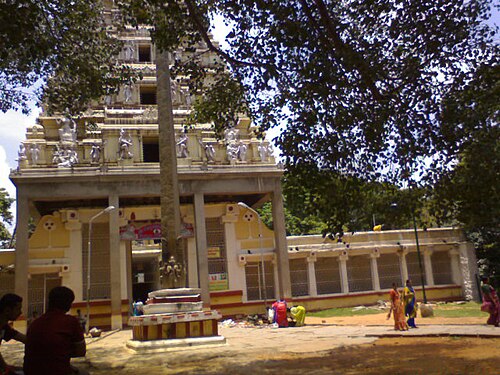
Welcome to the historic Shree Dodda Ganapathi Temple, located along Bull Temple Road in the vibrant South Bengaluru neighborhood of Basavanagudi. This celebrated sacred shrine traces its origins back to the sixteenth century, having been founded in 1537 CE by Nadaprabhu Kempe Gowda I, the revered chieftain acknowledged as the founder of modern Bengaluru. For nearly five centuries, this living temple complex has served as an enduring sanctuary of spiritual grace, drawing local devotees and international travelers who seek blessings, peace, and the removal of life obstacles. As you begin your walkthrough, this immersive audio guide will accompany you through each distinct architectural section, highlighting its rich history, sacred legends, and living ritual traditions. Before stepping onto the stone entrance stairs, please observe the foundational visitor etiquette and traditional guidelines required at this active heritage site. All footwear must be removed before entering the sacred perimeter. An official footwear counter is located directly to the right of the front Rajagopuram entrance archway, where you can safely deposit your shoes for a nominal fee of two to five rupees per pair in exchange for a retrieval token. Please refrain from leaving your shoes unattended along the public street curb. Visiting pilgrims are also expected to strictly maintain traditional and modest attire. Gentlemen must wear dhotis, kurtas, or neat full length trousers paired with a shirt. Sleeveless athletic shirts, vests, and shorts are strictly prohibited at the perimeter entrance gate. Ladies are required to wear traditional sarees, salwar kameez with dupattas, or long ethnic skirts that fully cover the shoulders and knees. Western clothing such as short skirts, crop tops, sleeveless blouses, or ripped garments will result in denied entry by temple security. Furthermore, photography and videography are strictly forbidden inside the inner pillared mandapa and the central subterranean sanctum sanctorum. While you may photograph the outer Dravidian Rajagopuram tower from the exterior street, all mobile devices must be silenced and stored away once you cross the threshold into the stone courtyard. The temple welcomes pilgrims twice daily, opening every morning at six o clock and closing at twelve thirty in the afternoon, before reopening for evening prayers from five thirty to nine o clock at night. Please note that the inner gates remain completely locked between twelve thirty and five thirty in the afternoon for maintenance and deity rest. Having adjusted your attire and safely deposited your shoes, please proceed calmly through the entrance gate into the open stone courtyard.
02 The Open Courtyard and Ritual Offerings
As you step past the grand Rajagopuram entrance tower into the stone paved open courtyard, the chaotic rumble of Bull Temple Road fades away, replaced by an atmosphere of focused reverence and tranquility. Along the right boundary wall of this open air enclosure, bustling devotional stalls offer traditional ritual items essential for Hindu worship. …
03 The Pillared Mukhamandapa: Vijayanagara Architectural Splendor
Leaving the open air courtyard behind, you descend a few shallow stone steps into the cool, shaded expanse of the Mukhamandapa, or front pillared pavilion. Constructed entirely from massive blocks of dense regional granite, this sheltered hall serves as an atmospheric transition zone where pilgrims gather to quiet their minds before approaching the inner sanctuary. …
04 The Colossal Monolithic Shakthi Ganapathi and Benne Alankara
Now, focus your attention toward the recessed Garbhagriha, or inner sanctum sanctorum, housing the awe inspiring centerpiece of this ancient site, the colossal monolithic Ganesha. Measuring an impressive eighteen feet, or five point five meters in height, and sixteen feet, or four point nine meters in width, this imposing deity is recognized as one of the largest single stone Ganesha sculptures in all of Karnataka. …
05 The Pradakshina Path: Walking Around Living Bedrock
After paying your respects before the main sanctum, follow the ambulatory corridor to your left to begin the traditional clockwise circumambulation known as the Pradakshina Path. In Hindu ritual tradition, walking around a deity or sacred site in a clockwise direction signifies aligning oneself with the cosmic order, placing the divine presence continually at one's right side as a gesture of reverence and total surrender. …
06 Ascending to Dodda Basavana Gudi: The Great Bull Temple
Exiting the rear Pradakshina Path, step onto the stone paved outdoor stairway that climbs gently up the granite slope toward Dodda Basavana Gudi, universally known as the Great Bull Temple. Situated just a minute's walk uphill on the contiguous Bugle Rock ridge, this neighboring shrine is intrinsically connected to the Ganesha temple, and local tradition dictates that pilgrims almost always visit both holy sites together as a single sacred circuit. …
07 Bugle Rock Park and the Kadalekai Parishe Groundnut Festival
Stepping out from the Bull Temple complex, follow the tree lined pathways directly into Bugle Rock Park, an expansive green sanctuary adjoining the temple grounds that has been officially designated by the state government as a walker's paradise. The defining geological marvel of this public garden is the exposed Peninsular Gneiss rock formation upon which the park is built. …
08 Closing
This concludes your audio guide tour of the sacred Shree Dodda Ganapathi Temple, the neighboring Dodda Basavana Gudi, and the historic surroundings of Bugle Rock Park. May the benevolent grace of Lord Ganesha, the divine remover of all obstacles and harbinger of auspicious beginnings, illuminate your journey, bring lasting peace to your mind, and pave a smooth path for all your future endeavors. …