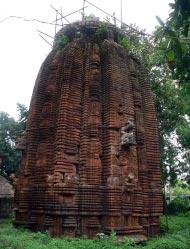
 Photo Wikimedia Commons
Contents
History & cultureBY TELLBY8 sections · numbered as on the map01 Orientation
Welcome to the sacred Kedar Gauri Temple complex located on Kedar Gauri Road in the heart of the historic Old Town of Bhubaneswar, Odisha, India. Positioned approximately four point five kilometers from the main Bhubaneswar Railway Station and situated conveniently between one hundred to three hundred meters directly behind the world famous Muktesvara Temple complex, this revered sanctuary offers a profound encounter with ancient Indian spiritual heritage. In ancient times, the region of Bhubaneswar was widely known as Ekamra Kshetra, referring to a holy land beautifully adorned with lush, fragrant mango trees. Celebrated through the ages as the City of Temples, Bhubaneswar once harbored around three thousand magnificent sacred structures, and even today, hundreds of ancient temples remain preserved across every corner of this historic city. Among these remarkable religious monuments, the Kedar Gauri complex occupies a sacred position as one of the distinguished Eight Astasambu Temples of Bhubaneswar. The complex itself is uniquely composed of two principal ancient temples existing side by side within the same sanctified enclosure. One temple is dedicated to Lord Shiva under the name of Kedar, and the other is dedicated to his divine consort, Goddess Parvati, under the name of Gauri. Two fascinating and deeply moving traditions surround the origin of this holy sanctuary. The first legend tells a poignant story of tragic love between a young village man named Kedar and a maiden named Gauri. Opposed by their villagers and families, the two lovers fled their home together. During their journey, Gauri became overcome with severe thirst, so Kedar ventured deep into the surrounding forest to search for food and water. Tragically, Kedar was attacked and killed by a wild tiger in the woods. Upon discovering the heartbreaking death of her beloved partner, Gauri was consumed by overwhelming sorrow and ended her life by jumping into a nearby sacred pond. Moved by this tragic devotion, King Lalatendu Keshari of Utkal constructed temples beside the pond and named the sanctuary Kedar Gauri in perpetual memory of their eternal love. To this day, lovers seeking marriage and enduring happiness visit this sanctuary to receive divine blessings. The second legend offers a captivating mythic origin involving the cosmic deities. Lord Shiva, finding the holy city of Kasi, also known as Varanasi, increasingly noisy, desired a serene abode for contemplation. He commanded the celestial sage Narada to discover an equally sanctified and tranquil place. Narada guided Lord Shiva to Ekamra Kshetra, where the lord descended and established his divine presence. Initially residing alone, Lord Shiva eventually brought Goddess Parvati to join him following her persistent entreaties, thereby establishing the cojoined sanctuary of Kedar and Gauri. As you begin your walk through this peaceful sanctuary, prepare to experience a unique blend of architecture, myth, and deep living faith.
02 The 12th Century Kedar Temple and Kedareshwar Shivalinga
Now let us direct our step and attention toward the Kedar Temple, which stands as one of the two main sacred structures gracefully positioned within this holy compound. Historically and architecturally, this impressive temple was constructed during the twelfth century Common Era under the royal patronage of the Ganga Kings. …
03 The 10th Century Gauri Temple and Intricate Carvings
We now step across the courtyard to inspect the second primary sanctuary within the complex, known as the Gauri Temple. Dedicated to Goddess Gauri, the divine consort of Lord Shiva, this sanctuary presents a fascinating historical and aesthetic contrast to the adjacent Kedar Temple. Although local folklore often pairs both temples as if they were constructed simultaneously, precise historical and architectural studies confirm that the Gauri Temple belongs to the Somavamsi period, dating back to…
04 Subsidiary Shrines of Hanuman Durga and Ganesha
As you continue your peaceful stroll through the spacious courtyard of the Kedar Gauri complex, you will discover several smaller yet spiritually significant subsidiary shrines surrounding the two primary temples. These smaller architectural structures demonstrate how a major Hindu temple compound functions as a vibrant microcosm, bringing together diverse deities into a single harmonious spiritual ecosystem. …
05 The Open Mandapa Hall and Sacred Murals
Standing prominently within the central courtyard of the temple compound is a unique freestanding structure known as the Open Mandapa. Unlike the enclosed Jagamohana assembly halls attached directly to the main temple spires, this Mandapa is built as an independent ritual pavilion with all four sides completely open to the surrounding courtyard and fresh air. …
06 Sacred Tanks of Healing and Liberation Khira Kund and Marichi Kund
No visit to the Kedar Gauri Temple complex can be truly complete without exploring its two highly revered sacred water tanks, known as Khira Kund and Marichi Kund. Situated within the peaceful inner grounds of the temple enclosure, these ancient holy ponds possess immense spiritual significance and therapeutic importance in the living traditions of Odisha. The first sanctified tank is known as Khira Kund. …
07 Sital Shasti Festival and the Divine Wedding Procession
The Kedar Gauri Temple is far more than a quiet historical monument, functioning as a dynamic, living cultural sanctuary that plays a central role in one of Bhubaneswar's most magnificent annual religious celebrations, known as the Sital Shasti festival. Occurring annually during an auspicious calendar period, this joyful festival commemorates the divine marriage between Lord Shiva and Goddess Parvati, drawing thousands of passionate pilgrims and local residents into a shared atmosphere of…
08 Closing
As we conclude our audio guide walk through the Kedar Gauri Temple complex, take a quiet moment to pause in the courtyard and reflect upon the remarkable journey you have experienced. Within this single sacred sanctuary, you have witnessed the harmonious coexistence of two distinct architectural epochs, namely the intricate tenth century Somavamsi period artistry of the Gauri Temple and the grand twelfth century Ganga dynasty heritage of the Kedar Temple. …