Contents
History & cultureBY TELLBY2 sections · numbered as on the map01 The Sovereign Silhouette: An Eye for Form, Fabric, and Power
Morning arrives in Florence not with noise, but with texture. The fog lifts off the slow waters of the Arno like steam rising from a newly pressed wool, revealing the cool grey grain of pietra serena stone and terracotta roofs sharply etched against a pale Tuscan sky. In the quiet side streets between San Marco and the river, the city awakens to a familiar, private ritual: the crisp clatter of an espresso cup against a marble counter, the aroma of dark roast cutting through chilly air, and the rhythmic, authoritative click of bespoke leather soles echoing on flagstones worn smooth by six centuries of ambition. To walk through Florence in the morning is to enter an atelier that never closed its doors. Here, beauty was never an afterthought or an accidental romance. It was a rigorous discipline, an exacting craft, and above all, the primary currency of power.
The Sovereign Archive
The Florentine mind has always understood the sheer leverage of appearance. Long before modern ateliers defined haute couture, the merchant princes and dynastic patrons of this valley recognized that architecture, bronze, and paint were the ultimate instruments of public standing. Consider Anna Maria Luisa de Medici, the final descendant of the extraordinary banking family that bankrolled the Renaissance. When her male line collapsed in the eighteenth century, Europe hovered like a flock of eager vultures, ready to dismantle the grand ducal collections and ship centuries of treasures off to Paris, Vienna, and Madrid. Instead, she engineered one of the most brilliant acts of cultural preservation in human history. Through the famous Family Pact of 1743, she bequeathed the entire Medici heritage to the state of Tuscany on one unyielding condition: not a single painting, antique coin, or carved cameo could ever leave the city walls. They were to remain intact forever for the ornament of the state, the utility of the public, and the curiosity of foreigners. Her sovereign signature kept the soul of the Renaissance grounded firmly in its birthplace.
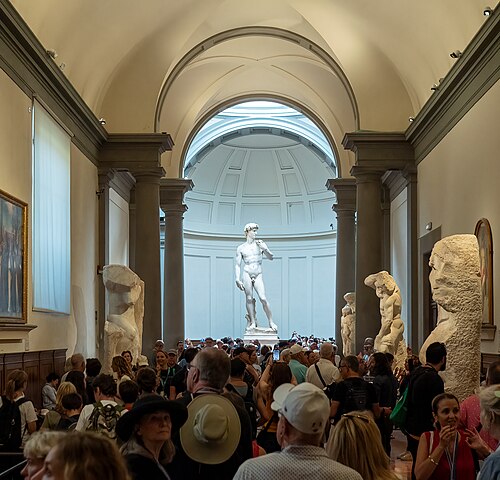
This was not an isolated triumph. That same protective fury over visual identity echoes through the centuries down to our present moment. Just a short walk away, when a glossy contemporary publication produced a lenticular cover that switched between the classical marble torso of Michelangelo David and a modern fashion model, the Galleria dell Accademia promptly took the publishers to court. Even five centuries later, Florence insists that its iconic silhouettes are neither casual commercial fodder nor interchangeable motifs. They belong to a fiercely guarded canon of Florentine proportion.
The Theater of Form
Across the river, in the monumental rusticated fortress of Palazzo Pitti, Duchess Eleonora di Toledo demonstrated that style could conquer the most severe political arena. Raised in the splendid, gilded court of Naples, she bought the unfinished palace from the impoverished heirs of banker Luca Pitti, turning an austere stone pile into an opulent stage for the Grand Duchy of Tuscany. She dressed the court in lavish Spanish brocades and commissioned Angelo Bronzino to saturate her private chapel with incandescent lapis lazuli and pearls, crafting an imperial image that outlasted the Medici empire itself.
These spaces are neither passive mausoleums nor silent archives. They are catwalks of statecraft and aesthetic desire where marble, paint, and leather refuse to concede to time. As you move through their galleries, do not simply inspect the historical markers. Observe the precise fall of drapery, the severe geometry of a courtyard, and the timeless Florentine certainty that perfection in form is the most enduring legacy one can leave behind.
02 The Austere Refectory
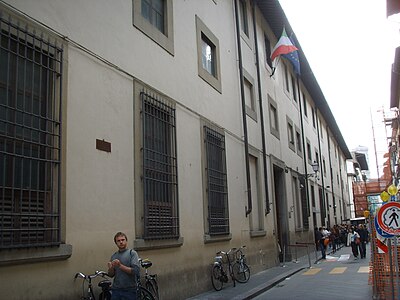
Begin where the city holds its breath. Push open an unassuming wooden door near the corner of Via Ventisette Aprile and step into the former refectory of Sant Apollonia. Once a strictly cloistered Benedictine convent, this cool hall preserves an extraordinary stillness. Turn your gaze toward the end wall. Here, Andrea del Castagno painted The Last Supper with the graphic precision of an architectural draft. …