Contents
History & cultureBY TELLBY2 sections · numbered as on the map01 The Private Chambers of the Canal City
Morning mist lifts off the Herengracht in silver ribbons, diffusing the pale northern light against dark gabled facades. A cyclist in an impeccably tailored charcoal wool coat glides past wet brick pavement, the bicycle bell chiming once with crisp, melodic precision. Amsterdam does not display its luxury on bombastic boulevards or gilded plazas. It folds its elegance into interior courtyards, narrow alleyways, and quiet doorways that appear utterly ordinary until you push them open. True sophistication here has always been private, understated, and intensely personal. The true rhythm of the city is set not by grand public spectacles, but by the confidential friction of weathered brick, dark canal water, and hand-rubbed timber. To understand this landscape with the discerning eye of an editor, you must abandon the crowded tourist arteries and step deliberately into its hidden folds, where silence becomes an aesthetic statement and every cobblestone corner conceals an intimate ritual of daily life.
The Architecture of Sanctuary
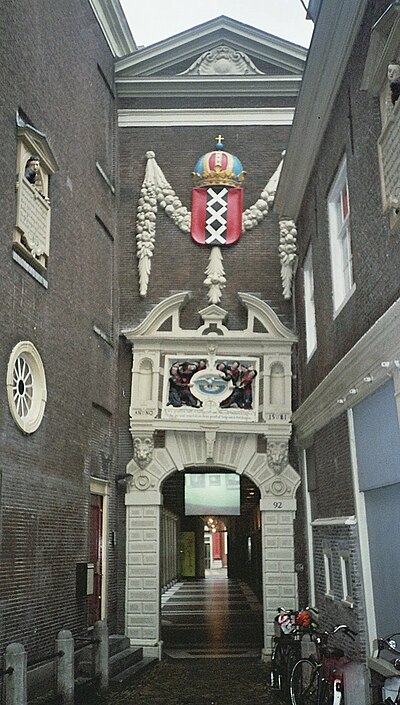
Consider how Amsterdam has long perfected the art of the enclosed retreat. In the fourteenth century, while the rest of medieval Europe built fortified castles, an extraordinary collective of women shaped the Begijnhof behind high brick walls. As the Belgian historian Henri Pirenne famously observed, the beguine movement arose from a severe surplus of women following destructive wars. Rather than submitting to feudal marriage or taking cloistered vows under rigid monastic orders, these women established an autonomous communal society. They lived in private townhouses wrapped around a silent lawn, maintaining their personal property and independent spiritual life through centuries of political upheaval. That impulse toward self-contained sanctuary remains etched into the municipal character.
Across the canal ring in the leafy Plantage district, a parallel devotion to quiet discipline took root. When director Johannes Snippendaal took charge of Hortus Botanicus in 1646, he spent his tenure meticulously cataloging seven hundred and ninety-six species of medicinal flora, transforming a pragmatic municipal herb plot into an enduring pharmacopoeia of Amsterdam. Centuries later, when evolutionary scientist Hugo de Vries brought international renown to the same garden with his revolutionary mutation theories, the governing board went so far as to commission an Amsterdam School expressionist Palm House and laboratory simply to persuade the professor never to leave the city. From medieval domestic sanctuaries to rare botanical pavilions, the urban genius of Amsterdam lies in carving out protected chambers of beauty, shielded from the noise of commerce.
The Underground Cadence
That same appetite for subterranean devotion runs straight into the modern creative landscape. When Jimi Hendrix recorded Electric Ladyland at Record Plant Studios in 1968, his legendary perfectionism led him to cut over fifty takes of Gypsy Eyes. Deeply insecure about his own vocal timbre, Hendrix sang concealed behind acoustic studio screens, converting vulnerability into a timeless masterpiece of layered psychedelic soul. Amsterdam shares that exact creative temperament. It is an urban sanctuary that celebrates the obsessive collector, the neon-lit basement studio, and the clandestine courtyard garden.
Walking through its lesser-known quarters is an exercise in stylistic editing. You learn to listen for the hush behind heavy oak doors, breathe in the damp peat of hidden glasshouses, and savor the sudden transition from gray canal drizzle to radiant ultraviolet galleries. What lingers long after you leave is not the noisy spectacle of the main waterways, but the quiet satisfaction of having stepped inside private sanctuaries that yield their charms only to those who move softly, observe closely, and cherish the luxury of stillness.
02 The Courtyard of Quiet Shadows
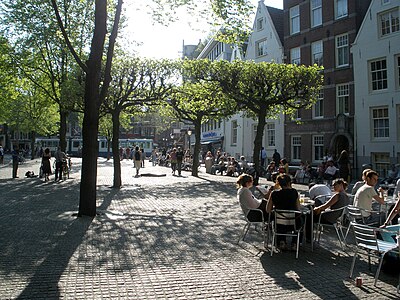
Slip away from the lively chatter of the Spui and locate the discreet arched doorway set into the brick wall. Step across the threshold, and the city hum cuts out instantly, replaced by the rustle of manicured grass and the soft fluttering of birds. You are standing inside a fourteenth century sanctuary founded by the beguines, independent women who lived here without taking formal vows. …