Contents
History & cultureBY TELLBY2 sections · numbered as on the map01 The Cradle of Wonder: Wandering Florence with Young Eyes
Morning arrives over Florence not with a sudden clamor but as a soft unlocking of light along the Arno, where ancient stone facades and morning river mist dissolve seamlessly into one another. To walk these paved thoroughfares with a child by your side is to experience the Tuscan capital through an entirely altered sense of human scale and wonder. Where an adult eye gravitates toward centuries of heavy patronage, statecraft, and formal Renaissance architectural proportion, a child immediately notices the worn hollows of ancient threshold stones, the curious brass lion gargoyles mounted at eye level, and the rhythmic clatter of morning delivery carts echoing off tall plaster walls. Florence is frequently celebrated as a monumental open-air museum, yet its truest genius has always resided in its domestic intimacy, its extraordinary capacity to translate grand historical ambition into a warm, accessible narrative for the curious mind.
Consider how youthful intellect has flourished in this valley across generations. In the late fifteenth century, a young left-handed boy named Leonardo wandered these exact riverbanks, filling draft notebooks with mirror script and unbridled observations of swirling water and birds taking flight. His grandfather Antonio had meticulously recorded the boy's birth in an ancient notarized family ledger, noting a quiet rural arrival that would eventually reshape human inquiry across Europe. Years later, when Leonardo entered the bustling workshop of Andrea del Verrocchio near the heart of the city, he joined a living tradition of hands-on experimentation where fine art, geometry, and mechanical invention were indivisible. Long before modern scholars categorized the Renaissance into rigid textbook movements, it was simply an atmosphere of daily wonder, a communal workshop where young apprentices ground earth pigments, constructed wooden pulleys, and learned to observe the natural world with untamed clarity.
The Heritage of Young Curiosity
Centuries later, amidst the tranquil woodlands of the Cascine park along the northern bank of the Arno, the romantic poet Percy Bysshe Shelley experienced a parallel awakening during his Florentine stay. Strolling beneath the towering trees near the neoclassic Narcissus Fountain in the former Medici estate, Shelley watched autumn leaves sweep across the open meadows and listened to the tempestuous gale stirring the forest canopy, deriving the direct inspiration for his celebrated Ode to the West Wind. These historical echoes remind us that Florence has perpetually nurtured writers, visionaries, and thinkers who maintained an enduring sense of childhood astonishment when confronting the natural beauty of the world.
In our present era, traveling through Florence with family offers a rare opportunity to step away from the hurried tempo of modern life. The city invites adults and children alike to become co-discoverers, tracing how generations of builders and artists shaped spaces that feel simultaneously grand and welcoming. When exploring Florence as a family, our primary aim should never be a breathless march through endless gallery corridors, but rather the cultivation of a shared rhythm of discovery and quiet reflection.
A Sanctuary of Shared Memory
It is about lingering beneath the graceful arcades designed by Filippo Brunelleschi, observing how morning light illuminates painted vaulted ceilings, and pausing for a quiet scoop of artisanal gelato on a shaded bench while afternoon shadows lengthen across historic piazzas. As you set out together on this walking journey through the historic heart, allow the city to reveal itself at an unhurried pace, transforming every stone alleyway into an inviting classroom of human history and every peaceful courtyard into a lasting sanctuary of collective family memory.
02 Under Brunelleschi's Arcades of Compassion
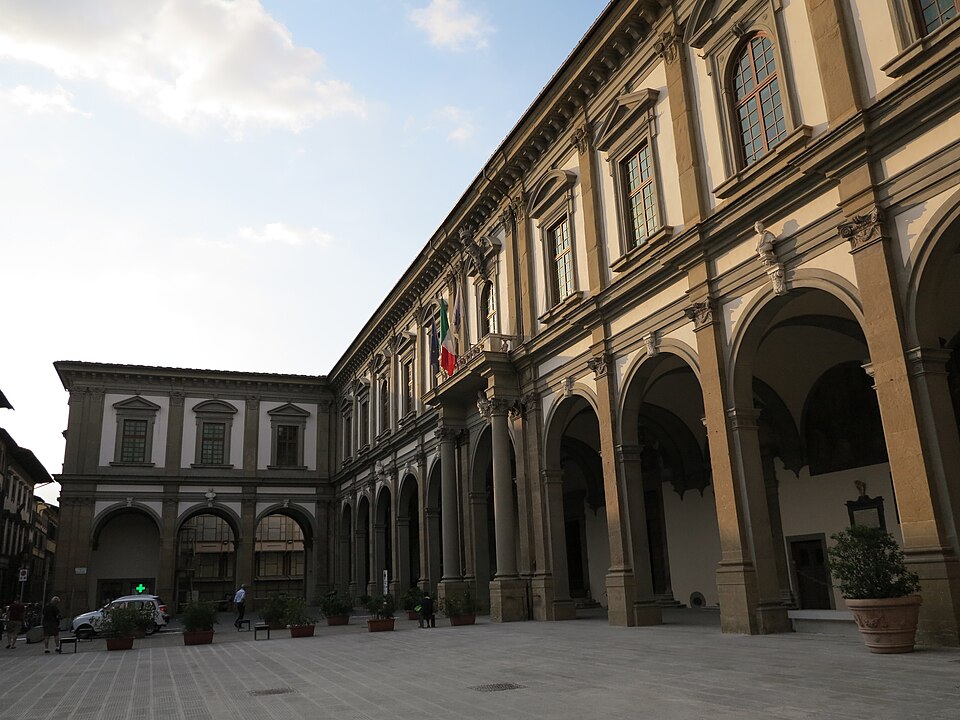
As you step into Piazza della Santissima Annunziata, the delicate loggia designed by Filippo Brunelleschi opens like an outstretched pair of welcoming arms. Founded in fourteen nineteen as Europe's first Renaissance orphanage under the proud patronage of the Florentine Silk Guild, the Spedale degli Innocenti was constructed to offer dignity, warmth, and sanctuary to vulnerable abandoned infants. …