Morning arrives over the waters of the Vistula River with the pale, chalky luminescence of ancient limestone. From the riverbank, Wawel Hill emerges not merely as a dramatic geological outcrop, but as a monumental vessel of Polish collective memory, its layered towers, bastion walls, and pitched roofs holding centuries of political ambition, artistic triumph, and profound spiritual resolve. As curators of material culture, we often remind our visitors that stones do not simply enclose space or shelter human life; they absorb and reflect the temperament of the hands that shaped them. To approach this historic elevation in southern Poland is to witness how an entire civilization safeguarded its identity through sheer architectural discipline and unyielding devotion to craftsmanship.
Consider the singular historical reality that defines Krakow today. Unlike numerous major European capitals whose historic urban centers were tragically reduced to rubble during the cataclysms of the twentieth century, this ancient royal seat survived physically intact. Its medieval street grid, monumental Gothic portals, and soaring vaults remain largely as their medieval and Renaissance creators intended. Yet this miraculous preservation was never an accident of quiet fortune. Krakow was besieged, repeatedly occupied, stripped of its royal court, and subjected to foreign partitions for over a century. In response to political erasure, Krakowians transformed their monuments, relics, and learned institutions into silent strongholds of cultural sovereignty, ensuring that every carved arch and Latin inscription would outlast the rise and fall of surrounding empires.
A Court Open to the South
That deliberate fusion of governance, sacred dignity, and avant-garde artistry reached its golden age during the reign of King Sigismund the First and his Italian-born consort, Queen Bona Sforza. When a devastating fire damaged the old Gothic castle at the beginning of the sixteenth century, the royal court chose not to repeat familiar northern designs. Guided by Queen Bona and the king's cosmopolitan vision, they summoned renowned Florentine masters, including Bartolommeo Berrecci and Francisco from Florence, across the Alps. Working alongside skilled Polish stonemasons, they constructed a monumental three-tiered arcaded courtyard that harmonized Mediterranean elegance with the steep, protective roofs demanded by northern winters. To adorn the grand state chambers, the crown acquired more than three hundred and fifty lavish tapestries woven in Flanders, depicting biblical histories and lush botanical panoramas. These textiles, together with Hans Behem's colossal bronze bell cast in fifteen twenty, were far more than luxury commissions. They stood as tangible declarations of the Commonwealth's intellectual and cultural preeminence.
Descending from the royal hill into the quiet university quarter brings you to that same humanist conviction cast in warm brick. At Collegium Maius, funded through the posthumous jewelry bequest of Queen Jadwiga, scholars and students gathered beneath late Gothic vaults to measure the physical world. In the fourteen nineties, a young Nicolaus Copernicus walked these very cloisters, studying astronomical instruments and disputing classical cosmology. His revolutionary insight into the planetary order began right here, within an academic sanctuary sheltered just paces from the bustling central marketplace.
The Endurance of Sacred Relics
Today, walking these historic flagstones offers an extraordinary, unbroken communion with the past. Even when Poland was erased from continental cartography, Wawel Cathedral served as an unshakeable national pantheon where citizens gathered to honor the sarcophagi of kings, poets, and freedom fighters. When you listen to the deep resonance of the church bells and observe the rhythmic play of light through ancient arcades, you are experiencing the quiet authority of human heritage. Empires invariably fade, but the courage and artistry preserved in these timeless objects remain immortal.
Want to walk it yourself? Plan a trip with these places
The walk
On site, play just that chapter
- 1 min · on site
The Renaissance Courtyard and Royal State Rooms
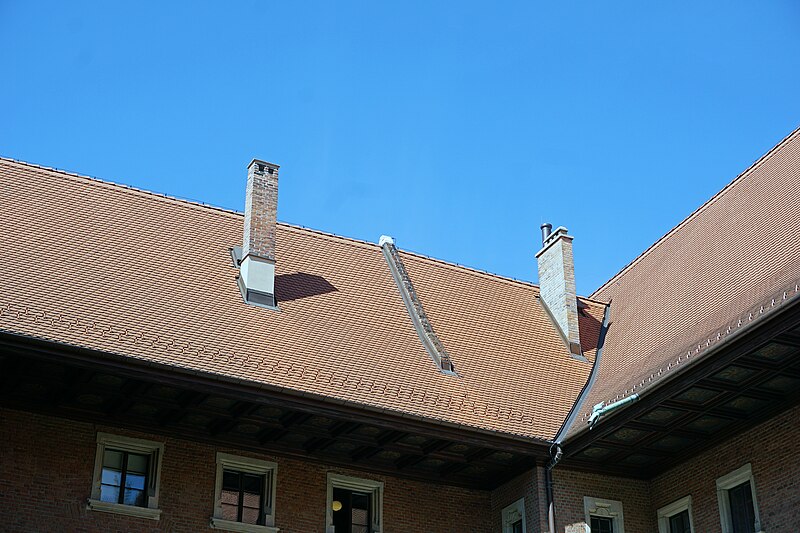
Photo · Wikimedia Commons Ascending the gentle slope of the hill path, pause before entering the castle gates to appreciate the sheer mass of limestone foundations dating back over a millennium. As you pass through the gateway into the central courtyard, allow yourself several uninterrupted minutes simply to pace the stones before heading inside to the royal state rooms. What confronts you is one of the most astonishing triumphs of Renaissance design north of the Alps. Notice how the uppermost arcade rises dramatically higher than the lower tiers, an unorthodox departure from Italian canons that accommodated grand third-floor ceremonial halls while welcoming northern sunlight. Step inside to the Deputies Hall, where thirty expressive human heads carved from linden wood gaze down from the coffered ceiling, sculpted by Sebastian Tauerbach. Surrounded by Flemish tapestries depicting biblical narratives commissioned by King Sigismund Augustus, you are standing in the administrative engine of a vast Renaissance commonwealth.
Exiting the palace portals back into the open courtyard, turn your gaze toward the neighboring towers of Wawel Cathedral, where spiritual sanctity meets royal dynastic ambition.
- 1 min · on site
The Royal Pantheon and Sigismund Bell
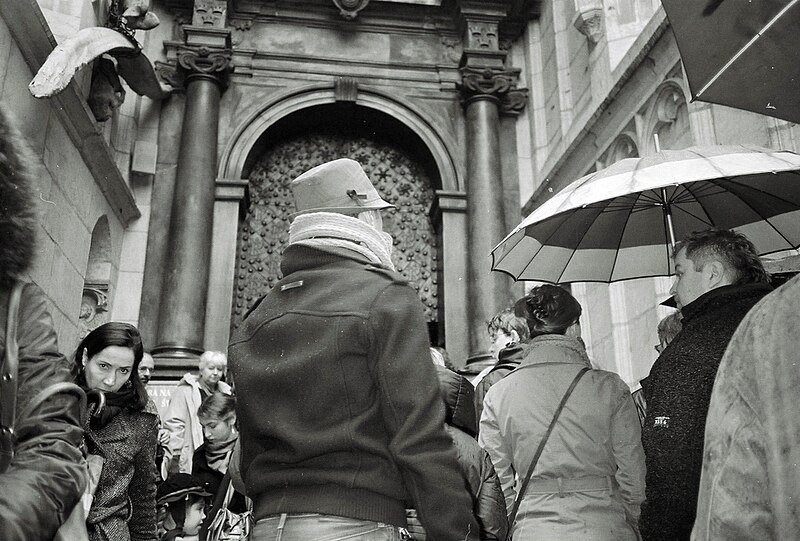
Photo · Wikimedia Commons Cross the courtyard to the portal of Wawel Cathedral, lowering your voice as you cross the threshold into this active place of daily worship and solemn national veneration. Within this Gothic sanctuary, consecrated in thirteen sixty-four under King Casimir the Great, every chapel functions as a distinct chapter in Polish history. Cast your eyes toward the southern aisle to admire Sigismund Chapel, hailed as the purest Florentine Renaissance jewel outside Italy, its golden dome catching amber light over red marble royal tombs. Deep below the flagstones lies the Romanesque Crypt of Saint Leonard, where Father Karol Wojtyla celebrated his first Mass as a young priest in nineteen forty-six. Above your head hangs the Sigismund Bell, cast in bronze by Hans Behem in fifteen twenty, weighing nearly thirteen tons and requiring twelve ringers to toll its solemn cadence across the roofs of Krakow on days of historic significance.
Descend the northern bastions of Wawel Hill and follow the ancient royal route northward through the Old Town streets toward the quiet scholastic quadrangles of Collegium Maius.
- 1 min · on site
The Late Gothic Courtyard of Copernicus
Photo · Wikimedia Commons Turn down Jagiellonian Street to reach Collegium Maius, the oldest surviving academic edifice in Poland. Even if you choose to bypass the formal museum galleries upstairs, make sure to step through the dark arched passage into the intimate late Gothic courtyard. Here, banded red brickwork and delicate stone tracery form an enclosed cloister centered upon a stone well constructed in fifteen seventeen. In the fourteen nineties, a youthful Nicolaus Copernicus climbed these timber staircases to attend lectures in natural philosophy, consulting brass astrolabes and medieval manuscripts that ignited his revolutionary astronomical hypotheses. Take note of the Gothic crystal vaulting beneath the galleries and the rectorial emblems carved above the doors. In this sheltered courtyard, intellectual curiosity found a permanent sanctuary, nurtured by the royal bequest of Queen Jadwiga and sustaining the university across seven turbulent centuries.
Standing in these courtyards, one realizes that Krakow's monuments were never meant to be passive scenery. They are resilient instruments of cultural continuity, preserved by generations who understood that stones and ideas can outlast any political storm.
Take it further
Open the tour in the appThe tour in the app
A Curator Walk Across Royal KrakowThis curated walking itinerary ascends Wawel Hill to explore the Renaissance arcaded courtyard and royal state rooms of Wawel Castle, enters the historic royal crypts and Sigismund bell tower of Wawel Cathedral, and concludes within the quiet late Gothic cloisters and historic university museum of Collegium Maius in the Old Town.
+ Add the tour to your planIf you have the app the tour opens right away; otherwise you go to the store.FAQ
- Why is Wawel Castle considered the spiritual cradle of Polish statehood?
- Wawel Hill served as the residence of Polish monarchs from the eleventh century until the court moved to Warsaw, remaining the permanent site of royal coronations and burials throughout the country's history.
- What distinguishes the architecture of the arcaded courtyard at Wawel Castle?
- Designed by Florentine architects, it incorporates a steeply pitched northern roof and an unusually tall third-tier arcade, adapting Mediterranean Renaissance proportion to the climate and ceremony of Poland.
- What is the historical significance of Collegium Maius in European academic heritage?
- Dating back to the fourteenth century, it is Poland's oldest university building where Nicolaus Copernicus studied in the fourteen nineties, preserving rare late Gothic vaults, medieval scientific instruments, and early celestial globes.