As dawn mist gently lifts from the terracotta rooftops of the Kathmandu Valley, an intoxicating fragrance of crushed juniper boughs, damp brick, and roasted barley drifts through the cool mountain air, carrying with it the quiet awakening of an ancient basin that has always lived suspended between earthly dust and sacred sky. To approach this historic valley is not merely to arrive at a geographic pin on a traveler map, but to step across the threshold of a living palimpsest where centuries of dynastic ambition, poetic solitude, and civic upheaval rest layered upon one another like pages of an illuminated manuscript. Wandering chroniclers, solitary essayists, and pilgrims who crossed the high Himalayan passes in generations past often remarked that Kathmandu refuses to yield its true spirit to hurried eyes. Time here does not rush forward in an indifferent torrent; rather, it gathers quietly in hidden courtyards, pauses beneath overhanging eaves of intricately carved sal wood, and ebbs and flows to the cadence of footfalls echoing along brick flagstones and the rhythmic tolling of brass bells from neighborhood shrines. For the traveler who listens closely, each stone step reveals how memory perseveres against the slow erosions of modernity.
The Solitary Library and the Garden of Six Seasons
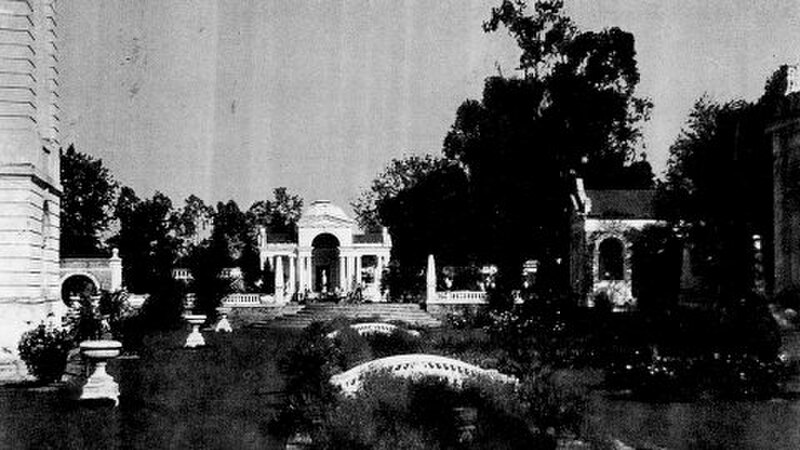
In the quiet recesses of this vibrant capital, thinkers, builders, and sovereigns have inscribed their deepest yearnings onto stone and loam, seeking spaces where the solitary intellect might converse freely with the natural world. Across from the old royal palace, Field Marshal Kaiser Sumsher Rana spent the early decades of the twentieth century retreating into his vast private library at Kaiser Mahal, a cloistered sanctuary lined with European treatises on classical architecture, botany, philosophy, and world literature. Drawing deep inspiration from these beloved volumes and architectural pattern books, he commissioned the gifted landscape architect Kishore Narshingh in 1920 to sculpt the Garden of Six Seasons, creating an Edwardian haven of sunken lily ponds, neo-classical pavilions, and marble balustrades nestled within native Himalayan soil. When commercial development threatened to sweep away this fragile paradise decades later, it was preserved through the impassioned resolve of local conservationists like Karna Shakya and education minister Arjun Narsingha KC, who recognized that a city without quiet gardens of contemplation is a city that has forgotten how to dream, ultimately enabling the Austrian restoration architect Götz Hagmüller to breathe life back into its forgotten urns and shaded pergolas.
The Minaret of Bugles and the Resilient City
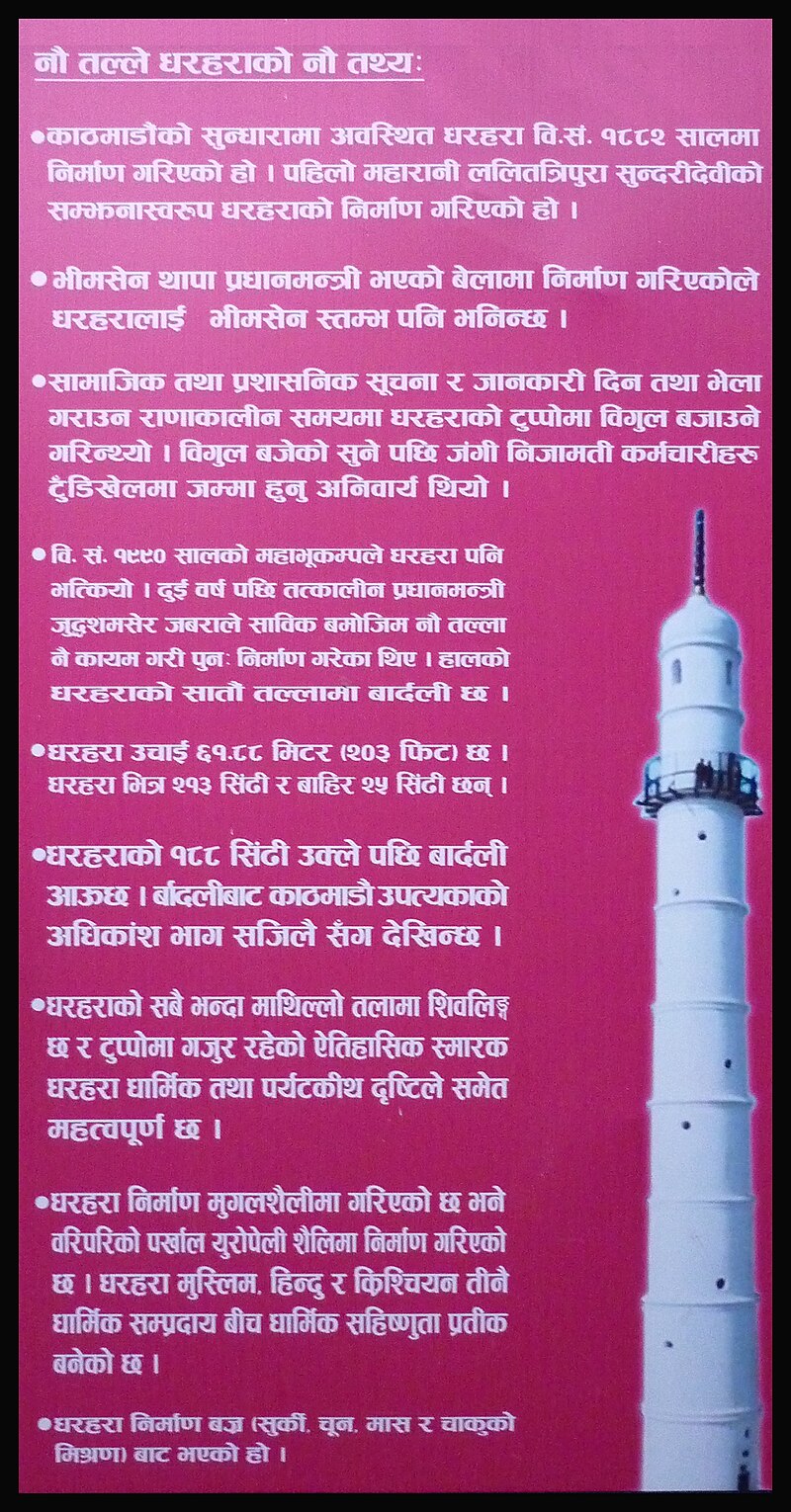
Further south, along the bustling civic axis of Sundhara near the historic parade ground of Tundikhel, rises another enduring monument born of literary devotion and martial pride. In the early nineteenth century, Mukhtiyar Bhimsen Thapa erected the magnificent minaret-like tower of Dharahara for his niece, Queen Lalit Tripurasundari, celebrating the restoration of national territory and constructing an observation balcony from which brass bugles summoned soldiers and sounded royal proclamations across the valley floor. Though shattered repeatedly by devastating seismic upheavals throughout its long history, the tower rose anew from its stubborn foundations, held together in spirit by the memory of traditional mortar crafted from lime, black lentils, caramel, and brick dust. Just as King Mahendra and architect Benjamin Polk would later fuse traditional pagoda forms with twentieth-century civic space at Narayanhiti, Kathmandu perpetually remakes itself without severing its sacred cord to the past. As you listen to this narration while journeying toward the city heart, let the frantic clamor of modern thoroughfares fade away, take a slow breath, and allow yourself to inhabit this quiet architecture of memory, where every weathered lintel and rising spire still tells an unfinished story.
Want to walk it yourself? Plan a trip with these places
The walk
On site, play just that chapter
- 1 min · on site
The Spire of Bugles and Rebirth
Photo · Wikimedia Commons Standing at the bustling crossroads of Sundhara, where the modern capital rushes past in a tide of motorbikes and street vendors, look upward toward the gleaming white spire of Dharahara rising into the Himalayan sky. This twenty-two-story sentinel, crowned with its traditional bronze mast, stands upon foundations first laid in the 1830s by Mukhtiyar Bhimsen Thapa in honor of Queen Lalit Tripurasundari. Here, buglers once leaned over the balcony balustrade to sound urgent calls to arms, summoning regiments across the parade ground of Tundikhel. Though brought low by great earthquakes, the tower has risen repeatedly from the rubble, its historic spirit honoring the ancient mortar of lime, black lentils, and caramel that bound its first bricks. Ascend to the circular observation gallery on a crisp, clear morning when the mountain air is sharpest; from this airy vantage, the sprawling sea of brick rooftops suddenly gives way to the jagged snow peaks of the northern horizon, reminding the observer of how small human ambitions appear beneath the eternal mountains.
When you descend back to street level, walk northward along the arterial avenue toward the edge of Thamel, where high white walls conceal an Edwardian sanctuary of quiet reflection.
- 1 min · on site
The Prince's Library of Six Seasons
Photo · Wikimedia Commons Step through the modest gate off Tridevi Sadak and feel the city roar abruptly dissolve into birdsong, whispering bamboo, and trickling water. Created in 1920 by landscape architect Kishore Narshingh for Field Marshal Kaiser Sumsher Rana, this neo-classical haven was christened the Garden of Six Seasons, drawing inspiration from Edwardian estates and the classical volumes in Kaiser Sumsher's personal library. Notice how the formal European pavilions, sunken flowerbeds, and classical urns converse with the subtropical vegetation of the valley. Decades of neglect nearly saw this paradise demolished for office blocks, until passionate defenders halted the bulldozers, paving the way for Austrian architect Götz Hagmüller to orchestrate its loving restoration. Take a seat on a quiet teak bench in one of the secluded southern corners, slip a book from your satchel, and watch the play of light across the pond, savoring the deliberate luxury of stillness that this scholarly prince carved out of the city.
Exit through the garden gates and cross the avenue just to the east, approaching the formidable iron gates where modern Nepal's regal past remains etched in stone.
- 1 min · on site
Echoes in the Pagoda Throne Room
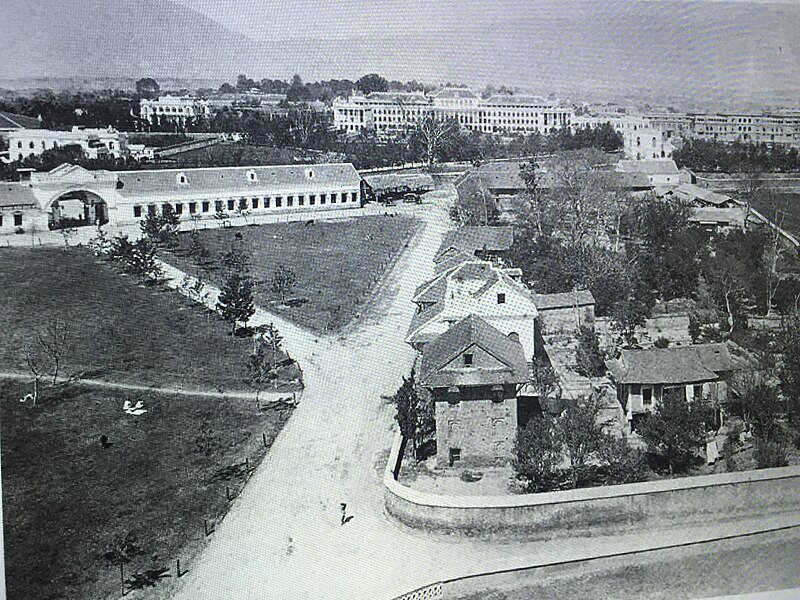
Photo · Wikimedia Commons Before crossing the threshold of Narayanhiti Palace, glance at the entry notices regarding photography restrictions, and prepare to enter a silent monument to Himalayan monarchy. Commissioned in 1963 by King Mahendra and conceived by the American architect Benjamin Polk, this sweeping complex boldly married twentieth-century civic form with indigenous Nepalese pagoda architecture. Wandering through the fifty-two staterooms named after the districts of the country, pause in the central throne room of Gorkha Baithak; gaze upward at the sixty-foot-high pagoda ceiling from which a monumental forty-eight-foot chandelier descends like an incandescent stalactite above the empty throne. In the adjacent reception halls, life-size portraits by painter Amar Chitrakar and mounted Bengal tigers keep watch over silent parquet corridors. Here, where centuries of royal intrigue and modern statehood converged until the abolition of the monarchy, the stillness of the courtyards speaks poignantly of how rapidly power passes into history, leaving only architectural shells for wanderers to contemplate.
Leave the quiet palace avenues behind and travel northeastward toward the valley rim, where an ancient white dome commands the horizon under swirling flocks of pigeons.
- 1 min · on site
The Clockwise Path of Painted Eyes
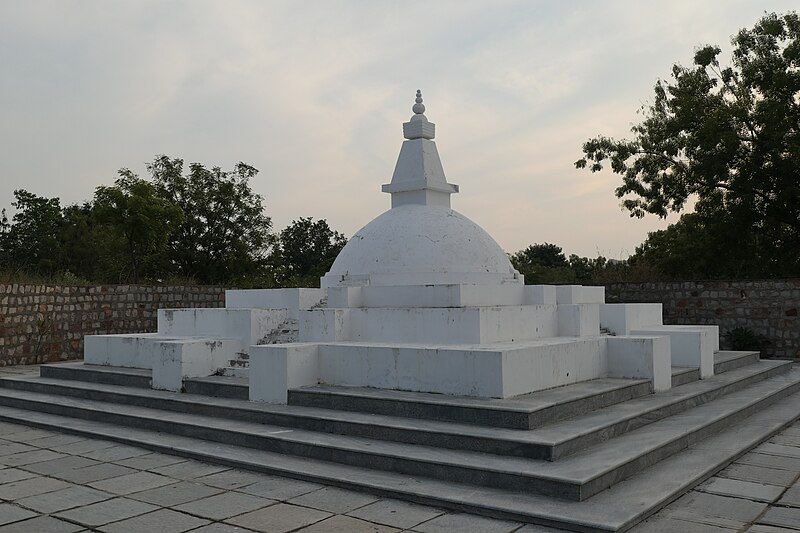
Photo · Wikimedia Commons Entering the circular enclosure of Boudhanath feels like stepping into the beating spiritual heart of the Tibetan diaspora, where the world contracts into a spinning mandala of white plaster and painted eyes. Above the stepped plinth rises the colossal white hemisphere of the stupa, crowned by a gilded spire where the serene, all-seeing eyes of the Buddha gaze outward across the four cardinal directions. Join the steady stream of pilgrims and maroon-robed monks circumambulating the perimeter in a clockwise direction, letting your fingertips gently brush the long rows of burnished copper prayer wheels set into the whitewashed walls. As dusk gathers and the fragrance of burning incense mingles with the buttery scent of yak-butter lamps, the fluttering prayer flags overhead snap softly in the evening breeze, carrying ancient mantras into the Himalayan sky. Settle into an upper terrace overlooking the square, watch the monks gather for evening prayer, and surrender yourself to the hypnotic cadence of devotion that has anchored this valley for over a thousand years.
Long after the traveler departs from Kathmandu, it is not the frantic pace of the streets that lingers in memory, but these quiet moments of architectural transcendence. Whether standing beneath the bronze mast of a resurrected tower, turning the pages of a notebook beside an Edwardian fountain, or joining the eternal circle of pilgrims around an ancient stupa, one realizes that Kathmandu does not merely preserve history; it transforms every ruin into a renewed act of faith, inviting every wanderer to become part of its unending song.
Take it further
Open the tour in the appThe tour in the app
A Walk Through Valley Memory and Spreading SkiesThis literary journey connects Kathmandu's monumental civic axis with its quietest architectural sanctuaries, guiding travelers from the restored heights of Sundhara through an Edwardian garden library and modern royal palace to the ancient spiritual circle of Boudhanath, revealing the valley's enduring dialogue between memory and rebirth.
+ Add the tour to your planIf you have the app the tour opens right away; otherwise you go to the store.FAQ
- Why was Dharahara historically used as a watchtower?
- Mukhtiyar Bhimsen Thapa constructed Dharahara with an upper observation balcony so military buglers could sound signals across the valley to summon troops and call citizens to state announcements at Tundikhel.
- What inspired the design of the Garden of Dreams?
- Field Marshal Kaiser Sumsher Rana conceived the Garden of Six Seasons using European landscape pattern books and volumes on botany, architecture, and literature housed in his private library at Kaiser Mahal.
- What architectural style defines the throne room at Narayanhiti Palace Museum?
- The central Gorkha Baithak features a sixty-foot-high ceiling designed in the Nepalese Hindu temple pagoda style, anchored by concrete columns representing Naga guardians and suspended with a monumental forty-eight-foot chandelier.