Morning arrives over the canals not as gentle light, but as a cool, damp respiration rising from the dark water. Before the bicycle bells begin their shrill morning chorus, the city smells sharply of river silt, wet iron, and the faint oily trace of diesel barges gliding beneath low stone arches. To understand how Amsterdam shops, one must step away from the sanitized glass of modern luxury boutiques and stand where heavy wooden crates scrape roughly across wet granite cobbles. Here, trading is an appetite, a visceral physical reckoning that was never nurtured in velvet drawing rooms, but dredged directly from peat bogs and cold North Sea tides. The true currency of this city has always been tangible matter: the taut skin of a cured fish, the fibrous density of hand-loomed flax, and the oily heft of aged cheese wheels resting patiently in canal-side cellars. Listen to the sharp scrape of the iron knife cleaving through winter cabbage, the crackle of fried dough in peanut oil, and the dry rustle of garments hung from canvas awnings. In this city, market stalls are not museums of the past; they are living test kitchens of everyday resilience.
The Brine and the Bourse
There is an old, unvarnished Dutch proverb that every cook and fishmonger knows by heart: Amsterdam was built on herringbones. Long before grand merchant houses traded abstract equities on the Dam inside Hendrick de Keyser’s seventeenth-century brick exchange, anonymous deckhands on wooden fishing vessels were revolutionizing Europe with the simple flick of a curved gutting knife. By mastering the technique of gibbing at sea, removing the gills and entrails on rolling ocean planks to let the fish cure in brine barrels, Dutch sailors transformed humble seafaring foraging into the world’s most formidable trade monopoly. When the novelist Joseph Conrad peered upon Amsterdam from the seaside in his 1906 reflections for The Mirror of the Sea, he recognized an enduring merchant capital whose maritime soul had been forged by that very same stubborn, unsentimental pragmatism. The Dutch did not simply exchange commodities on open wooden bridges near the harbor; they tasted, preserved, dried, salted, and weighed them until sheer biological survival hardened into worldwide commercial sovereignty.
Cobblestones and the Living Voice
Walk the damp market avenues today and that primal culinary instinct still dictates how goods pass from hand to hand. Down on the reclaimed island of Vlooienburg where Waterlooplein spreads its vibrant outdoor stalls, Jewish traders once gathered along the old canals to barter salvaged wool, worn leather jackets, and discarded brass. It was on this very ground that the outcast philosopher Baruch Spinoza walked between street vendors, quietly grinding lenses to mathematical perfection while daring to proclaim that the ultimate goal of any civil state is freedom. Centuries later, that same hardscrabble square echoed with the comic voice of John Kraaijkamp Senior, whose lively ode to the market captured the gritty charm of neighborhood barter, the very same square where he famously discovered an eight-year-old street urchin named Andre Hazes belting out raw, heartbreaking folk ballads over the stones.
In Amsterdam, every market stall is an open kitchen and every vendor is a cook testing your discerning palate. Whether running your thumb over the indigo grain of vintage railway denim or testing the crystalline crunch of a two-year-old farmhouse Gouda aged on raw pine boards, you are being invited to judge the maker by the integrity of their technique. To wander these open-air aisles is to discover that true luxury is not an exorbitant label, but the stubborn, salty honesty of things made to endure.
Want to walk it yourself? Plan a trip with these places
The walk
On site, play just that chapter
- 1 min · on site
The Raw Milk Almanac

Photo: Rob Bogaerts / Anefo · CC0 · Original file Step into the humming corridor of Ten Katemarkt in Oud-West, where the air carries the sharp tang of raw milk and crushed mint stems. This is where neighborhood cooking begins, stripped of tourist pretensions. Make your way toward the middle stalls where the cheesemongers stack wheels of farmhouse Boerenkaas. Notice the dull golden rind on the aged gouda and ask for a paper-thin sliver shaved directly from the wheel center. When you bite down, search for the fine crunch of tyrosine crystals, the tiny white pearls of salt and protein that declare at least eighteen months of patient curing on untreated wooden planks. Across the aisle, fruit vendors arrange glistening mounds of seasonal berries and bitter chicory with geometric pride. After admiring the produce, glance down the bustling side arteries toward Kinkerstraat to observe how small local bakeries and specialty grocers frame this unfiltered pantry of the western quarters.
Now let us turn northeast toward the Jordaan, where the scent of raw brine meets the shadow of an ancient church.
- 1 min · on site
Flour, Fire, and the Church Shadow
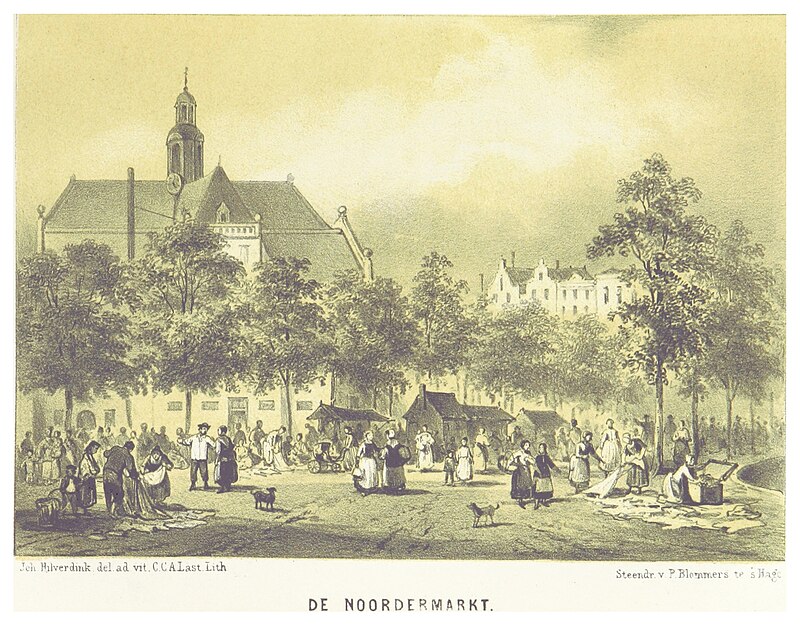
Photo · Wikimedia Commons Arriving at Noordermarkt beneath the heavy brick tower of the seventeenth-century Noorderkerk, the atmosphere shifts from working-class grocery to an artful celebration of the soil. On organic market mornings, the square turns into a cathedral of honest agriculture. Look for the bakers whose dark sourdough loaves boast blisters and deep mahogany crusts, achieved only through slow wild fermentation and blisteringly hot stone decks. Pause at the historic church wall to view the bronze plaque commemorating the brave organizers of the nineteen forty-one February Strike who gathered here to protest tyranny. Then follow the sweet aroma of spiced baked fruit toward the corner cafe terrace. Order a thick wedge of warm Dutch apple cake, crowned with unsweetened cream, and observe how the tender tartness of the apples cuts through the buttery pastry crumb. Depending on the day, brocante dealers replace the vegetables with tarnished silver spoons and weathered copper pots.
Leave the Jordaan behind and follow the curves of the central canals southeast toward the historic bend of the Amstel.
- 1 min · on site
Cast Iron and Second Chances
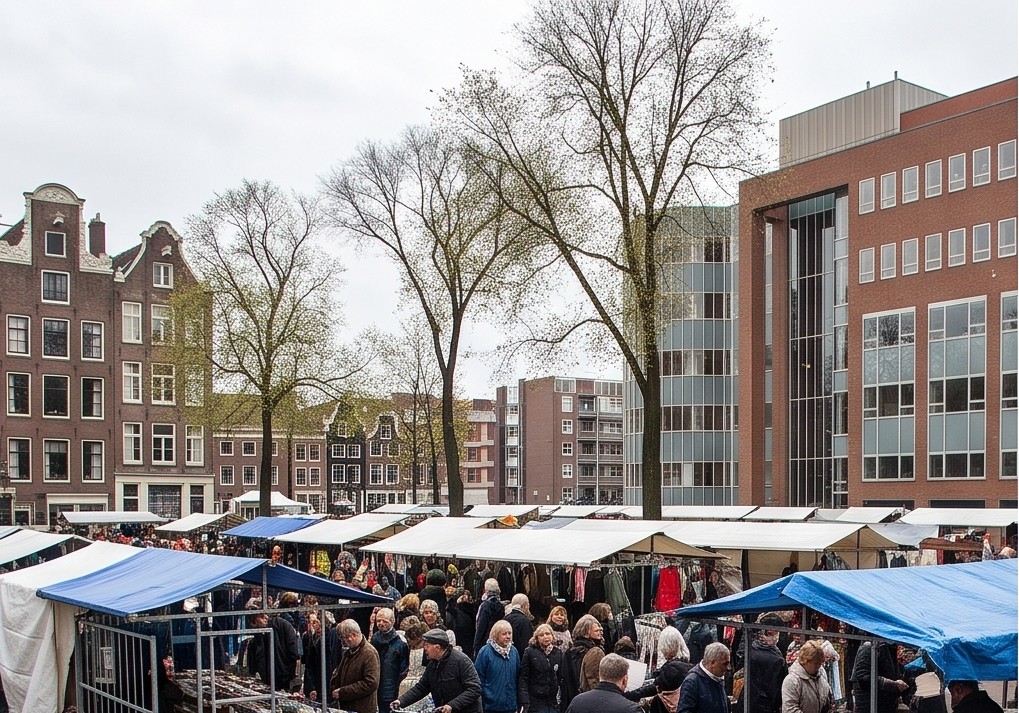
AI-generated image · may differ from the real place Here on the broad pavement of Waterlooplein, the city displays its memory like a rummaged pantry. You are standing on the historic island of Vlooienburg, framed by the red brick of the Stopera and the stately facade of the Moses and Aaron Church. Walk among the three hundred outdoor stands where traders spread second-hand military trench coats, classic vinyl records, and brass compasses over canvas tables. Approach the stalls near the canal edge and practice the art of polite haggling with the seasoned vendors who price goods by intuition and character. Before leaving the perimeter, look toward the Staalstraat bridge over the Zwanenburgwal to find the solitary monument honoring Baruch Spinoza, sculpted beside an intricate mathematical form. Here, among piles of discarded paper and relics of daily domesticity, the philosopher idea of human freedom feels as tangible as the weathered leather and cold iron under your fingertips.
Just across the stone pavers of the square, step into the warm, sheltered warmth of a landmark clothing vault.
- 1 min · on site
The Geometry of Vintage Indigo

Photo: Jan Hoynck van Papendrecht · Public domain · Original file Cross directly into Episode at Waterlooplein one, where the open breeze of the flea market gives way to the dense, parchment aroma of curated vintage textiles. As a critic, I assess a rack of vintage garments the way I evaluate a cured ham: by density, patina, and the honest marks of aging. Work your way through the dense rows of vintage denim jackets and chore coats. Run your fingertips across the heavy cotton twill to detect the subtle ridges of ring-spun yarns and the fading along the seams where decades of rain and labor have softened the indigo. The inventory here shifts constantly with fresh deliveries arriving from across Europe, rewarding those who comb each hanger with methodical patience. Inspect the stitching along the collars and the heavy brass zippers, details that mass production long ago abandoned in favor of disposable synthetics.
Step outside into the canal air and walk east past the Jewish quarter toward the quiet elegance of Muiderstraat.
- 1 min · on site
Severe Angles and Curated Linens
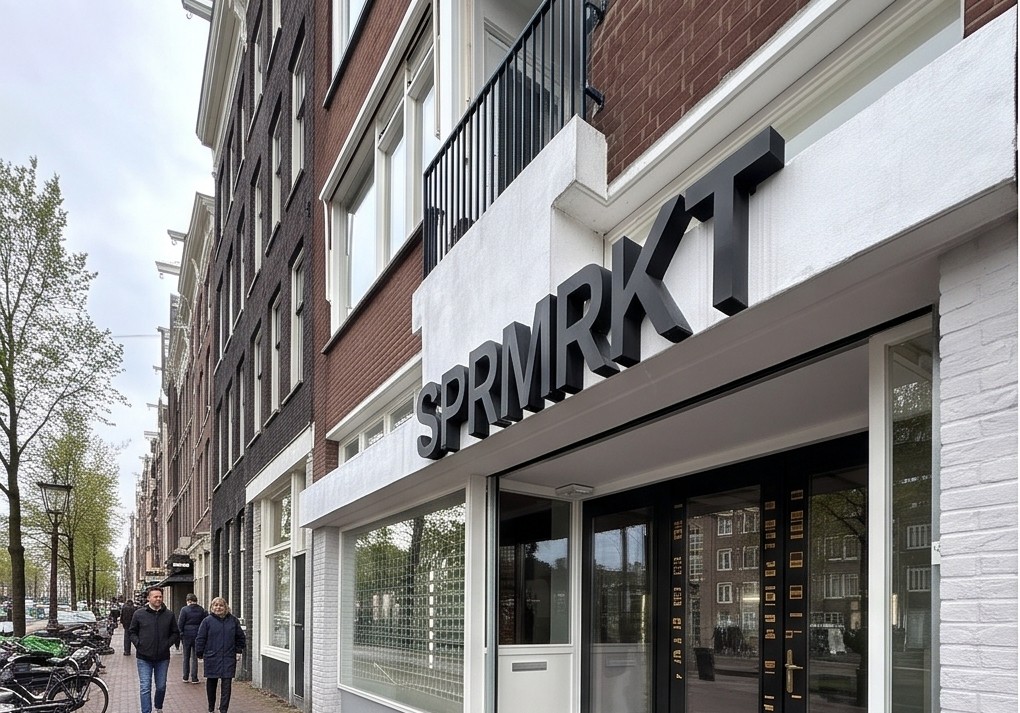
AI-generated image · may differ from the real place At Muiderstraat twenty-one, SPRMRKT presents the opposite extreme of Amsterdam shopping: retail conceived as an austere, avant-garde gallery. Before examining a single garment, allow yourself several quiet minutes to absorb the bold contemporary art installation dominating the entrance, which sets an uncompromising, sculptural tone for the entire interior. Here, fashion is treated with the exacting discipline of modernist culinary plating. Run your hand over raw-edged linen tunics, architectural wool overcoats, and hand-cast design objects displayed like precious sculptures against minimalist concrete and muted light. Notice the radical silhouettes and the subversive textures created by independent designers who manipulate textiles through enzyme washes, deliberate distressing, and asymmetric tailoring. It is an unapologetic, sharply curated palate cleanser, proving that Amsterdam taste can pivot effortlessly from rugged outdoor thrift to severe aesthetic refinement.
Now let us journey eastward into the vibrant residential rhythm of the Dapperbuurt.
- 1 min · on site
Cumin Smoke and Frying Bara
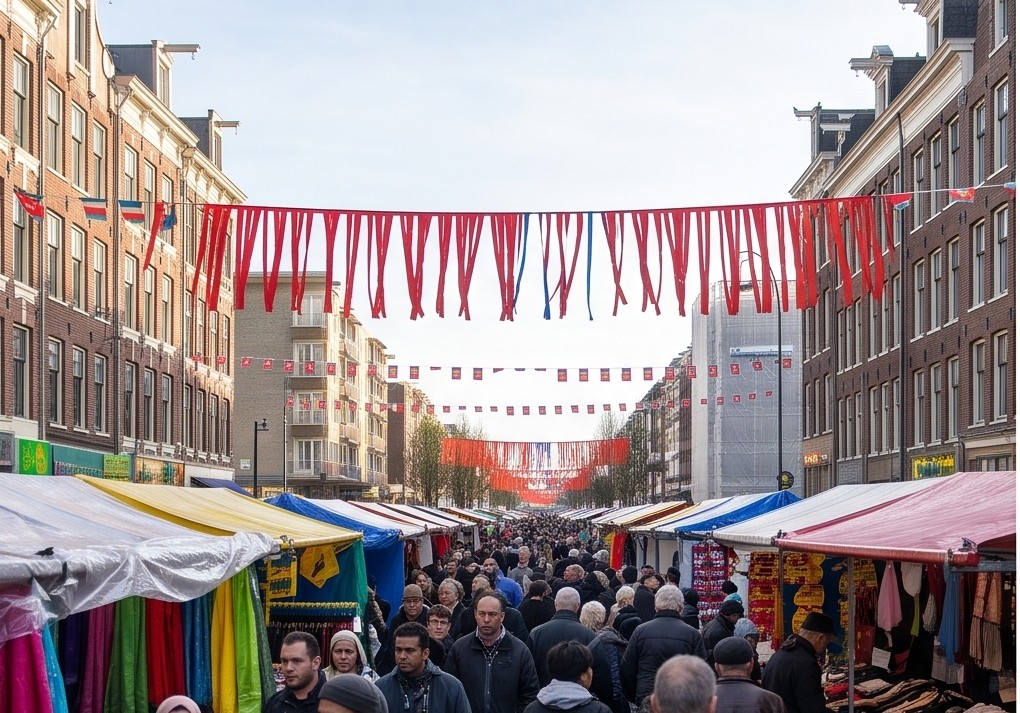
AI-generated image · may differ from the real place We finish our pilgrimage on Dapperstraat, where Dappermarkt explodes in a riot of spices, sizzling oil, and multicultural vitality that National Geographic rightly hailed as one of the world great shopping streets. The air here is heavy with toasted cumin, scotch bonnet peppers, and roasted coriander. Weave between stalls selling vibrant Surinamese textiles and exotic greens, then follow the smoking cast-iron griddles toward the Surinamese street food stands. Order a freshly fried bara, piping hot from the bubbling oil. Tear open the crisp, golden exterior to reveal the fluffy, spiced dough infused with wild spinach, and dip it generously into sharp mango chutney. The acidity and heat slice cleanly through the rich, savory crumb. Standing on these stones, chewing slowly amid the calls of Turkish, Moroccan, and Antillean merchants, you finally taste Amsterdam in all its unvarnished, living glory.


As dusk descends across the canals, the market stalls fold their canvas wings and the cobblestones are washed down with cold river water. The true souvenir of Amsterdam is neither a trinket nor a mass-produced garment, but a sharpened sense of tactile discernment. To walk these streets with an open palate is to understand that craftsmanship is an act of daily devotion, sustained by the stubborn pride of those who work behind the counters.
Take it further
Open the tour in the appThe tour in the app
From Morning Curd to Evening Spices: A Critic's Market TrailThis food critic guided walking tour journeys across Amsterdam from the artisan dairy stalls of Ten Katemarkt to the spice filled lanes of Dappermarkt. Along the way, explore historic flea markets, vintage denim troves, and avant garde fashion, tasting the city tactile heritage through textures, techniques, and authentic market craftsmanship.
+ Add the tour to your planIf you have the app the tour opens right away; otherwise you go to the store.FAQ
- How should one approach bargaining at the historic outdoor flea markets?
- In Amsterdam market stalls, bargaining is regarded as an exchange of mutual respect rather than aggressive confrontation. Greet the vendor politely, inquire about the history of the piece, and propose a courteous counteroffer while keeping the interaction friendly and grounded.
- What is the best way to evaluate authentic farmhouse cheese at neighborhood stalls?
- Look for traditional Boerenkaas crafted from raw unpasteurized milk. Inspect the rind for a clean golden finish and ask the monger for a thin sliver to taste, checking for the delicate crunch of tyrosine protein crystals that indicate patient aging on wooden boards.
- How do the offerings vary across the weekly market schedule?
- Different days bring entirely distinct textures to the squares. For example, certain mornings welcome organic produce growers and artisan sourdough bakers, whereas alternate days see the very same cobbles filled with antique brocante collectors and vintage textile vendors.
This piece was newly written based on the Wikipedia articles ‘Waterlooplein (Amsterdam) (nl.wikipedia) / Amsterdam’, ‘Albert Cuyp Market (en.wikipedia) / Waterlooplein (Amsterdam)’, ‘Amsterdam’ · CC BY-SA 4.0