There is a peculiar stillness that descends upon Amsterdam when the North Sea wind strips the last bronze leaves from the elms along the Keizersgracht, leaving only the bare black architecture of branches silhouetted against an opal sky. To arrive in this city during the turn of the seasons is to encounter a landscape that has long dissolved the boundary between water and solid ground. In the early damp chill of November, when low-lying mists rise from the Singel and coil around the sandstone bases of seventeenth-century gables, one senses immediately why centuries of wanderers, scholars, and exiled free-thinkers chose this marshy delta as their refuge. Joseph Conrad, arriving from the grey expanses of the open sea in 1906 and later recording his maritime memories in The Mirror of the Sea, observed how the harbor and its labyrinthine approaches seemed to emerge directly from the tide, an amphibious sanctuary born of water and collective human will. Here, winter does not merely freeze the city; it clarifies it, transforming the concentric canals into dark mirrors that double every lantern, every leaded window pane, and every passing silhouette.
The Geometry of Winter Light
In the Dutch consciousness, season is never a mere backdrop to life; it is an active philosophy of endurance and communion. Long before modern embankments tamed the Zuiderzee, the inhabitants of this watery basin learned to read the sky as a parchment of survival, navigating floods and freezing winters through ingenuity and communal celebration. When the icy northeasterly continental drafts sweep across the low-lying polders, driving temperatures below freezing, Amsterdam does not retreat behind heavy draperies. Instead, the city undergoes an alchemical conversion. The darkness becomes a canvas for festival illuminations, and the frozen canals become public boulevards where social hierarchies dissolve upon the ice. In 1893, when the newly established International Skating Union chose the open lawns of the Museumplein to host the world's very first governing speed skating championships, an adolescent prodigy named Jaap Eden captured the imagination of the nation by gliding across the frozen plain with a speed that felt like flight. To lace on skates or walk the winter embankments in Amsterdam is to enter into this deep historic dialogue with the cold, discovering that human warmth is rendered most radiant when framed by northern frost.
Voices Beneath the Gables
As you travel toward this capital of water, allow yourself to listen for the softer reverberations beneath the bustling city. Stand on an arched stone bridge as twilight gathers, and you can almost hear the echoes of René Descartes pondering existence in his candlelit canal rooms, or Baruch Spinoza grinding lenses in quiet defiance of dogma, drawing courage from a city that offered intellectual shelter when the rest of Europe was engulfed in religious wars. Even the royal whims of history carry an ironic poetry here: in the bitter winter of 1808, when Louis Bonaparte converted the classical town hall on Dam Square into his royal palace, he commanded the demolition of the medieval weigh house simply because its bulky gables obscured his view of the city square. The stones of Amsterdam hold all these layered desires and defiant gatherings, from regal spectacle to the brave dockworkers who stood in the freezing winter mist of 1941 to protest tyranny. What remains, enduring through every passing festival and drifting snowflake, is the quiet miracle of a city that knows how to turn the coldest season into an intimate, luminous sanctuary.
Want to walk it yourself? Plan a trip with these places
The walk
On site, play just that chapter
- 1 min · on site
Amsterdam Light Festival Foundation
Waterborne Luminescence along Prins Hendrikkade
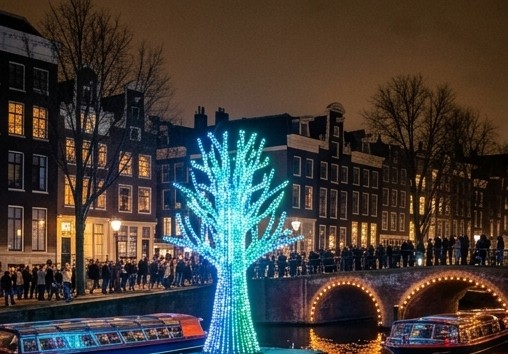
AI-generated image · may differ from the real place Standing along the granite quays of Prins Hendrikkade where the open water meets the historic canal mouth, darkness arrives not as an absence of vitality but as a vast curated exhibition. As dusk settles over the harbor basin, international light artists transform the canal into an extraordinary luminous gallery. Walk along the waterside railing near the old shipping docks where the dark ripples catch brilliant crimson and amber reflections from suspended geometric sculptures. Notice how these contemporary light installations engage in a silent conversation with the shadowy gables across the water, casting shifting patterns that dissolve and reform with each passing canal boat. It is as though the city is actively repainting its maritime heritage in vibrant modern luminescence, answering the long northern winter night with pure radiant human creativity.
Turn southward and follow the wide cobblestone curve of the Damrak as it leads you inland toward the monumental open expanse of Dam Square.
- 1 min · on site
The King's Obstructed Horizon
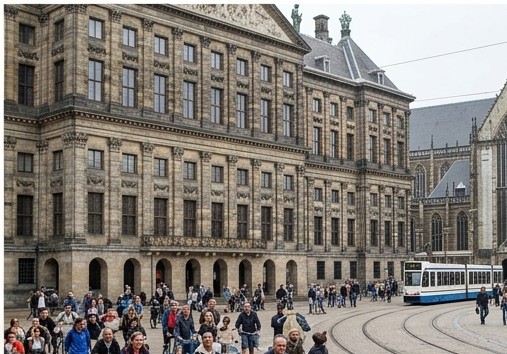
AI-generated image · may differ from the real place Arrive on foot into the vast stone rectangle of Dam Square, where the very origins of Amsterdam were established upon a thirteenth-century river dam. Look across to the west at the austere classical facade of the Royal Palace, originally constructed during the Dutch Golden Age as the grand city hall. In the winter of 1808, Napoleon's brother Louis Bonaparte took up residence here as monarch and grew so annoyed by the medieval weigh house obstructing his frontal view that he ordered its immediate demolition. Turn slowly toward the east to observe the pale stone column of Oud's National Monument, standing dignified in the winter air. During the festival season, carnival lights and holiday stalls fill this open space, creating a lively civic theater where historic royal ambition and joyful street life meet upon the cobblestones.
Walk westward away from the palace facade, crossing the quiet canal bridges into the residential streets of the Jordaan until you reach the open market square of Noordermarkt.
- 1 min · on site
Morning Vapors and Moral Courage in the Jordaan
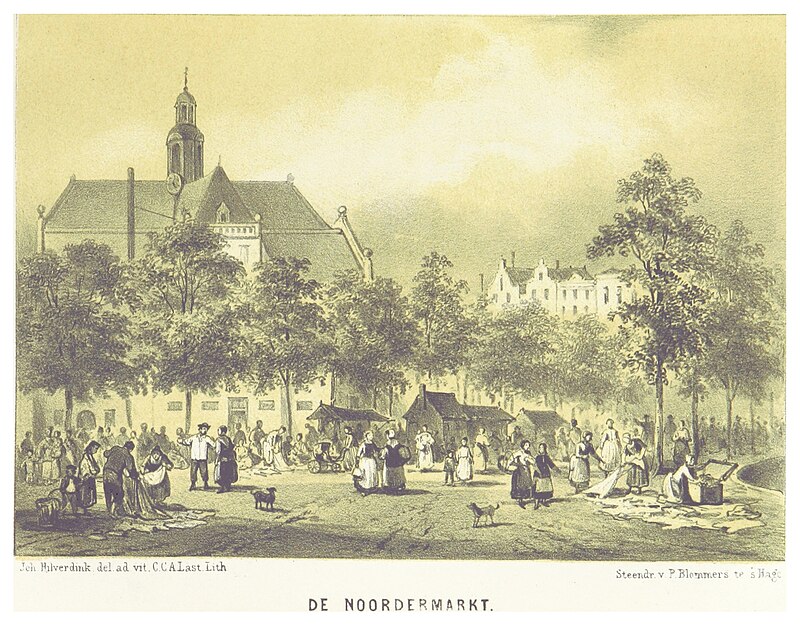
Photo · Wikimedia Commons Step into the historic cobblestone clearing of Noordermarkt beneath the towering brick silhouette of the seventeenth-century Noorderkerk. Arrive in the crisp morning hours when the farmers market unfurls timber stalls laden with seasonal root vegetables, hearty Dutch winter cheeses, and damp antique books. Walk quietly toward the southern facade of the church to discover the modest bronze plaque commemorating the freezing morning of February 1941, when courageous local organizers gathered here to initiate the general strike against Nazi deportations. This market square, which originally served as a quiet cemetery until the seventeenth century, hums today with vibrant communal warmth. Breathe in the crisp aroma of roasted winter apples and freshly poured hot coffee from nearby historic corner cafes, appreciating how mundane everyday commerce and profound moral courage remain forever woven into these historic stones.
Follow the serene southward course of the Prinsengracht past a sequence of arched stone bridges until the quiet waters open onto the lively cultural crossroads of Leidseplein.
- 1 min · on site
The Theatrical Heart of Winter Nights
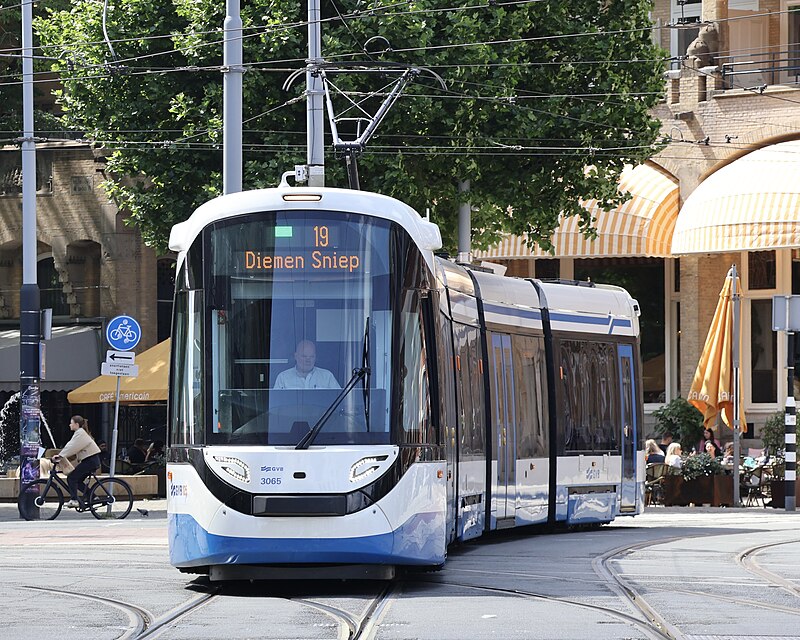
Photo · Wikimedia Commons Emerge onto the energetic crossroads of Leidseplein, where horse-drawn wagons arriving from the southern university city of Leiden historically concluded their journeys into Amsterdam. Today, this open square serves as the radiant epicenter of the city's winter nightlife and theater culture. Stand near the center of the terrace and look up at the illuminated neo-Renaissance gables of the Stadsschouwburg theater, whose red-brick balconies have staged generations of dramatic performances and festive gatherings. Find a comfortable seat at an outdoor terrace warmed by radiant braziers, order a warm spiced tea or mulled drink, and watch seasonal street performers draw enthusiastic crowds beneath the golden decorative balconies of the nearby American Hotel. Here in this bustling junction of sound and light, the sharp winter chill only heightens the public thirst for lively conversation, theatrical flair, and shared metropolitan spectacle.
Cross the peaceful waters of the Singelgracht canal and stroll down the broad avenue until the monumental cultural lawn of Museumplein unfolds before you.
- 1 min · on site
Cuypers' Castle and the Great Cultural Lawn
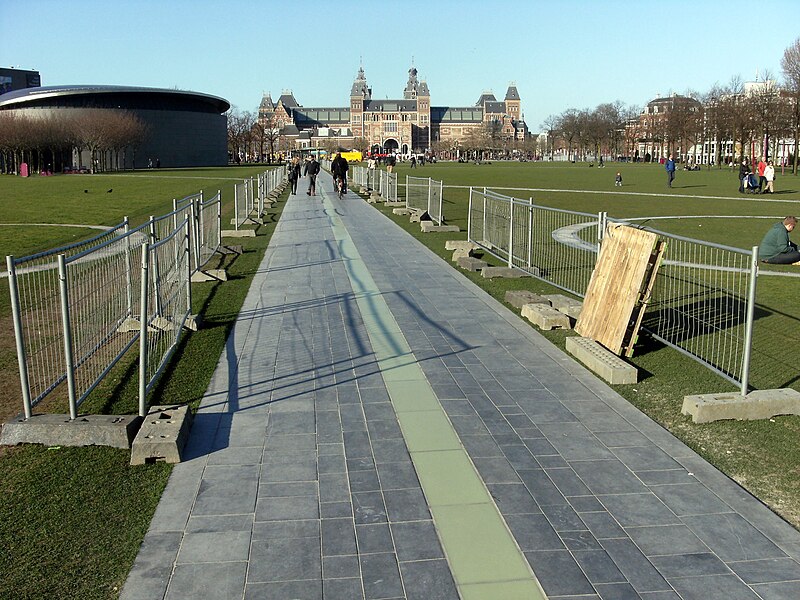
Photo · Wikimedia Commons Step onto the sweeping lawn of Museumplein, where the grand neo-Gothic facade of the Rijksmuseum rises like an architectural fortress against the pale winter sky. Completed in 1885 under the brilliant direction of Pierre Cuypers, this former marshland was meticulously transformed into the premier cultural sanctuary of the nation, framed by the Concertgebouw and neighboring museums dedicated to Van Gogh and modern art. Walk past the open lawns where seasonal winter markets gather beneath strings of festive lights, offering artisan craft stalls, roasted chestnuts, and hot regional delicacies to cold wanderers. It was right across this open expanse in 1893 that the inaugural world allround speed skating championships were staged, forever enshrining this grand cultural square as a living winter arena of joyful public movement, intellectual discovery, and shared civic celebration.
Follow the joyous sounds of laughter and the crisp ringing of steel blades toward the illuminated central reflecting pool of Schaatsbaan Museumplein.
- 1 min · on site
Gliding on the Winter Mirror of the North
Photo · Wikimedia Commons Arrive at the vibrant frozen basin of Schaatsbaan Museumplein, where the central reflecting pool transforms each winter into a beloved open-air skating rink directly beneath the towering silhouette of the Rijksmuseum. Wrap your scarf securely, pull on your warmest woolen gloves, and step onto the timber perimeter deck to inhale the frosty air, sweet with the irresistible scent of freshly pressed Dutch waffles. Watch skaters of every generation glide effortlessly beneath the illuminated timber replica of the historic skinny bridge arching gracefully over the ice. This communal devotion to winter skating directly echoes the legendary nineteenth-century triumphs of Jaap Eden, and gliding across this smooth surface connects you to a timeless Dutch tradition that greets the northern freeze not with retreat, but with boundless exhilaration, poetry, and shared human grace.
As your skates leave the ice and the evening chimes of the Noorderkerk and Westertoren drift across the darkening waterways, Amsterdam folds its winter visitors into an intimate, enduring embrace. The cold in this city does not isolate souls; it draws them together into warm candlelit cafes, beneath the radiant canopies of light installations, and across frozen canals that have witnessed centuries of defiant thinkers and daring skaters. To travel here during the seasonal turn is to discover that beauty in northern Europe is never passive; it is meticulously crafted out of sea mist, damp brick, and the indomitable human warmth that turns the darkest winter month into a luminous work of living art.
Take it further
Open the tour in the appThe tour in the app
A Winter Promenade: From Waterfront Light to Cultural IceThis curated winter walking journey traces Amsterdam's seasonal festival spirit from luminous waterfront light installations on Prins Hendrikkade through historic Dam Square, the Jordaan's charming Noordermarkt, and spirited Leidseplein, culminating in joyous open-air ice skating upon the cultural grounds of Museumplein.
+ Add the tour to your planIf you have the app the tour opens right away; otherwise you go to the store.FAQ
- What is the best way to experience the seasonal winter atmosphere on foot?
- Begin in the late afternoon along the Prins Hendrikkade waterfront to view illuminated art on the canals, stroll through the Jordaan market, and conclude with evening skating on Museumplein.
- How does winter weather affect walking along the historic canals?
- Winter temperatures can be damp and brisk due to prevailing North Sea winds, so wear warm windproof layers and comfortable walking shoes to enjoy the open-air squares and canal bridges.
This piece was newly written based on the Wikipedia articles ‘Dam Square’, ‘Jaap Eden’, ‘Amsterdam’ · CC BY-SA 4.0