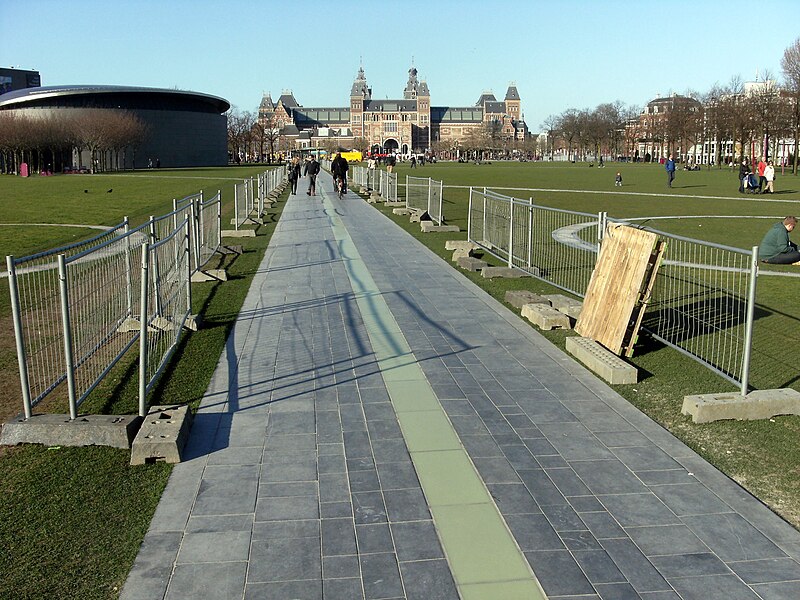
Winter in Amsterdam arrives not with a sudden freeze, but as a slow, luminous transformation of space, atmosphere, and light. Standing at the edge of the Museumplein when November turns to frost, one feels the grand architectural expanse soften into an intimate theater of human warmth. The distant red-brick towers of Pierre Cuypers's Rijksmuseum rise like a magnificent neo-Gothic cathedral against the overcast northern sky, anchoring a vast lawn where autumn grass now glimmers under a delicate sheet of ice. Here, in the very heart of the city's cultural quarter, cold air carries the fragrant aroma of roasted chestnuts and the rhythmic scraping of steel blades against a frozen pond. It is a tranquil setting where art, memory, and everyday domestic life dissolve into a single continuous canvas, inviting the traveler to pause before stepping into the great galleries that encircle the square.
As dusk settles over the capital, the streetlamps cast long amber reflections across the dark surface of the water, illuminating couples gliding hand in hand beneath the towering facade of the Concertgebouw. To witness this scene is to understand that winter here is not a season of hibernation, but a festive gathering of spirit. The surrounding quarter, once nothing more than marshy meadows and a modest wax candle factory in the nineteenth century, was reimagined into a sanctuary of high culture through the vision of local citizens and visionary architects. Today, the frozen expanse bridges the gap between historical grandeur and effortless recreation, allowing locals and wanderers alike to share a fleeting moment of joy.
Echoes of Devotion and Courage
To understand this landscape deeply is to recognize how profoundly Amsterdam's cultural memory is bound to resilience, quiet devotion, and heroic acts of quiet courage. Consider the remarkable story of Willem Sandberg, the legendary curator and future director of the Stedelijk Museum. In the dark years of the Second World War, Sandberg helped secret the city's irreplaceable modern artistic treasures into a hidden underground bunker buried deep within the sand dunes of Santpoort. When an enemy search party arrived in nineteen forty-three to arrest him, Sandberg mounted his bicycle and pedaled frantically into the coastal wind, evading capture in the dunes to safeguard the collection he loved.
Equally moving is the enduring legacy of Johanna van Gogh-Bonger. Following the tragic deaths of Vincent van Gogh and her devoted husband Theo within six short months of each other, she inherited a vast, neglected storehouse of unrecognized canvases. Undeterred by financial strain or critical indifference, Johanna organized tireless exhibitions across Europe, translating Vincent's private anguish into a universal language of light. Without her fierce determination, the world might never have known the radiance of Sunflowers or the emotional depth of The Potato Eaters.
The Living Canvas of Winter
As we prepare to walk across the frost-dusted plaza, we carry these ghosted footsteps with us through the winter chill. The open ice rink becomes far more than a seasonal leisure ground; it is a space of living communion where the past whispers through the surrounding brickwork. The architect Pierre Cuypers suffered bitter defeat in the initial eighteen sixty-three design competition for the Rijksmuseum, yet he returned more than a decade later to craft a masterwork of Gothic and Renaissance harmony that defined Dutch national identity. Every carved lintel and stained-glass window reflects a quiet refusal to let beauty be lost to time.
Walking toward the ice today, one realizes that Amsterdam does not merely preserve its heritage within sterile glass cases; it lives intimately alongside it, letting children skate beneath the watchful gaze of Golden Age masters. Let us step forward together into this crisp air, taking our time as each monument reveals its story upon the ice.
Want to walk it yourself? Plan a trip with these places
The walk
On site, play just that chapter
- 1 min · on site
Glint of Steel on the Frozen Pond
Photo · Wikimedia Commons As you step out onto the frost-rimmed wooden observation deck surrounding the open rink, the crisp winter wind brings the faint sound of classical waltzes echoing across the ice. Look down toward the center of the frozen pond, where skaters of all ages glide in wide, graceful arcs beneath festive fairy lights. Here stood the young Jaap Eden in the late nineteenth century, a prodigy discovered running in the dunes near Santpoort by Klaas Pander. Eden went on to achieve what no other male athlete has ever accomplished, winning world championships in both speed skating and bicycle racing. As you strap on your skates or hold a warm mug of cocoa, notice how the ice mirrors the soaring silhouette of the Rijksmuseum just beyond the northern bank. Take a moment to watch the rhythmic motion of the crowd before you move along the snowy pathway toward the grand archway.
Walk north across the open plaza toward the monumental brick facade of the national museum.
- 1 min · on site
Cathedral of Brick and Shadows
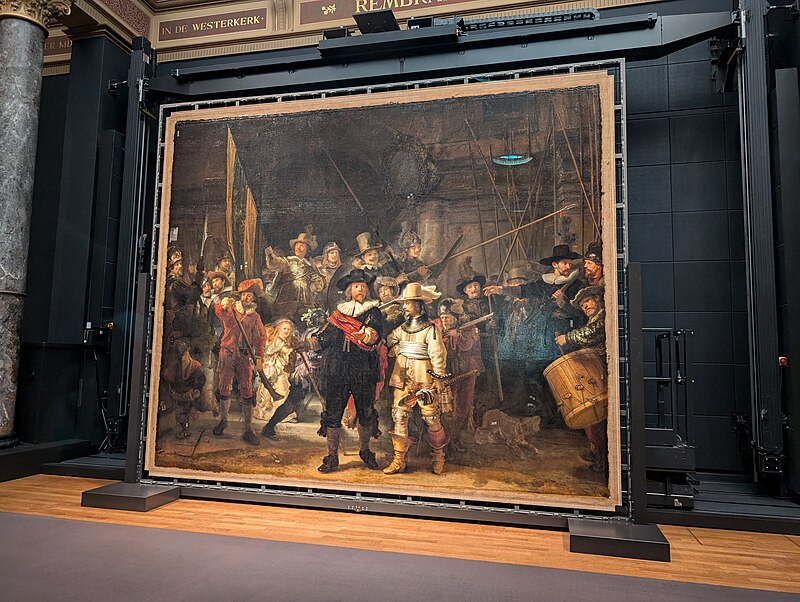
Photo · Wikimedia Commons Standing beneath the vaulted central passage of the Rijksmuseum, look up at the intricate tilework and stained glass that celebrate centuries of Dutch creative triumph. Pierre Cuypers designed this grand building in eighteen eighty-five after losing his first contest entry two decades earlier, creating a masterpiece that blends Gothic soaring arches with Renaissance brickwork. As you enter the Gallery of Honour on the upper floor, pause before Rembrandt's monumental masterpiece, The Night Watch, which was moved here by order of King Louis Bonaparte in eighteen hundred and eight. Feel the cool air lingering in the passageway where street musicians often play acoustic melodies that echo off the stone walls. Before heading back out into the plaza, take a quiet moment to admire how the north elevation frames the icy square in a perfect architectural portrait and notice the detailed brickwork surrounding the courtyard windows.
Turn southeast across the tree-lined path toward the quiet, elegant townhouse of Villa Alsberg.
- 1 min · on site
Rebellious Grace in Villa Alsberg
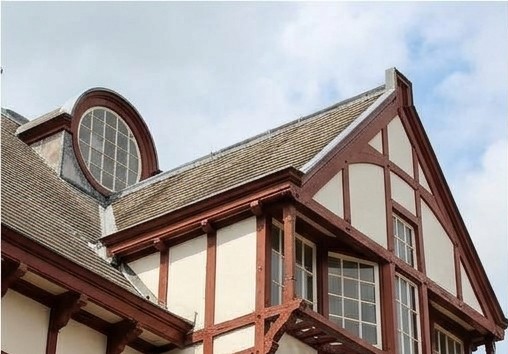
AI-generated image · may differ from the real place Approach the red-brick gables of Villa Alsberg on Honthorststraat, a historic townhouse designed in nineteen hundred and four by Eduard Cuypers, the nephew of Pierre Cuypers. As you step into the intimate garden, look for the striking outdoor sculptures by Banksy and KAWS nestled among the winter foliage. This refined residence was once a private home before transforming into a sanctuary for revolutionary contemporary and street art. Notice how the classic stained-glass windows contrast beautifully with the bold, subversive pop art hanging inside the gallery rooms. Stand on the front porch for a moment to take in the quiet elegance of Honthorststraat, where historic domestic architecture meets the vibrant energy of modern creative disruption. Take your time enjoying the garden art and listening to the faint winter rustle of leaves before walking across toward the next gallery.
Head west along Paulus Potterstraat toward the sleek, sunlit glass entrance of the Van Gogh Museum.
- 1 min · on site
The Sanctuary of Light and Devotion
Photo · Wikimedia Commons Standing before the curved glass entrance wing designed by Kisho Kurokawa adjacent to Gerrit Rietveld's modern structure, notice how the winter light fills the soaring glass atrium. Inside these walls rests the extraordinary artistic legacy saved by Johanna van Gogh-Bonger, who guarded her brother-in-law's unsold paintings after Vincent and Theo passed away within months of each other. As you wander through the first-floor galleries, look closely at the vibrant yellow brushstrokes of Sunflowers and the turbulent cobalt skies of Wheatfield with Crows. Listen to the quiet rustle of visitors moving through the sunlit halls, absorbing the emotional intensity of Vincent's short, brilliant career. Before leaving, take a seat near the high window looking out toward the square to watch the skaters gliding gracefully in the distance while enjoying the warm gallery atmosphere.
Step out onto Paulus Potterstraat and walk a few paces west to the bold white structure next door.
- 1 min · on site
Bold Lines and Dune Escapes
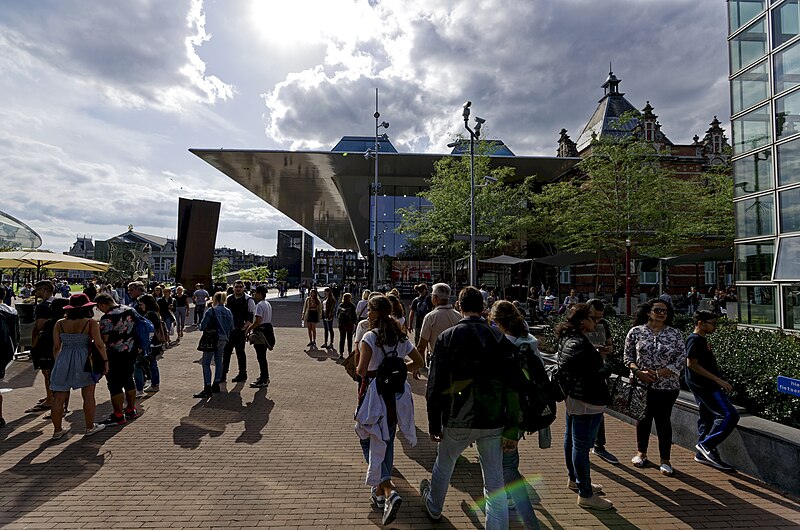
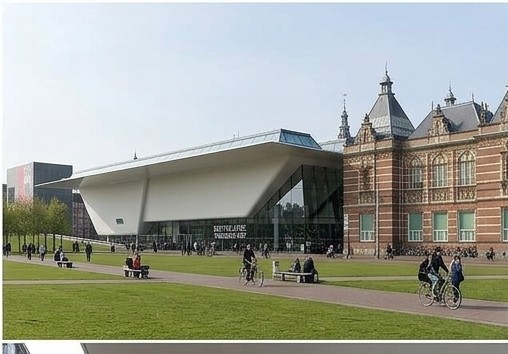
AI-generated image · may differ from the real place Pause in front of the dramatic white cantilevered wing of the Stedelijk Museum, affectionately known to locals as The Bathtub, designed by Benthem Crouwel Architects. As you look up at the seamless white facade juxtaposed against Adriaan Willem Weissman's original eighteen ninety-five Neo-Renaissance building, remember the remarkable courage of former director Willem Sandberg. During World War II, Sandberg hid the museum's precious modern masterpieces in a sand dune bunker near Santpoort and narrowly escaped arrest by fleeing on his bicycle into the dunes. Inside, wander among bold works by Kazimir Malevich and Henri Matisse, taking in the open white-cube galleries that Sandberg pioneered. Before exiting, stop by the vibrant ground-floor cafe to observe how contemporary design harmonizes with the city's historic artistic spirit while enjoying the bright light filtering through the sweeping glass windows.
Cross Van Baerlestraat toward the neoclassical colonnade of the grand concert hall facing the plaza.
- 1 min · on site
The Golden Lyre on Damp Earth
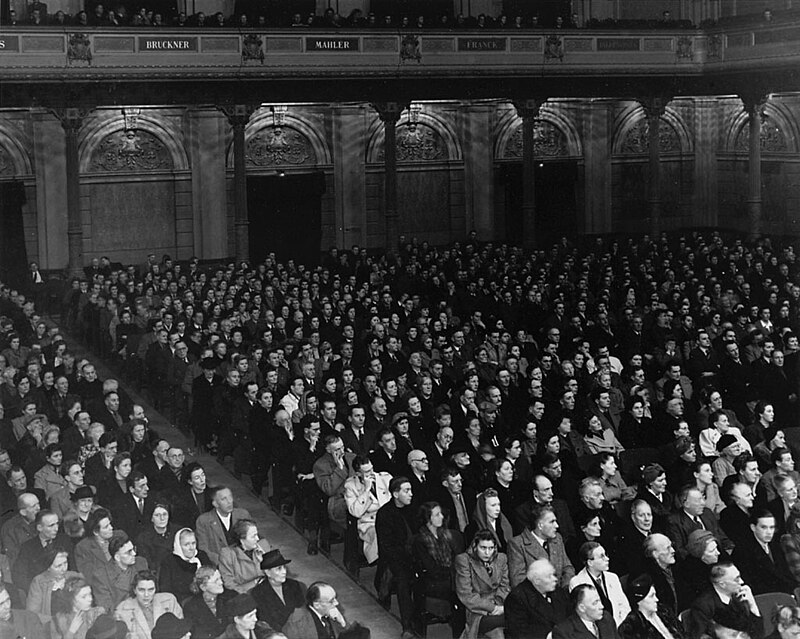
Photo · Wikimedia Commons Stand before the grand neoclassical entrance of Het Concertgebouw, designed by Adolf Leonard van Gendt in eighteen eighty-eight upon more than two thousand wooden piles driven into the damp soil. Look up at the golden lyre crowning the pediment, and imagine the opening night when a massive chorus of five hundred singers echoed through the Main Hall. Renowned worldwide for its warm, crystalline acoustics, this legendary hall has hosted timeless classical symphonies as well as iconic rock performances by Pink Floyd and Led Zeppelin. As you step under the covered portico, listen closely to the faint hum of orchestral rehearsals echoing through the wooden doors. Pause here on the steps to look back across the entire Museumplein, taking in the glittering rink and the majestic museums lit against the evening sky.
As night deepens over the Museumplein, the last skaters trace glowing arcs across the rink while the distant chime of the Concertgebouw echoes through the chill air. The museums stand like silent guardians of human creativity, proving that in Amsterdam, beauty is never stranded in the past but alive on the ice. Carry this warmth with you as you wander into the evening, where every shadow holds a story waiting to be told.
Take it further
Open the tour in the appThe tour in the app
Museumplein Cultural Winter CircuitThis walking tour circles Amsterdam's Museumplein during winter, starting at the open-air Schaatsbaan ice rink before visiting the monumental Rijksmuseum, the intimate Villa Alsberg housing the Moco Museum, the sunlit Van Gogh Museum, the avant-garde Stedelijk Museum, and ending at the acoustically world-renowned Royal Concertgebouw.
+ Add the tour to your planIf you have the app the tour opens right away; otherwise you go to the store.FAQ
- What is the historical significance of Museumplein in winter?
- Museumplein was originally a wax candle factory and marshy meadow before being transformed in the late nineteenth century into Amsterdam's cultural center, where the pond transforms each winter into a vibrant open-air ice rink.
- Which major cultural institutions border the square?
- The square is bordered by the Rijksmuseum, the Van Gogh Museum, the Stedelijk Museum Amsterdam, the Moco Museum in Villa Alsberg, and the Royal Concertgebouw.