There is a specific hour just after dawn when Amsterdam stops being a museum postcard and turns into an impossibly cinematic stage set. The canal water lies utterly flat, catching the charcoal shadows of seventeenth-century gables in liquid silver, while the faint clatter of an early bicycle chain cuts through the mist. Everyone right now is obsessed with Amsterdam because it answers an urgent modern craving for texture. It is a city built not out of smooth marble or cold glass, but from weathered red brick, tilted wooden pilings, and concentric ribbons of dark water that seem designed specifically to slow down your pulse. Yet beneath this flawless visual surface lies an astonishing culture of pure mercantile swagger. The Dutch did not simply inhabit this damp delta; they carved it out with sheer human willpower, creating an urban miracle that remains the ultimate blueprint for living with style and water.
What makes this place feel so magnetic today is that its legendary landmarks are never isolated monuments tucked behind velvet ropes. Instead, they are living architectural monuments woven straight into the daily commute, standing shoulder to shoulder with narrow townhouses and lively sidewalk terraces. To understand why Amsterdam resonates across our collective imagination, you have to look past the casual cafe culture and tune in to the sheer audacity of its history. This was a city that dared to build its grandest public hall on more than thirteen thousand wooden piles driven into muddy silt, proving that radical engineering and exquisite beauty could share the exact same address.
Ambition and Insolvency
Walk along the ancient waterways and the city reveals itself through the human drama of its most famous residents. Consider Rembrandt van Rijn, who in sixteen thirty-nine bought a monumental residence on Jodenbreestraat for thirteen thousand guilders, filling its high ceilinged rooms with classical plaster casts, rare sea shells, and foreign weapons. In that very house, he ground local clay and quartz into rough earthenware pots to prime his canvases with an earthy mixture that no other painter dared to use. But the pinnacle of success was fragile; within two decades, his lavish lifestyle led to total bankruptcy, forcing the auction of his cherished possessions and casting him into obscurity. When he was finally buried in the Westerkerk, he went to a pauper grave whose exact marker was entirely lost to time.
The Theater of the Everyday
That peculiar tension between theatrical ambition and practical reality repeats everywhere you look. When Louis Bonaparte, brother of Napoleon, arrived in eighteen hundred and eight as the newly appointed king, he immediately converted the grand city hall on Dam Square into his personal royal palace. Annoyed that the historic city weigh house spoiled the view from his palace windows, he simply ordered its immediate demolition. At the same time, he gathered priceless Dutch masterpieces, including Rembrandt's The Night Watch, under his palace roof to protect them from being carted off to Paris, inadvertently establishing the foundational collection of what would become the national museum.
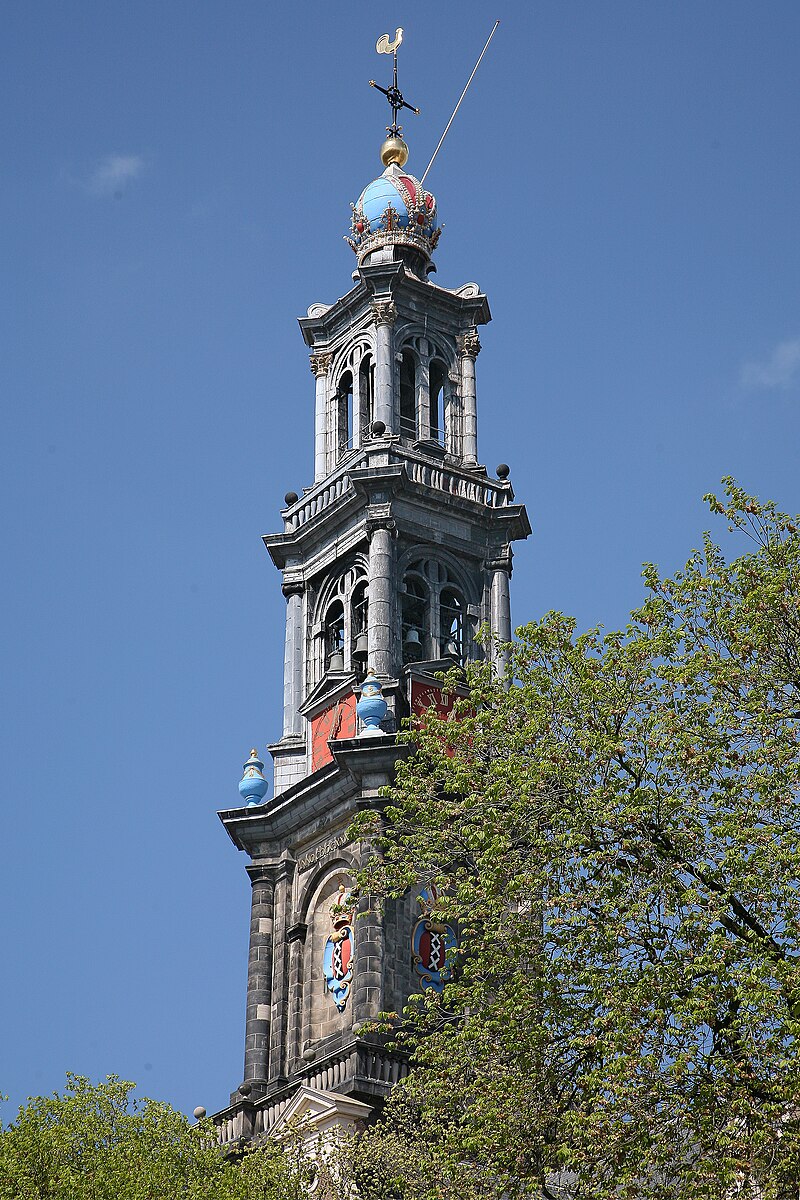
A few canals away, in the quiet attic hideaway along Prinsengracht, young Anne Frank would gaze through a sliver of window at the clock face of the Westertoren. In her diary, she recorded how the reliable quarter-hour chimes of the carillon offered an enduring sense of comfort amid unfathomable darkness. The bronze bells, cast centuries earlier by master founders, continued their steady rhythm over a fractured world. As you wander along the water today, listening to those same bells roll over the rooftops, you realize that Amsterdam is not merely a collection of pretty vistas. It is an enduring testament to human resilience, artistic defiance, and the timeless poetry of stone reflected in still water.
Want to walk it yourself? Plan a trip with these places
The walk
On site, play just that chapter
- 1 min · on site
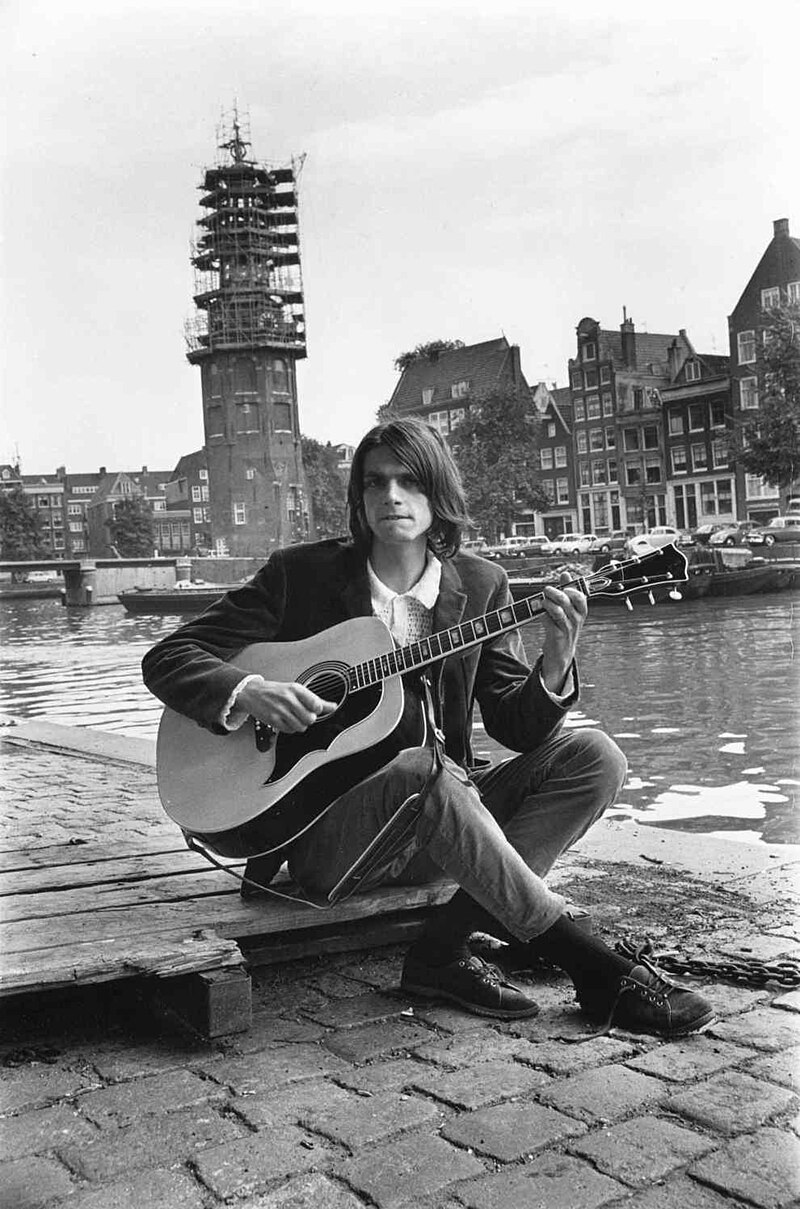
The Sentinel of the Eastern Harbor
Photo · Wikimedia Commons Standing directly before Montelbaanstoren on the tranquil bank of the Oudeschans canal, you are looking at one of the very few surviving medieval defensive structures in Amsterdam. Erected in fifteen sixteen as a sturdy watchtower to guard the city outer walls and harbor, it underwent a dramatic transformation in sixteen hundred and six when renowned architect Hendrick de Keyser designed its intricate decorative crown. The third Duke of Alba once proposed expanding this modest harbor bastion into a colossal military fortress known as Monte Albano, but the ambitious castle was never constructed. Over the passing generations, local citizens playfully garbled the noble Italian moniker into Montelbaanstoren. To appreciate its most iconic perspective, walk onto the stone bridge crossing Oudeschans and watch how the forty-eight meter spire and openwork cupola reflect across the water. It stands as a striking testament to martial vigilance gracefully reborn as civic architecture.
From this peaceful canal embankment, walk south along the water toward Jodenbreestraat where the master painter once made his home.
- 1 min · on site
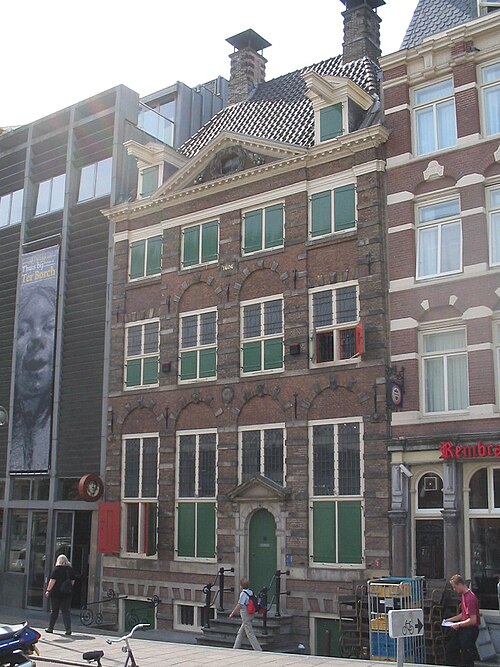
Ambition and Pigment on Jodenbreestraat
Photo: M.Minderhoud · CC BY-SA 3.0 · Original file Here on Jodenbreestraat stands the stately townhouse that Rembrandt van Rijn purchased in sixteen thirty-nine at the absolute summit of his artistic career. Stepping into these meticulously restored rooms, you immediately encounter the tangible world where his most famous works were conceived. Be sure to witness the live etching demonstration in the print room, where copper plates are inked using traditional techniques. In nineteen ninety-seven, researchers excavating the historical cesspool behind the house discovered two earthenware pots containing residues of quartz ground, a distinctive blend of clay and powdered quartz that Rembrandt uniquely formulated to prime his canvases. Although an extravagant appetite for collecting precipitated his devastating bankruptcy in sixteen fifty-six, forcing a heartbreaking auction of every possession, standing in his luminous third-floor studio under cool northern light allows you to feel the pulse of pure genius.
Step outside onto the lively pavement and follow Damstraat westward until the narrow brick corridor opens into the central square.
- 1 min · on site
The Living Crossroads of History
AI-generated image · may differ from the real place You are standing in Dam Square, the symbolic and geographic heart of Amsterdam created around twelve seventy when a protective barrier was constructed across the river Amstel to connect two separated settlements. For centuries, this expansive cobbled plaza bustled as the city main fish market and trading center, where merchant vessels moored to unload spices and textiles from distant seas. On the eastern perimeter rises the National Monument, an imposing white stone pillar sculpted in nineteen fifty-six to honor the fallen victims of the Second World War. Dam Square has hosted royal celebrations, dramatic civil riots, and major political gatherings across modern Dutch history. To truly appreciate its theatrical scale, visit early in the morning when the open expanse is relatively quiet, allowing you to absorb the grand sweep of historic facades before the afternoon rush begins.
Turn your attention across the open cobblestones toward the monumental classical facade anchoring the western perimeter.
- 1 min · on site
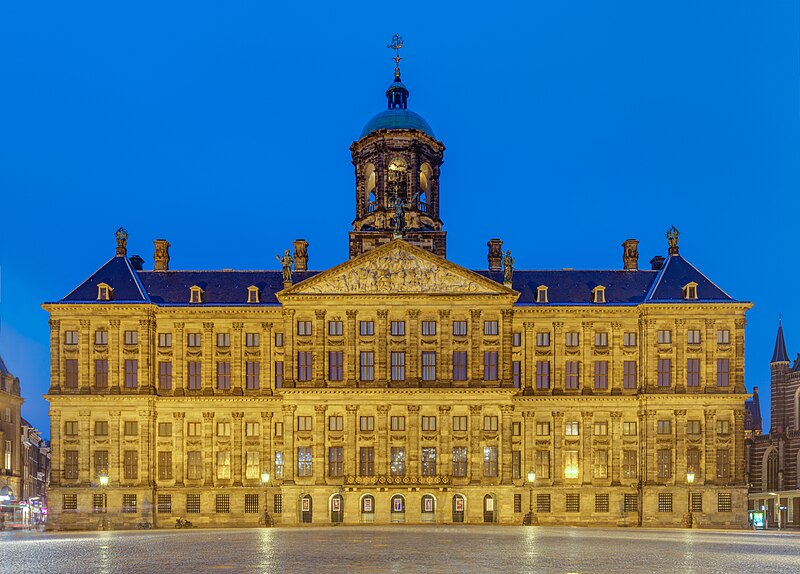
The Civic Hall That Crowned Kings
Photo · Wikimedia Commons Dominating the western horizon of Dam Square, the Royal Palace was originally built not for hereditary monarchs, but as the triumphant new town hall of the Dutch Republic. Designed by celebrated architect Jacob van Campen and inaugurated in sixteen fifty-five, this immense sandstone edifice rests securely on thirteen thousand six hundred and fifty-nine wooden piles sunk deep into marshy ground. In eighteen hundred and eight, Napoleon's brother, King Louis Bonaparte, designated the municipal building as his official royal palace. Notice the deliberate absence of a grand ceremonial portal, an enduring reminder of its origins as a shared house for burghers. Once inside, look up in the cavernous Citizens Hall to behold the six-meter marble statue of Atlas bearing the globe upon his shoulders, epitomizing the boundless maritime confidence of seventeenth-century Amsterdam.
Leave the palace square behind and stroll down Raadhuisstraat toward the soaring silhouette along Prinsengracht.
- 1 min · on site
Spire of Solace and Silent Masters
Photo · Wikimedia Commons Reaching eighty-seven meters into the skyline, the Westertoren of the Westerkerk is the tallest church tower in Amsterdam, crowned by the brilliant blue imperial crown of Maximilian the First. Completed in sixteen thirty-one by Hendrick and Pieter de Keyser, this Renaissance Protestant basilica carries some of the most poignant narratives in the city memory. Rembrandt van Rijn was buried beneath its stone pavement in sixteen sixty-nine as an impoverished citizen, his exact grave lost to history, though a dignified memorial marker on the northern wall commemorates his resting place. During the dark years of wartime occupation, diarist Anne Frank drew steady comfort from hearing the carillon chime every fifteen minutes from her concealed attic annex nearby. Gaze up at the majestic baroque organ shutters inside, painted by Gerard de Lairesse, before returning to the open street.
Exit through the church doors directly onto the leafy waterside promenade of Prinsengracht.
- 1 min · on site
The Concentric Masterpiece of Water
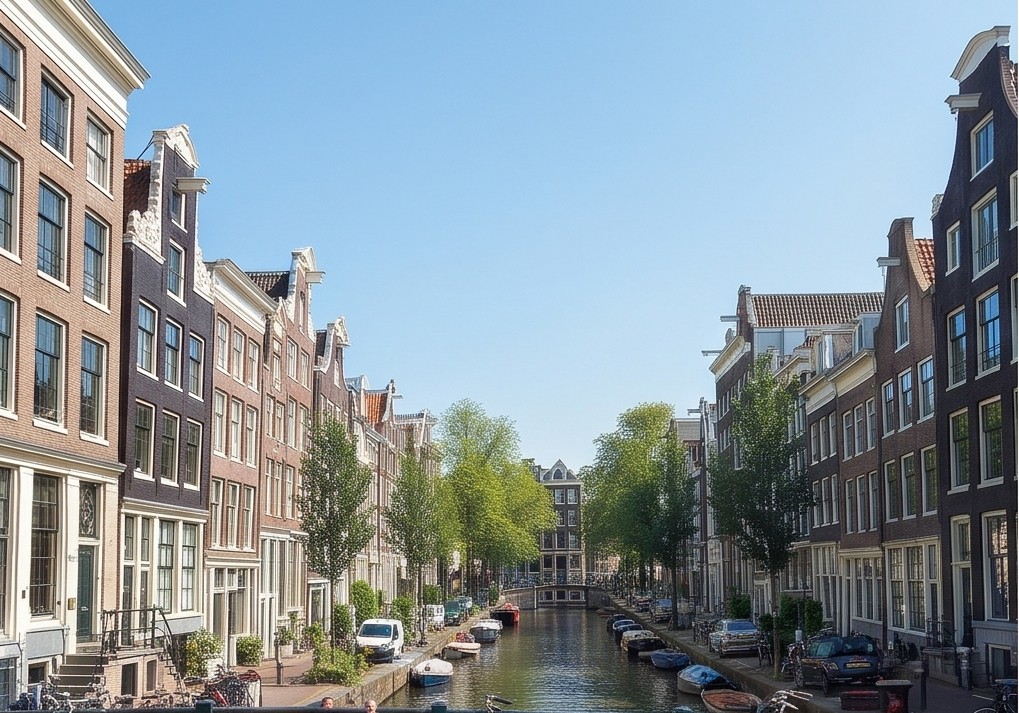
AI-generated image · may differ from the real place Unfolding across more than one hundred kilometers of waterways and spanned by fifteen hundred bridges, the concentric canal rings of Amsterdam represent one of the most visionary urban planning feats in global history. Excavated during the seventeenth-century Golden Age, the residential waterways of Herengracht, Keizersgracht, and Prinsengracht were constructed systematically from west to east like a giant sweep to house an exploding mercantile population. Now honored as a UNESCO World Heritage site, these tranquil channels are flanked by fifteen hundred protected historic mansions. To experience their serene rhythm, wander through the picturesque Nine Streets district connecting Prinsengracht with Singel. Pause atop an arched brick crossing to watch traditional canal boats glide through shimmering reflections of tilted gables, and savor the effortless grace of an ancient city that chose dark water as its permanent canvas.

As the afternoon light softens into amber across the canal surface, Amsterdam reminds you that true style is never about fleeting polish, but about endurance. Here, every stone has absorbed centuries of daring commerce, rebellious art, and deeply human survival. Take this walk slowly, listen to the bells, and let the quiet currents of the waterways guide your thoughts.
Take it further
Open the tour in the appThe tour in the app
A Walk Through Golden Age AmbitionThis curated walking tour connects six defining historic landmarks, guiding you from the eastern harbor watchtower of Montelbaanstoren across the energetic expanse of Dam Square and the Royal Palace to the soaring spire of Westerkerk and the iconic canal ring of Prinsengracht.
+ Add the tour to your planIf you have the app the tour opens right away; otherwise you go to the store.FAQ
- Why does the Royal Palace on Dam Square lack a grand entrance?
- The building was originally constructed in the seventeenth century as Amsterdam new city hall. Its classical civic architecture intentionally avoided a monarchical portal to reflect republican governance, and it was only converted into a royal palace in eighteen hundred and eight under King Louis Bonaparte.
- Where is Rembrandt van Rijn buried in Amsterdam?
- Rembrandt was buried in an unmarked pauper grave within the Westerkerk in sixteen sixty-nine following his financial bankruptcy. While the precise burial location under the stone church floor was lost, a dedicated memorial marker honors him on the northern wall.
- What is the historical significance of the canal ring?
- The concentric canals of Herengracht, Keizersgracht, and Prinsengracht were excavated in the seventeenth century during the Dutch Golden Age to manage urban expansion and maritime transport, and today they form a recognized UNESCO World Heritage site.
This piece was newly written based on the Wikipedia articles ‘Rembrandthuis’, ‘Royal Palace of Amsterdam’, ‘Westerkerk’, ‘Montelbaanstoren’ · CC BY-SA 4.0