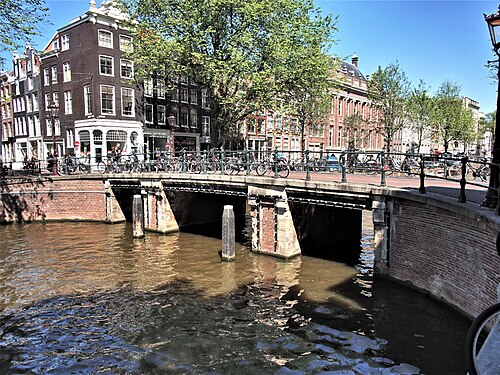
Morning mist lifts off the Herengracht in silver ribbons, diffusing the pale northern light against dark gabled facades. A cyclist in an impeccably tailored charcoal wool coat glides past wet brick pavement, the bicycle bell chiming once with crisp, melodic precision. Amsterdam does not display its luxury on bombastic boulevards or gilded plazas. It folds its elegance into interior courtyards, narrow alleyways, and quiet doorways that appear utterly ordinary until you push them open. True sophistication here has always been private, understated, and intensely personal. The true rhythm of the city is set not by grand public spectacles, but by the confidential friction of weathered brick, dark canal water, and hand-rubbed timber. To understand this landscape with the discerning eye of an editor, you must abandon the crowded tourist arteries and step deliberately into its hidden folds, where silence becomes an aesthetic statement and every cobblestone corner conceals an intimate ritual of daily life.
The Architecture of Sanctuary
Consider how Amsterdam has long perfected the art of the enclosed retreat. In the fourteenth century, while the rest of medieval Europe built fortified castles, an extraordinary collective of women shaped the Begijnhof behind high brick walls. As the Belgian historian Henri Pirenne famously observed, the beguine movement arose from a severe surplus of women following destructive wars. Rather than submitting to feudal marriage or taking cloistered vows under rigid monastic orders, these women established an autonomous communal society. They lived in private townhouses wrapped around a silent lawn, maintaining their personal property and independent spiritual life through centuries of political upheaval. That impulse toward self-contained sanctuary remains etched into the municipal character.
Across the canal ring in the leafy Plantage district, a parallel devotion to quiet discipline took root. When director Johannes Snippendaal took charge of Hortus Botanicus in 1646, he spent his tenure meticulously cataloging seven hundred and ninety-six species of medicinal flora, transforming a pragmatic municipal herb plot into an enduring pharmacopoeia of Amsterdam. Centuries later, when evolutionary scientist Hugo de Vries brought international renown to the same garden with his revolutionary mutation theories, the governing board went so far as to commission an Amsterdam School expressionist Palm House and laboratory simply to persuade the professor never to leave the city. From medieval domestic sanctuaries to rare botanical pavilions, the urban genius of Amsterdam lies in carving out protected chambers of beauty, shielded from the noise of commerce.
The Underground Cadence
That same appetite for subterranean devotion runs straight into the modern creative landscape. When Jimi Hendrix recorded Electric Ladyland at Record Plant Studios in 1968, his legendary perfectionism led him to cut over fifty takes of Gypsy Eyes. Deeply insecure about his own vocal timbre, Hendrix sang concealed behind acoustic studio screens, converting vulnerability into a timeless masterpiece of layered psychedelic soul. Amsterdam shares that exact creative temperament. It is an urban sanctuary that celebrates the obsessive collector, the neon-lit basement studio, and the clandestine courtyard garden.
Walking through its lesser-known quarters is an exercise in stylistic editing. You learn to listen for the hush behind heavy oak doors, breathe in the damp peat of hidden glasshouses, and savor the sudden transition from gray canal drizzle to radiant ultraviolet galleries. What lingers long after you leave is not the noisy spectacle of the main waterways, but the quiet satisfaction of having stepped inside private sanctuaries that yield their charms only to those who move softly, observe closely, and cherish the luxury of stillness.
Want to walk it yourself? Plan a trip with these places
The walk
On site, play just that chapter
- 1 min · on site
The Courtyard of Quiet Shadows
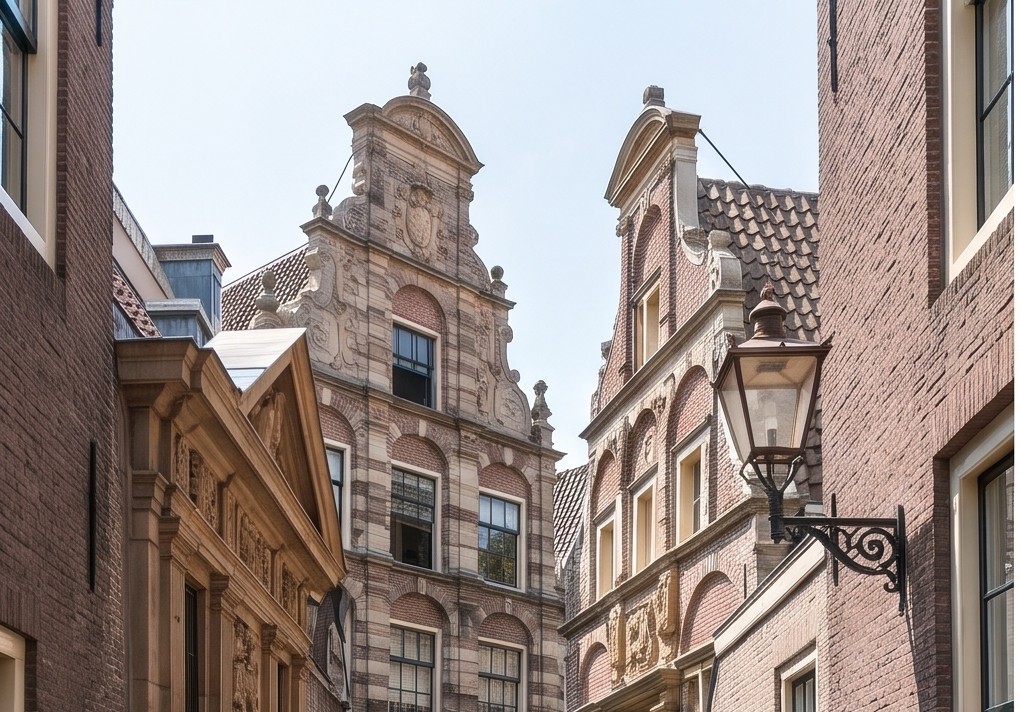
AI-generated image · may differ from the real place Slip away from the lively chatter of the Spui and locate the discreet arched doorway set into the brick wall. Step across the threshold, and the city hum cuts out instantly, replaced by the rustle of manicured grass and the soft fluttering of birds. You are standing inside a fourteenth century sanctuary founded by the beguines, independent women who lived here without taking formal vows. Notice house number thirty-four on your left, its black timber facade dating to the mid-fifteenth century, standing as the oldest wooden residence in Amsterdam. The residents here still honor an unspoken pact of silence. Speak only in whispers and keep your camera discreet. Notice the small stone plaques embedded in the masonry, depicting biblical scenes and floral emblems. There is a quiet, stoic luxury in this secluded quadrilateral, a reminder that true elegance does not seek applause.
Leave through the northern gate and stroll west toward the picturesque waterways of the Nine Streets.
- 1 min · on site
Pancakes Amsterdam Negen Straatjes
An Editorial Interlude in Berenstraat
Photo: Alf van Beem · Public domain · Original file Find your way to Berenstraat, tucked in the cinematic grid of the Nine Streets where stylish boutiques sit behind gleaming glass panes. Step into this intimate parlor, find a small wooden table near the tall window, and watch the parade of cyclists gliding along the canal bridges outside. Here, the traditional Dutch pancake is elevated into an exquisite daily ritual, skillet-baked with parchment-thin precision. Forgo the tourist routine and follow the insider rule of duality: order one savory pancake layered with aged Gouda and smoked bacon, alongside a delicate portion of poffertjes dusted in snowy powdered sugar. The contrast between rich savory depth and cloud-like sweetness is pure harmony. Savor a dark roast coffee while taking in the minimal decor, framed vintage tiles, and effortless warmth. It is a stylish culinary pause, perfectly measured before diving back into the labyrinth.
Turn north along the Prinsengracht and follow the tranquil water towards the artistic heart of the Jordaan.
- 1 min · on site
The Ultraviolet Cabinet of Curiosities
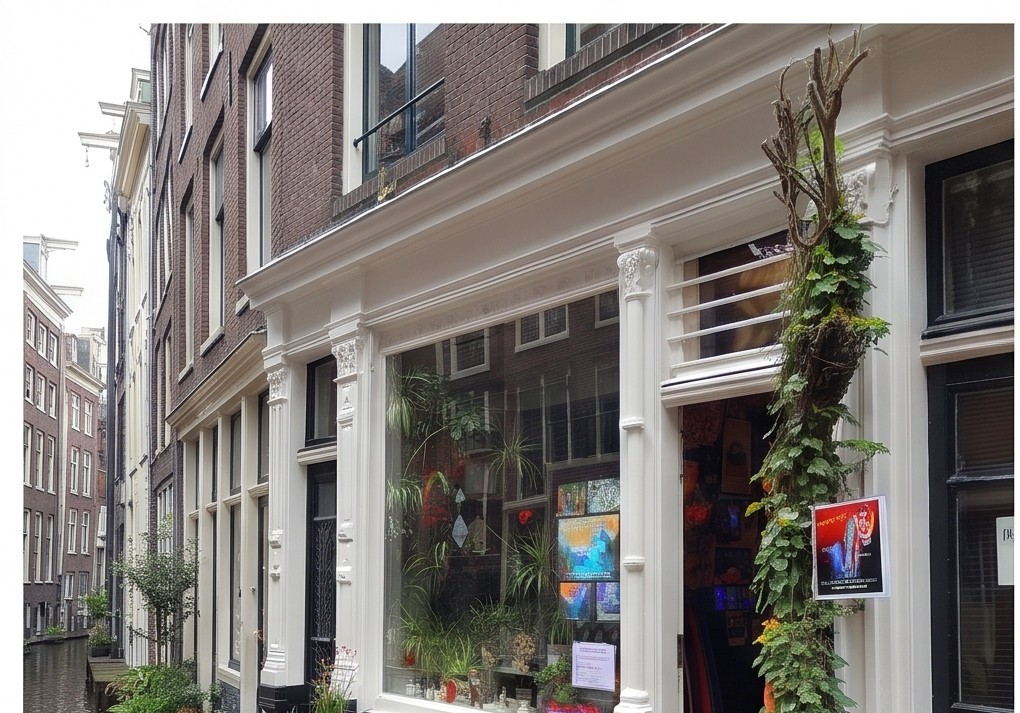
AI-generated image · may differ from the real place Wander down Tweede Leliedwarsstraat and ring the buzzer at this unassuming doorway. Descend a narrow flight of steps into what feels like a secret subterranean laboratory. This is the world first museum dedicated entirely to fluorescent art, created as an immersive homage to Jimi Hendrix and his kaleidoscopic studio aesthetic. As the ambient daylight vanishes, you are handed slippers and led into a glowing, phosphorescent cave. Minerals from deep underground, sea coral, and sculpted acrylic formations radiate in saturated magenta, electric lime, and cobalt under black light. Notice how ordinary gray stone ignites into living luminescence when ultraviolet waves wash over it. It is playful, surreal, and wonderfully eccentric. Hendrix once hid behind acoustic screens to find his true voice; down in this illuminated basement, you witness how darkness can unveil an unexpected spectrum of hidden beauty.
Step back into the crisp daylight and walk three blocks north to the historic church square.
- 1 min · on site
Bohemian Rituals at the Foot of Noorderkerk
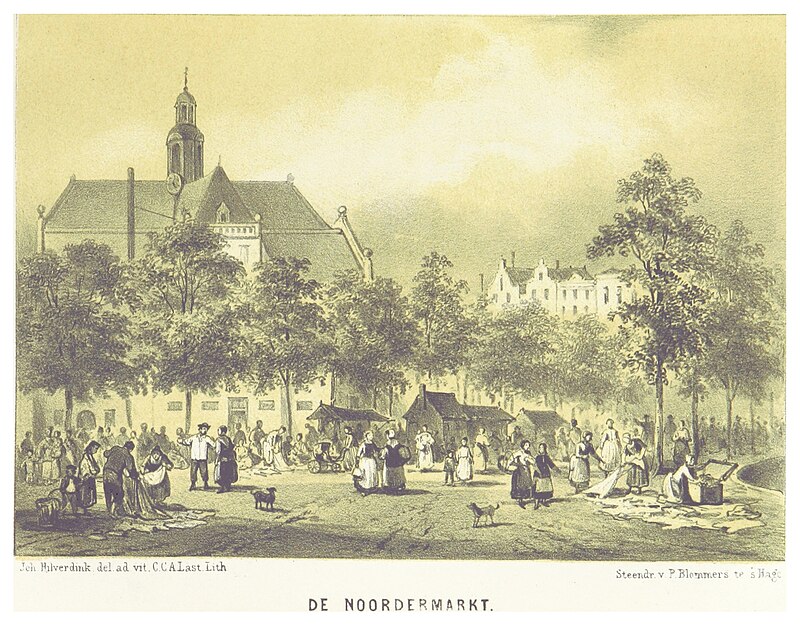
Photo · Wikimedia Commons Emerge onto the cobblestones of the Noordermarkt, beneath the austere brick silhouette of the seventeenth century Noorderkerk. On Saturdays, this square transforms into an organic market where Amsterdam creative elite gathers with woven market baskets and tailored linen coats. On Mondays, the mood shifts to an eclectic vintage bazaar filled with antique porcelain and rare textiles. Find a small cafe terrace overlooking the canal, order a steaming slice of Dutch apple pie layered with cinnamon and whipped cream, and observe the neighborhood theater. Notice the discreet stone plaque mounted on the southern facade of the church, commemorating the courageous citizens who held the first public rallies for the February Strike in 1941. Noordermarkt is an authentic neighborhood square where history, artisanal gastronomy, and effortless bohemian style coexist in perpetual balance.
From the northern corner, take a pleasant stroll east across the canals to the leafy avenues of the Plantage.
- 1 min · on site
The Glasshouse of Green Antiquity
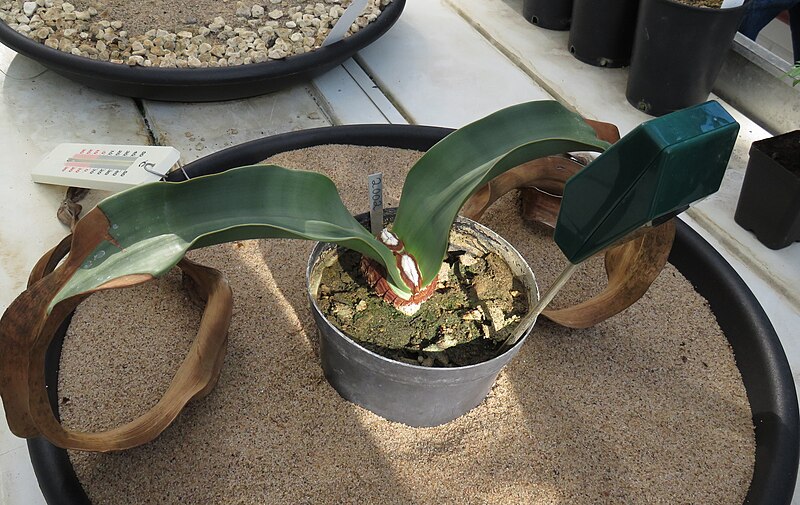
Photo · Wikimedia Commons Cross the threshold of one of the oldest botanical gardens in the world, founded in 1638 as a medicinal refuge for municipal apothecaries. Enter the iconic Snippendaal Garden, named after director Johannes Snippendaal who cataloged nearly eight hundred curative herbs in the seventeenth century. Breathe in the warm, humid air of the tropical glasshouses and follow the stone paths shaded by towering cycads and ancient palms. Look up at the dramatic timber arches of the Palm House, built in expressionist Amsterdam School architecture specifically to retain genetics pioneer Hugo de Vries. A single coffee specimen once nurtured on these grounds became the ancestor of Central and South American coffee culture. Pause by the hexagonal pavilion near the reflecting pond, admiring the rare water lilies. Hortus Botanicus is a masterclass in living architecture and contemplative green design.
Step out of the garden gates into the wide, aristocratic boulevards that define the surrounding neighborhood.
- 1 min · on site
The Aristocratic Promenade of Culture
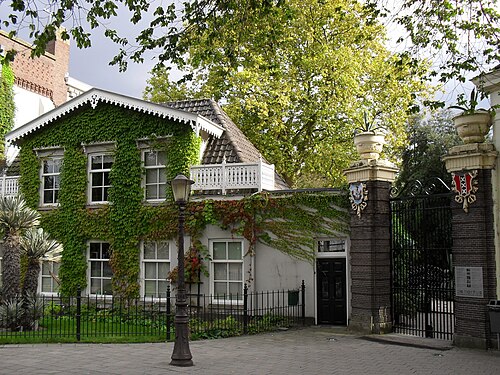
Photo: Marcelmulder68 · CC BY-SA 3.0 nl · Original file Stroll down Plantage Middenlaan, where the cramped scale of the medieval city dissolves into sweeping, tree-lined boulevards and whitewashed nineteenth century townhouses. This district was laid out as an expansive pleasure quarter of orchards and summer theaters. As you wander along Henri Polaklaan, notice the stately townhouses designed by architect Breuker and the quiet majesty of the surrounding parkland. Look toward the historic Hollandsche Schouwburg, where playwright Herman Heijermans once premiered his celebrated dramas, and where brave students later rescued hundreds of hidden children during the dark days of wartime occupation. Today, the Plantage exudes an intellectual grace and spatial luxury found nowhere else in central Amsterdam. Listen to the rustle of plane trees, feel the generous openness of the avenues, and savor the soothing stillness of a neighborhood that has mastered the art of cultured composure.


As twilight settles over the canal water, the true face of Amsterdam turns inward once more. The city grandest luxury has never been on display for the casual passerby; it is guarded by heavy oak doors, veiled by courtyard foliage, and kept alive by those who know how to listen. Carry that quiet cadence with you into the evening.
Take it further
Open the tour in the appThe tour in the app
The Hidden Sanctuary WalkThis curated walking route gracefully links serene medieval courtyards, subterranean fluorescent galleries, artisanal canal cafes, and historic botanical glasshouses. Designed specifically for mindful strollers, it trades crowded commercial thoroughfares for secluded architectural sanctuaries, offering an intimate sensory portrait of Amsterdam private elegance and creative poise at every turn.
+ Add the tour to your planIf you have the app the tour opens right away; otherwise you go to the store.FAQ
- What is the proper etiquette when entering the Begijnhof courtyard?
- Lower your voice to a whisper, silence your phone, and avoid pointing cameras directly into ground floor residential windows, as private citizens still dwell within the courtyard.
- Why is the Plantage district distinctly different from the medieval canal center?
- Originally established as seventeenth century pleasure orchards, the Plantage was later rebuilt with wide leafy boulevards, nineteenth century townhouses, and expansive cultural pavilions rather than narrow merchant canal houses.